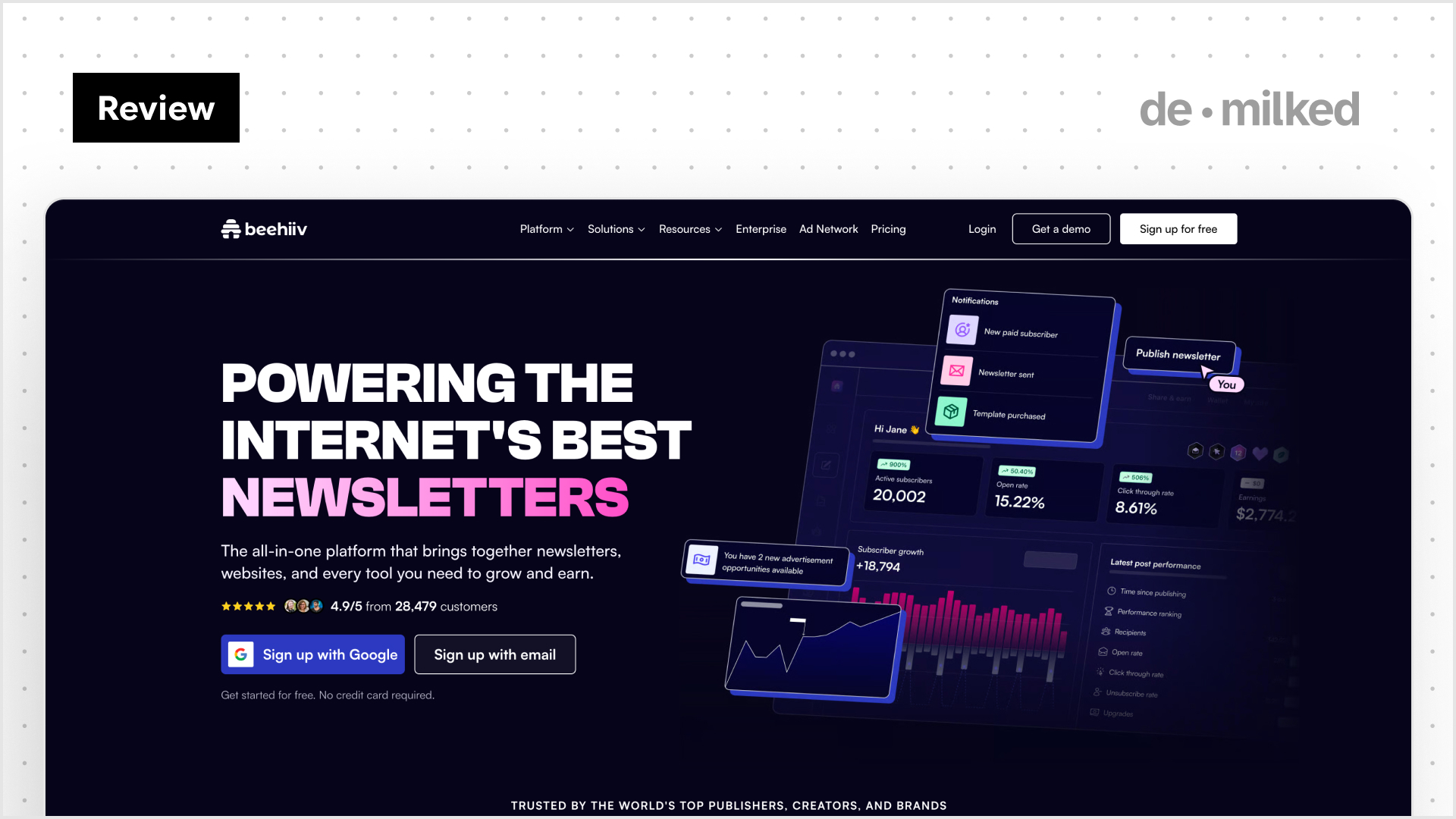
beehiiv review: The best newsletter platform in 2026
We tested beehiiv from first sign-up to first ad placement. Here's what actually works, and whether it actually is the best newsletter platform for solo creators in 2026.
This article contains affiliate links. If you purchase a tool through them, we may earn a commission — at no extra cost to you. It never influences our rankings or what we recommend.
The “all-in-one” label gets thrown around so much in newsletter tools that it's basically lost all meaning.
beehiiv actually has a case for it, but is it actually a good tool for you, and does it live up to the hype in 2026?
Here's what we found after going hands-on with the platform: beehiiv is one of the best-built newsletter tools for independent creators, bloggers, writers, and influencers who want to grow and get paid without switching between three separate subscriptions to do it. And yes, you can grow your newsletter 100% for free.
What we liked
1-minute sign-up — no credit card needed for the trial.
Website & newsletter builder included. We went from blank to published in under 5 minutes.
Built-in monetization: ad network, Boosts, referrals, and paid subscriptions.
Free plan supports up to 2,500 subscribers.
Clean editor with gradual Basic → Advanced mode (no scary feature walls).
What we disliked
Analytics still in beta — but enough for growth-stage creators.
14-day trial is on the short side.
Some advanced features (automations) gated to higher plans.
The all-in-one newsletter platform built for growth: built-in ads, referral engine, website, and the cleanest editor.
What is beehiiv?
beehiiv launched in late 2021, founded by former employees at Morning Brew, a pioneering 4M+ newsletter company. That backstory is an actual product philosophy: beehiiv was built by people who did the newsletter-to-millions journey and then designed an app to help others do the same.
Their “recipe for success” is one app for all you email marketing needs: newsletter, the website, the monetization, and the growth tools, all in one tool.
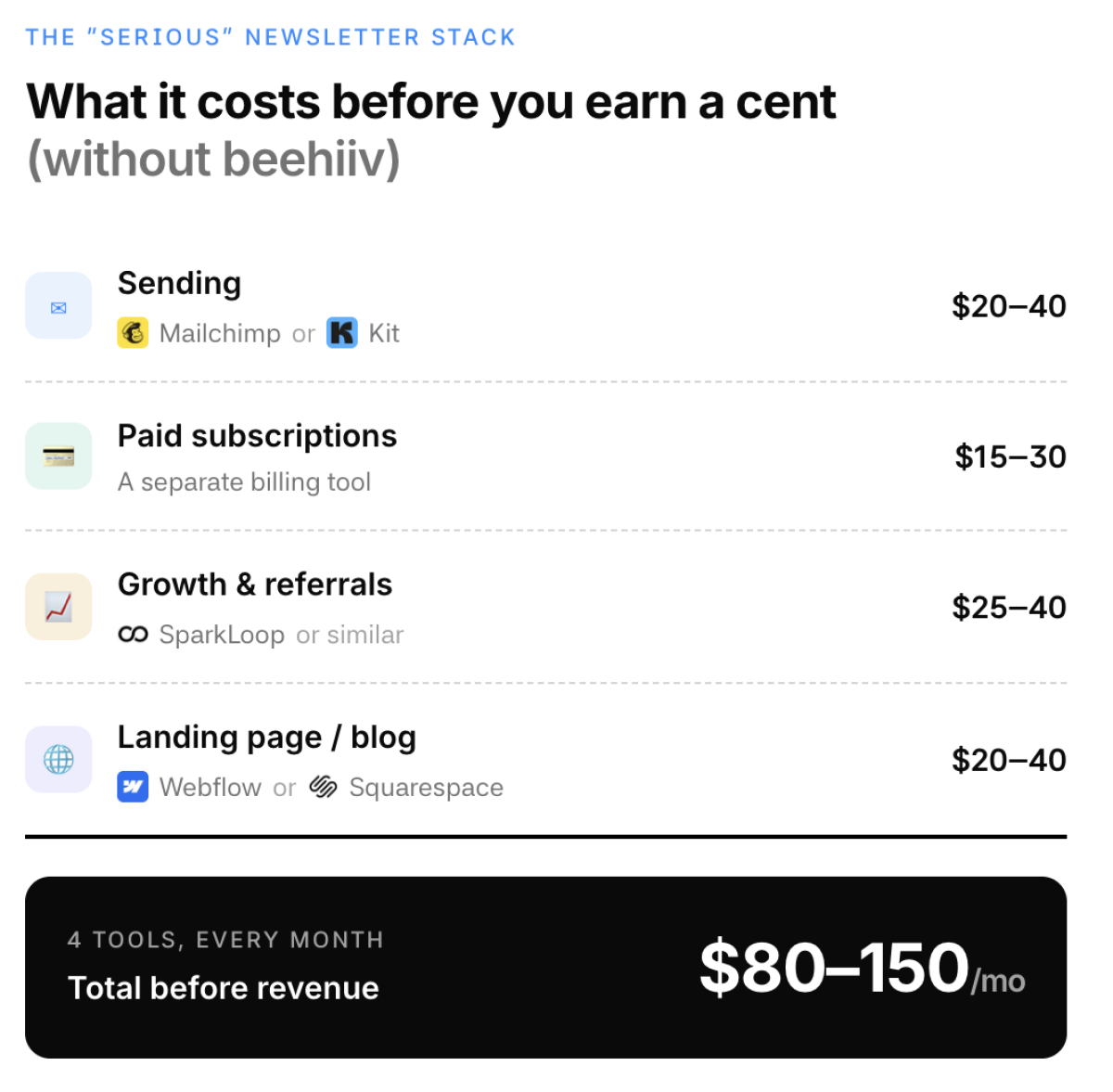
For solo creators, the math on this gets interesting fast. A typical “serious” newsletter stack looks like this: Mailchimp or Kit for sending, a separate tool for paid subscriptions, Sparkloop or a referral platform for growth, and Webflow or Squarespace for your landing page or blog. That’ll cost you $80-$150/month before you even start making money.
Other alternatives tailored to creators (looking at you, Substack) take generous 10% cuts and offer minimal features in return.
beehiiv compresses all of that into one bill. And it's a bill that, according to beehiiv, most users cover within a few months by running ads through their network.

We'll test their biggest promise in the monetization section. First, let’s start with the ideal user, core features, and the onboarding experience.
Who is beehiiv for?
beehiiv is a solo creator tool only. It's a design decision.
It competes directly with Substack and Kit (formerly ConvertKit). It does not compete with enterprise email tools like Klaviyo, HubSpot, or Salesforce Marketing Cloud. If you're a DTC brand that needs abandoned cart flows, deep CRM integrations, and team permissions for 15 people, this isn't your platform.
What beehiiv is built for:
Independent writers launching their first newsletter or migrating from Substack
Creators with an audience on YouTube, Instagram, or a podcast who want to own a direct channel with their readers
Newsletter operators at 500-10,000 subscribers who want to start monetizing
Anyone currently running multiple tools (send platform + referral tool + subscription platform) who want to cut on costs and centralize their workflow
One marketing line from beehiiv that we think is accurate: if you're actually paying for beehiiv's upper tiers, it's probably a good sign. It means people love reading your stuff. But we’ll get to that.
How onboarding looks
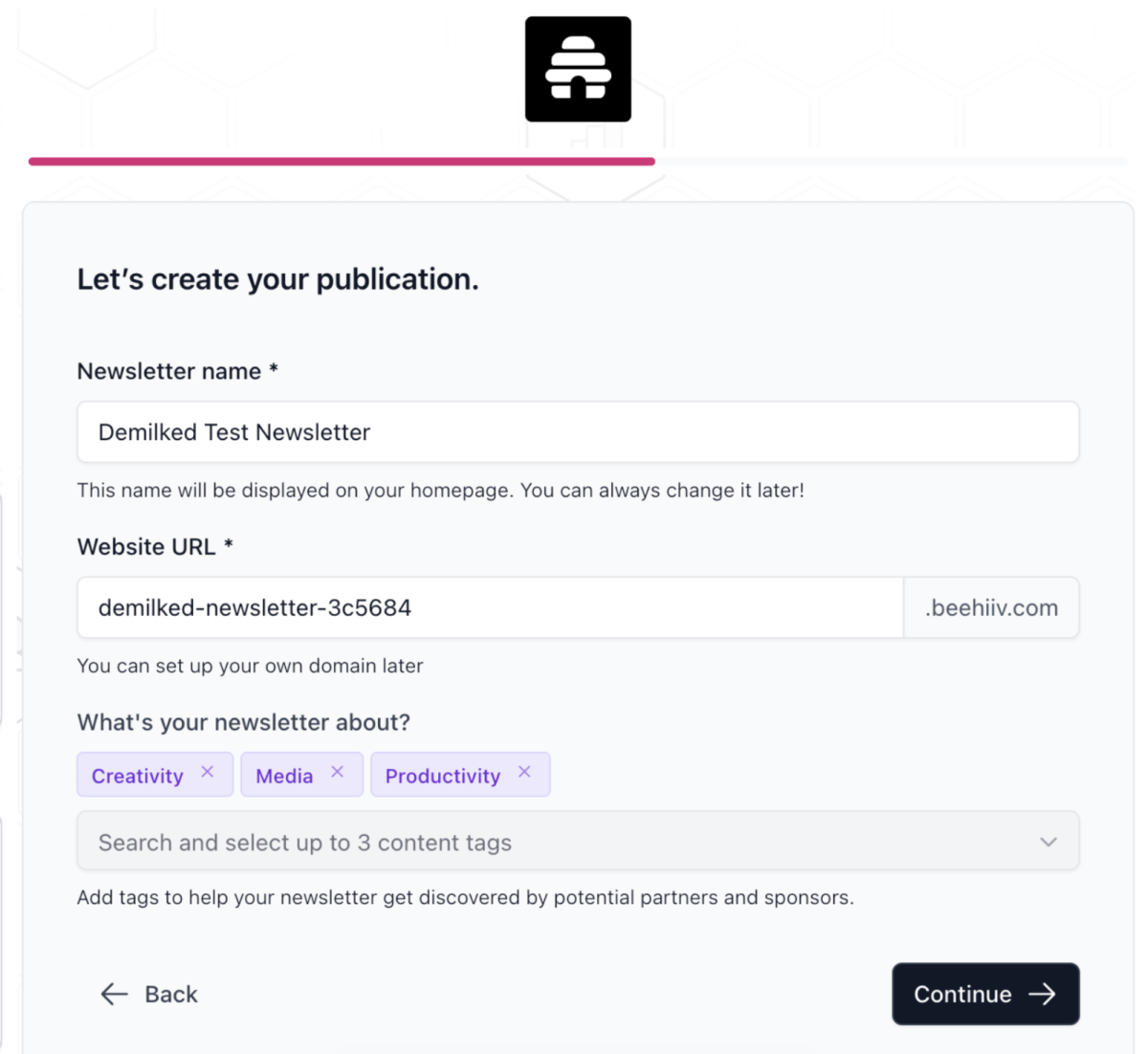
Sign-up is painless. No credit card or “request demo” gatekeeping (though you can, surprisingly, chat with an onboarding specialist anytime). You enter your email, answer a few personalization questions (what's your newsletter about, what's your goal, where are you starting from), and you're in.
The trial lasts 14 days and gives you access to a fair share of the core features. When it expires, you don't get locked out. beehiiv drops you to the free plan, which supports up to 2,500 subscribers with the main features still accessible.
For anyone who's still in growth mode and not ready to commit, that's a good deal. Most platforms either lock you out or cap the free plan at 500.
Key newsletter features: Create, publish, manage, analyze
Let’s take a quick look at the most standout beehiiv features for the creating and managing step of your newsletter workdlow.
Website builder
One of the more impressive parts of beehiiv is that you get your own hosted website out of the box, an actual landing page for reader sign-ups, not just a newsletter.
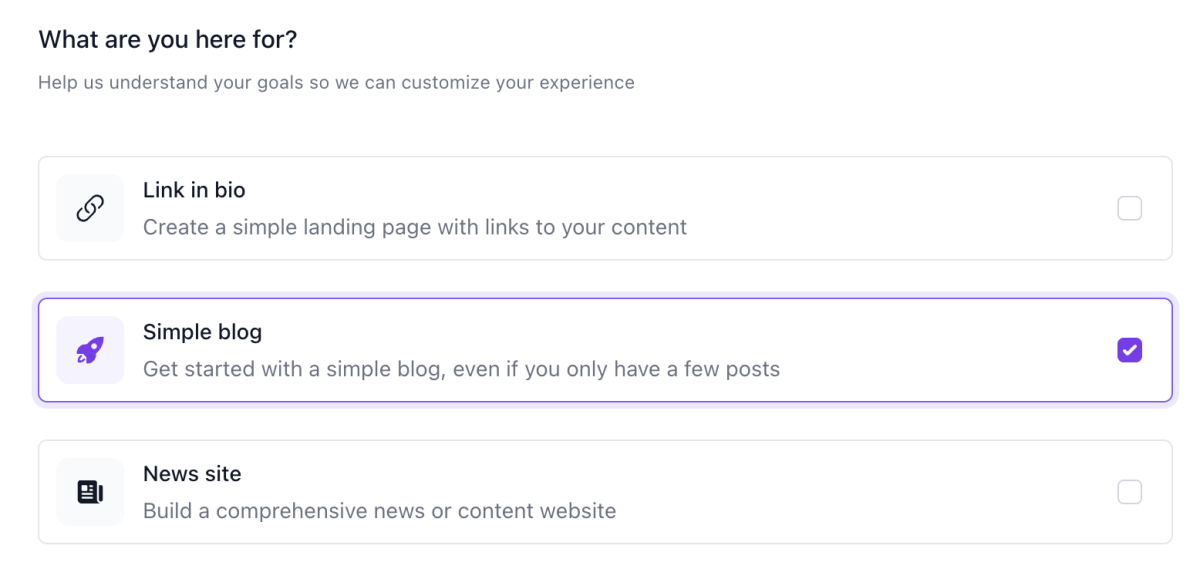
First, you choose between three main formats for your website (Simple blog, news site, or “link in bio” landing page).
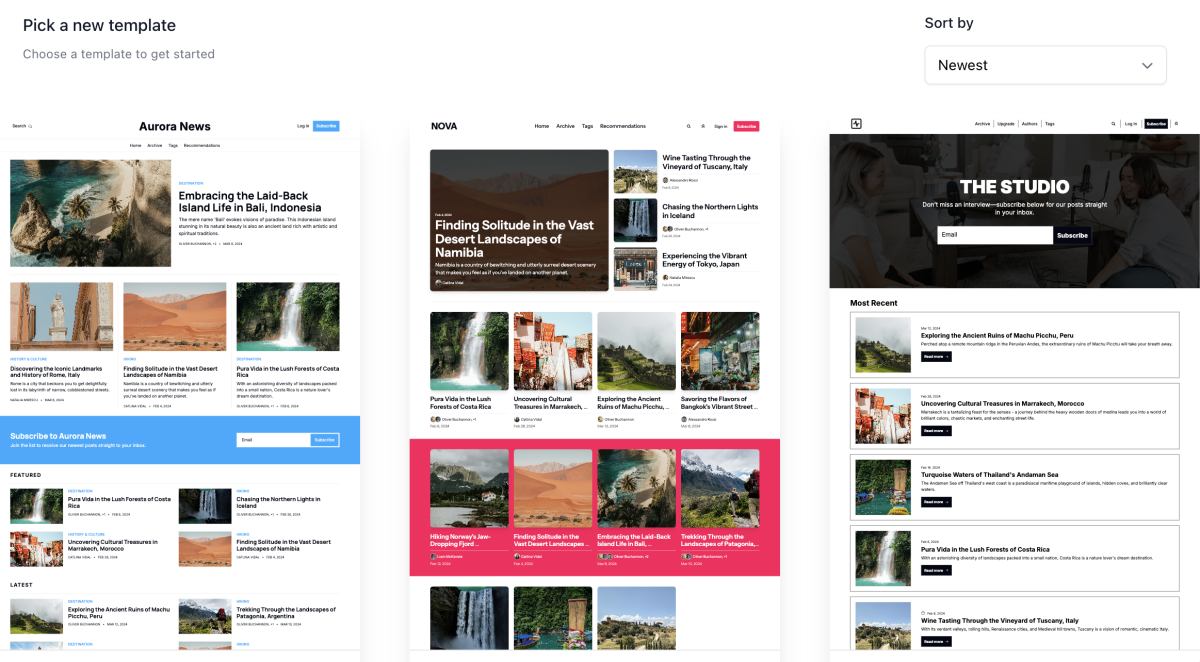
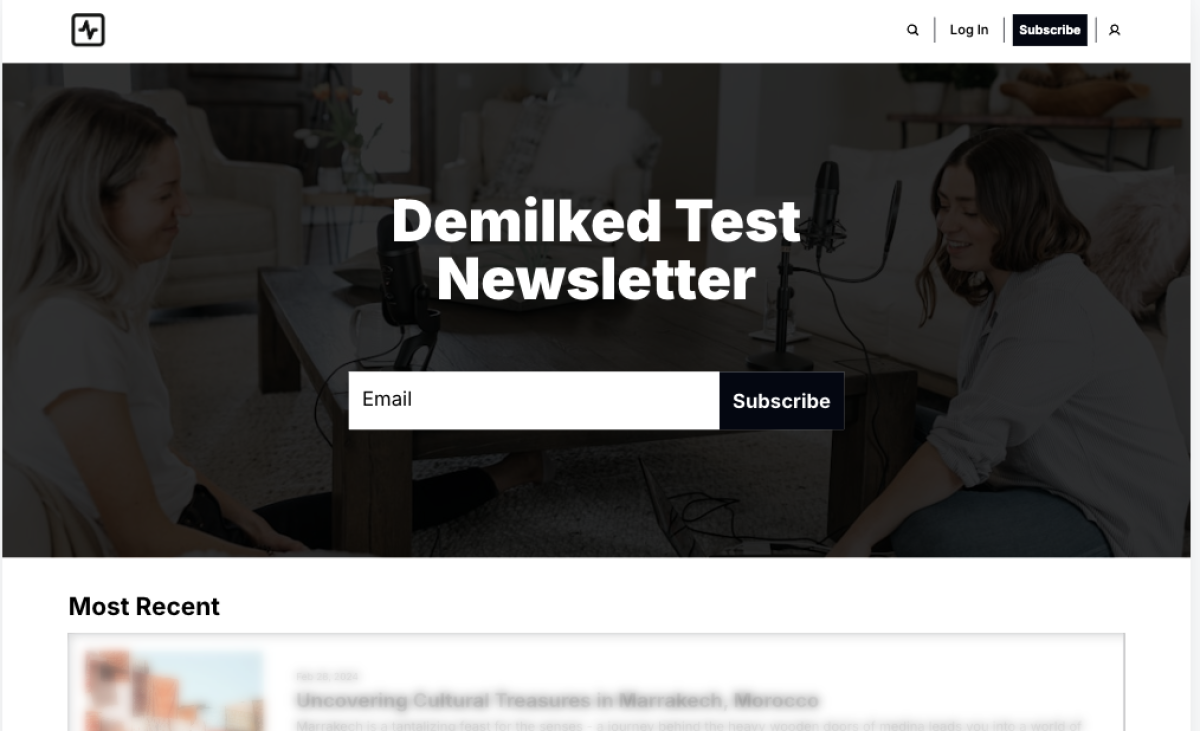
After, the customization options are more generous than expected: fonts, colors, layouts, header blocks, with a dozen templates to choose from.
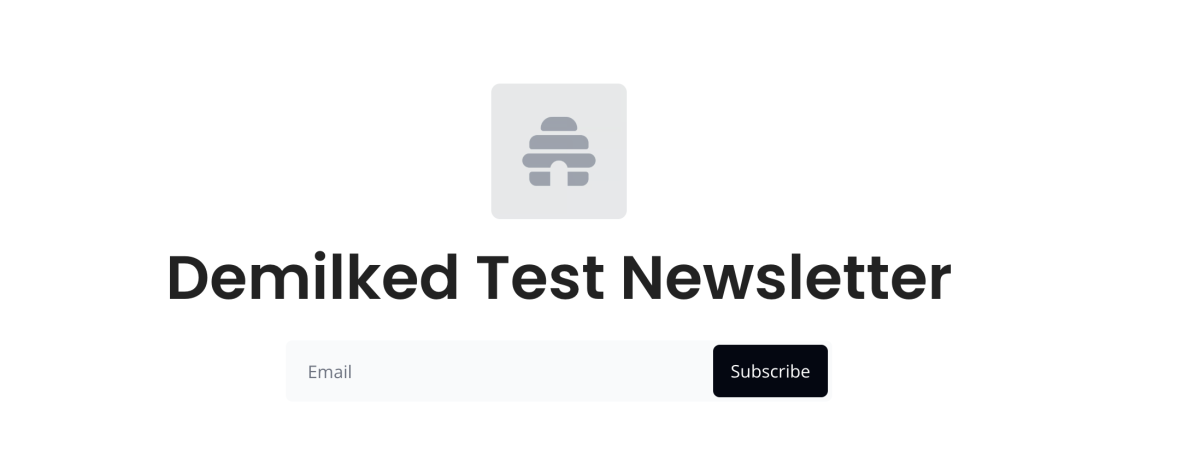
We went from a blank canvas to something we'd actually publish in under 5 minutes. It won't completely replace a properly built site if that’s what you’re after, but for 95% of newsletter creators, it covers everything you need, and then some more.
Newsletter editor
There are 13 templates to start from, and you can customize every section: fonts, spacing, colors, dividers, buttons.
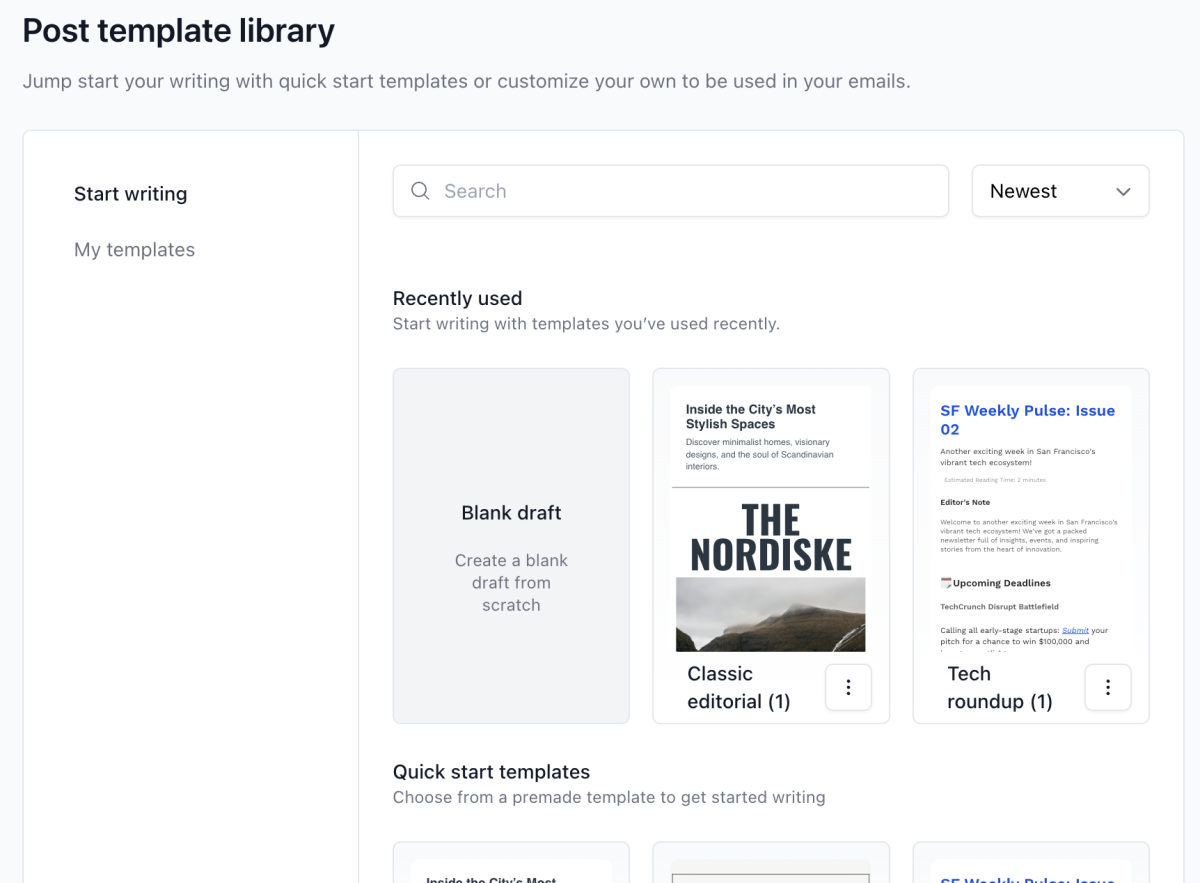
The editor has two modes: Basic and Advanced. Basic keeps things clean and guided; Advanced unlocks more granular control for people who know what they're doing. The transition between the two is organic, it doesn't feel like a sudden feature wall.
Analytics
This is the current weak point. Website analytics in particular are still in beta, and the data available is minimal compared to what a creator at 5,000+ subscribers would need to make serious decisions.
-content.png)
Open rates, click rates, subscriber growth — the basics are there. Deep segmentation, cohort analysis, per-link click attribution — not yet. Functional for early-stage newsletters, but factor this in if web analytics are a primary requirement.
Automations
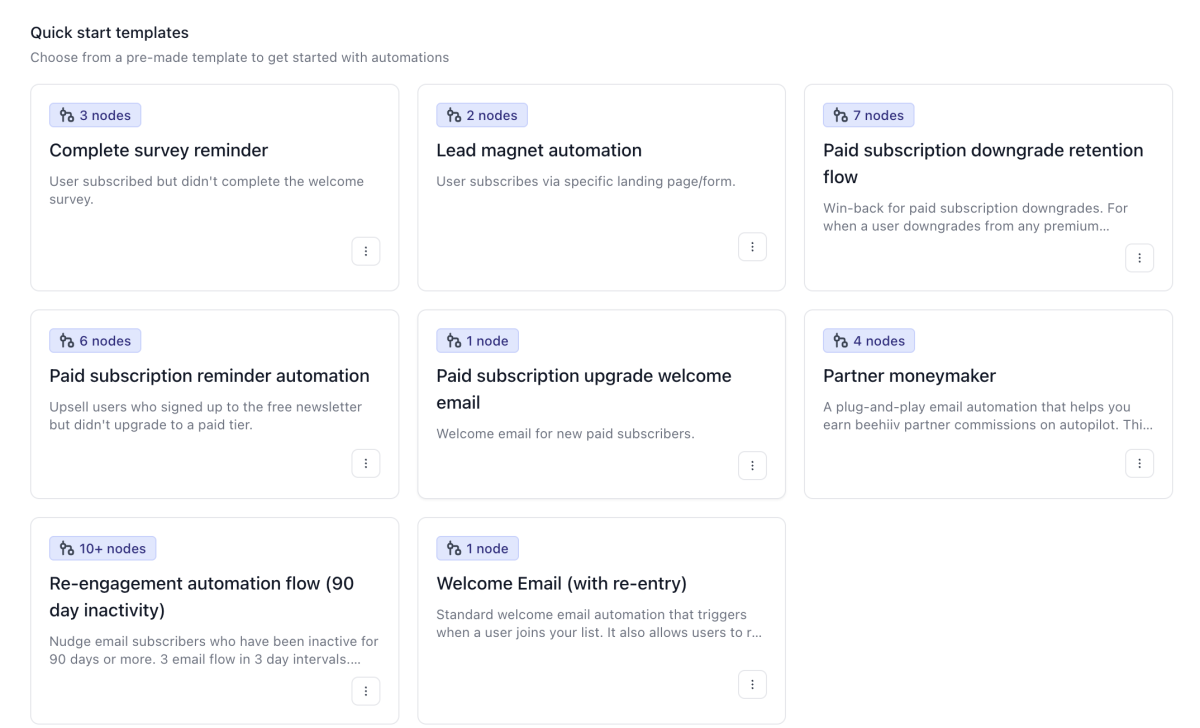
beehiiv has an automation builder for welcome sequences, drip emails, and tagging based on reader behavior. It's solid for standard workflows, and the platform holds your hand through the entire process, so you can create semi-complex sequences with granular triggers relatively easily.
How to monetize your newsletter with beehiiv
This is where beehiiv's strongest selling point lives. Most newsletter platforms help track monetization, at best. beehiiv built it into the architecture from the start. There are five distinct ways to generate revenue directly inside the platform.
Ad network
beehiiv's ad network is the most distinctive monetization feature they offer and, in our opinion, its strongest point as a platform in general. You opt your newsletter into the network, advertisers bid for placements, and you get paid per impression, regardless of whether your readers are paying subscribers yet.
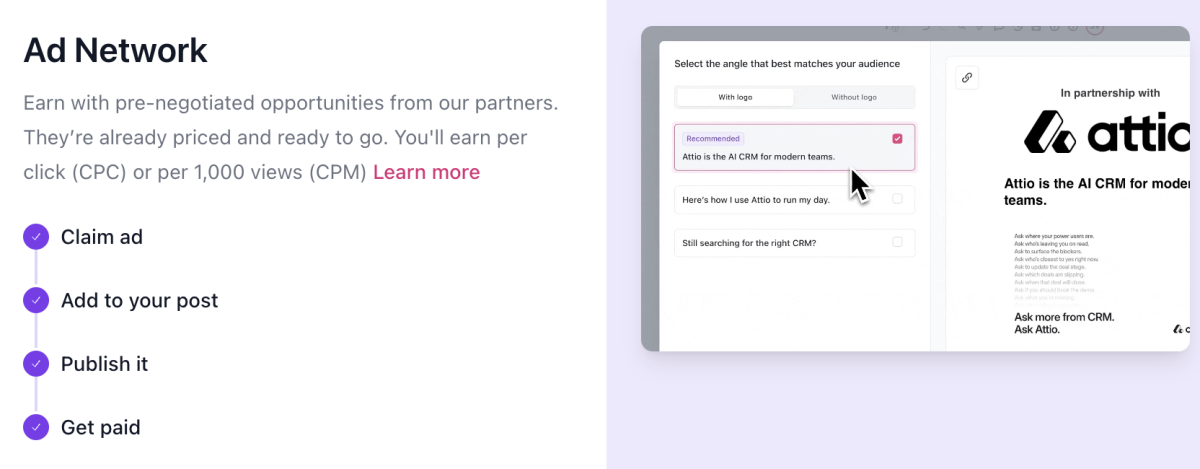
This matters because it changes monetization completely. On Substack, you earn nothing until readers pay. On beehiiv, you can start generating ad revenue from day one.
beehiiv's claim that most publishers cover their subscription cost within a few months is plausible at the $39/month Scale tier. A newsletter with 3,000 engaged subscribers running two ad placements per issue, publishing weekly, is in the right range.
It depends heavily on your niche and CPM: tech and finance audiences earn much higher rates than general lifestyle content. But the mechanism is real, and you maintain editorial control: you can preview and decline placements that don't fit. The algorithm matches you to the right advertisers, helps estimate earnings, and learns based on your preferences and content.
Boosts
Boosts is beehiiv's paid recommendation system. You get paid when your readers subscribe to other newsletters through your content — it’s a native referral marketplace.
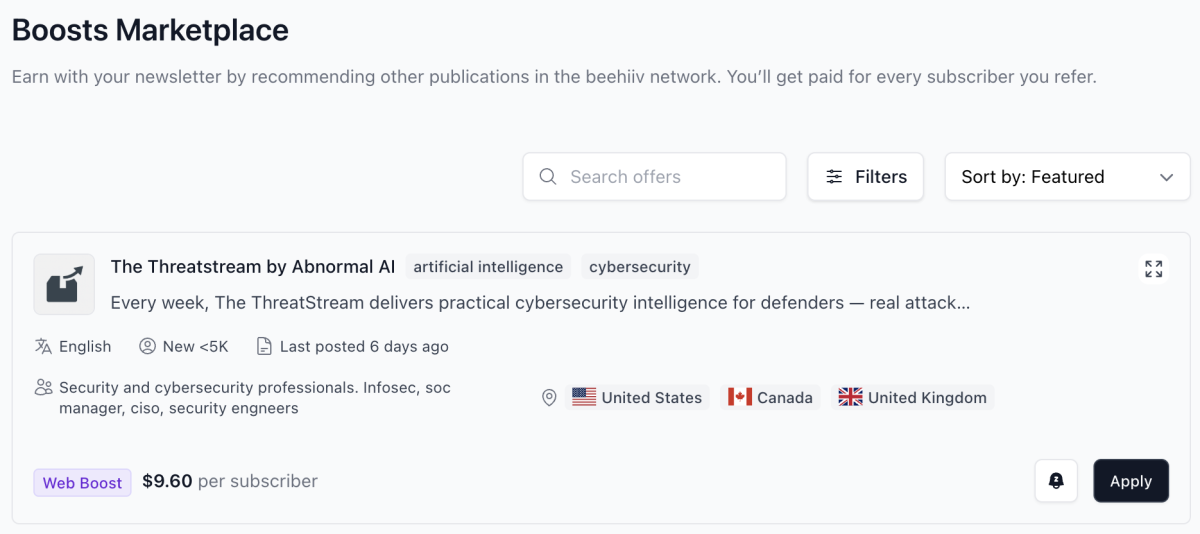
You recommend newsletters relevant to your audience, they pay you per confirmed subscriber, and your readers get introduced to content they'd likely enjoy. Even newsletters with 1,000-2,000 engaged subscribers have reported meaningful income through Boosts.
Paid subscriptions
Standard paid newsletter functionality: you set a price, readers subscribe monthly or annually, and beehiiv takes a 0% cut on paid subscriptions. Unlike Substack, which takes 10%.
That gap is significant at scale: on $5,000/month in subscription revenue, you keep $500 more per month on beehiiv. Over a year, that's $6,000.
Referral program
beehiiv has a built-in referral engine that lets you reward readers for bringing in new subscribers. You set up tiers: refer 3 friends and get a free month of paid access, refer 10 and get a digital download, and beehiiv tracks everything automatically.
Having this built natively into beehiiv, instead of a third-party tool like SparkLoop, saves both cost and integration headache.
Premium content
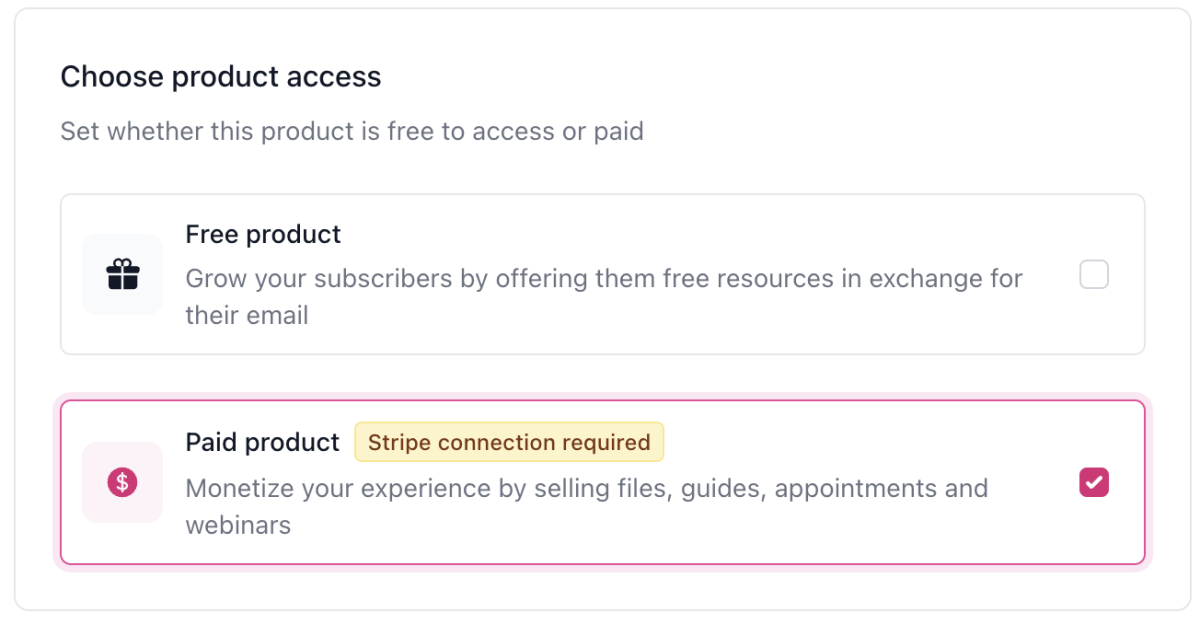
Beyond full paid subscriptions, beehiiv lets you gate individual pieces of content, like a specific deep-dive, a resource library, and a weekly briefing.
You can mix free and premium content within the same newsletter, which is a more flexible model than the free/paid-only mode.
Should you get beehiiv?
Let's cut to the scenarios, because the answer isn't the same for everyone.
If you're just starting out — yes
beehiiv's free plan is one of the most generous in the category: up to 2,500 subscribers, your own website, and the core newsletter features with zero monthly cost.
You won't need to think about HTML, you won't hit a feature wall immediately, and when you're ready to grow into advanced features, they're right there waiting, no platform switch required.
If you have a growing newsletter and you're considering switching:
It depends on what you're optimizing for.
Monetize more easily without extra fees? Yes — move to beehiiv. The Ad Network and Boosts give you revenue streams Substack doesn't have.
Currently running multiple tools and paying for them separately? Yes — beehiiv unites newsletter, website, referrals, and paid subscriptions into one bill that, at scale, is almost certainly cheaper.
A larger media company that needs enterprise-level analytics, abandoned cart tracking, or deep CRM integration? No. beehiiv isn't built for that, and it doesn't pretend to be. Look at Klaviyo or ActiveCampaign instead.
The single most underrated thing about beehiiv: you're not locked in until you make money. The free tier is real, functional, and “freemium” enough to run a legitimate newsletter without paying anything until you've proven the concept.
The all-in-one newsletter platform built for growth: built-in ads, referral engine, website, and the cleanest editor in the space.
With 5+ years in the creator, entertainment, and publishing spaces, Mia shortlists, reviews, and ranks leading tools that actually make your life easier.