.jpg)
Gumroad vs Payhip: Fees, commissions, and which makes you more money
Gumroad takes a flat cut of every sale, Payhip lets you buy your fee down to zero. Here's what that actually costs you and which platform is the best to sell digital products, ebooks, digital downloads, and more.
You've got a digital product ready to sell, and now you're stuck between the two online store solutions: Gumroad or Payhip.
Both promise the same thing, a store up in minutes, integration options, and no code required. But here's what nobody tells you: Payhip vs Gumroad isn't really a decision between features. A transaction fee decides if it’s worth it for you or not.
The platform that costs you less at $200/month revenue can cost you way more once you're doing $3,000/month. We ran the actual math so you don't have to guess. By the end of this Gumroad vs Payhip breakdown, you'll know exactly which one keeps more of your money in your pocket, why we wouldn’t recommend Gumroad over Payhip.
Gumroad vs Payhip: At a glance
If you need the TLDR, here’s everything you need to know to pick the right all-in-one tool that’s right for you.
| Top pick Payhip | Gumroad | |
|---|---|---|
| Starting cost | $0/mo, fee drops as you grow | $0/mo, fee never drops |
| Fees | 5% → 2% → 0% (Free/Plus/Pro) | 10% + $0.50 flat (30% via Discover) |
| Payment options | Stripe, PayPal, 10+ regional gateways | Cards, PayPal, Apple Pay, Google Pay only |
| Payout speed | Same day | 7-day hold, $100 minimum |
| Storefront customization | Full store builder, themes, blog CMS | Basic profile + product page |
| Tax handling | UK/EU VAT | Full Merchant of Record (all regions) |
What is Payhip
The easiest free-to-start platform to sell digital products, courses, memberships, and more.
Payhip is a storefront built for one job: selling digital products without a subscription hanging over your head. Ebooks, courses, coaching calls, memberships, template or even physical products all live on one free plan with zero features locked away.
You pay through a transaction fee instead of a monthly bill, and that fee drops the more you commit, from 5% on Free down to 0% if you upgrade to Pro. That’s the only difference you’ll see between tiers.
What is Gumroad
A flat-fee storefront for creators who want to sell a digital download today with zero setup.
Gumroad is the OG “link and sell” tool: paste a link, drop a price, and you're taking payments.
There's no plan to pick, just one flat setup with a 10% + $0.50 cut on every direct sale (jumps to 30% if a buyer finds you through Gumroad's own Discover marketplace) via Stripe or PayPal. It's the fastest way to get something selling today. The tradeoff shows up later, once you're doing real volume. We’ll go into that down below.
Payhip and Gumroad: Feature breakdown
Now, let’s get to the nitty gritty: checkout process, marketing tools on Gumroad and Payhip, which one is cheaper (to start and grow with), and, ultimately should you use Gumroad or Payhip.
We highlighted areas that will actually matter when you sell online, and picked one clear winner for each category.
Pricing & fees: The actual difference
This is the whole dilemma. No matter which platform you choose, strictly speaking, it won’t boost your sales. But the fees and taxes pile up, so it’s more up to how much it costs for you to sell on either Gumroad or Payhip.
Gumroad charges one flat rate no matter what: 10% + $0.50 on every direct sale, or 30% flat if the buyer finds you through Discover instead of your own link. That rate never moves, whether you're selling one ebook copy or ten thousand of them.

Payhip flips the model. Free plan starts at 5% per sale, no monthly cost. Upgrade to Plus ($29/month) and it drops to 2%. Go Pro ($99/month) and you pay 0% transaction fee, period.
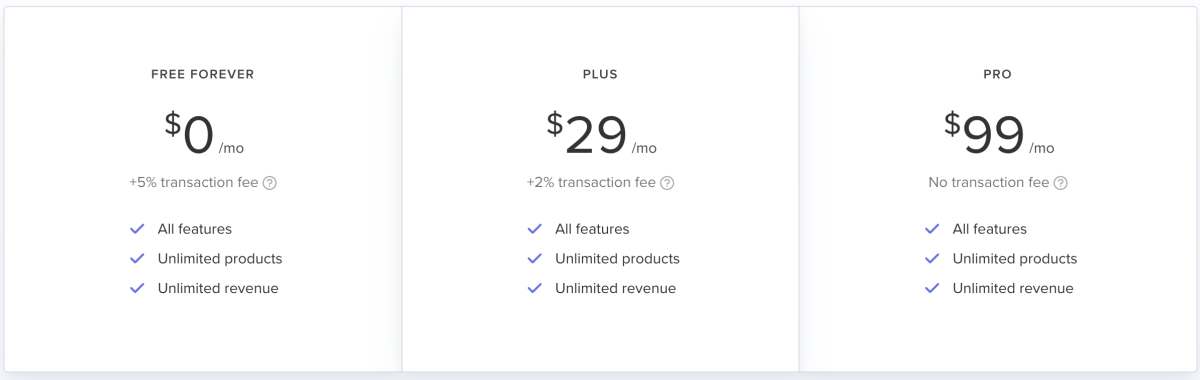
Both platforms add standard card processing (~2.9% + $0.30) on top, that part's unavoidable no matter who you pick.
The math shakes out like this: under about $500/month in sales, Payhip's free plan already beats Gumroad.
Past $967/month, Payhip Plus pulls ahead further.
Past roughly $3,500/month, Pro's $99 flat fee makes Gumroad's 10% look expensive fast.
✅ Winner: Payhip
Payhip’s fee shrinks as you grow. Gumroad always stays the same, percentage-wise. Gumroad only wins on fees at very low, inconsistent volume, where paying nothing beats paying anything.
Tax handling: VAT and sales tax
Gumroad became a full Merchant of Record in 2025, meaning it handles VAT, GST, and sales tax compliance globally on your behalf. One less spreadsheet to manage.
Payhip only automates VAT for UK and EU sales. Sell to the US, Canada, or Australia, and tax compliance is on you.
✅ Winner: Gumroad
If you sell internationally and don't want to think about tax law, this is the one category Gumroad wins.
Product types: What you can actually sell
Both platforms cover digital downloads and memberships/subscriptions.
Payhip adds dedicated tools for online courses (with quizzes and drip content), 1:1 coaching sessions, and physical product inventory management, all included on every plan, free or paid.

✅ Winner: Payhip
More product types are supported natively, and none of it's paywalled by plan.
Marketing tools
Payhip ships with built-in affiliate program management, coupon codes, email marketing, and cross-sell/upsell prompts on checkout, all free plans included.
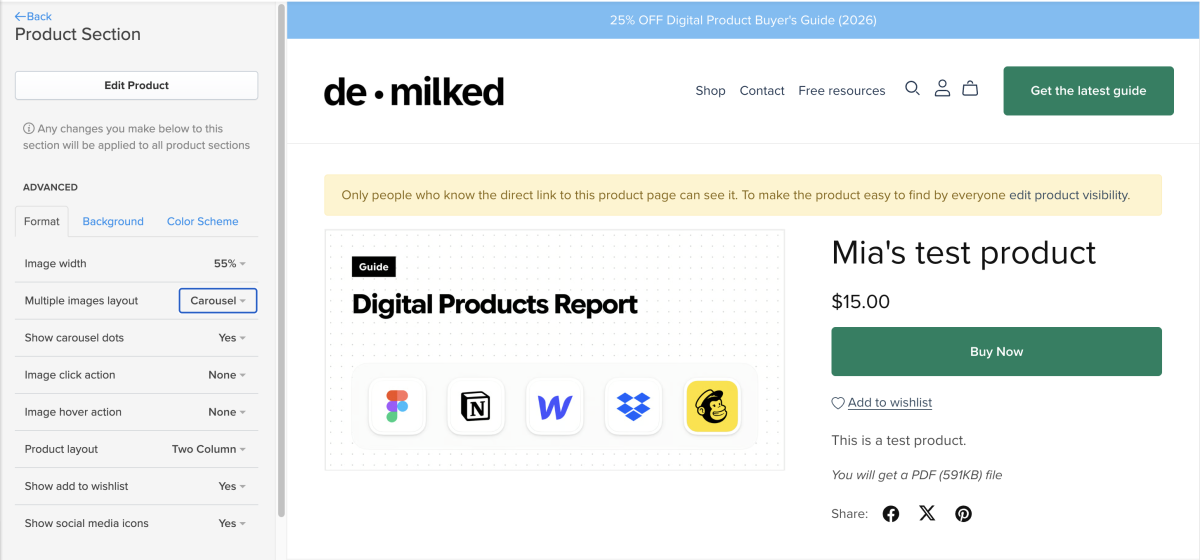
Payhip's extra options mean more decisions before you're live. Gumroad's bare-bones setup is close to plug-and-play: paste a link, add a price, done.
✅ Winner: Payhip for customization, Gumroad for how fast you're actually live
Pick based on whether you want a real storefront or just a sales link.
Payment methods: International sales & more
Gumroad accepts major credit and debit cards, PayPal, Apple Pay, and Google Pay. That covers most buyers, but it's a fixed list, no local payment methods, no alternative gateways, no way to add more.
Payhip connects to Stripe, PayPal, and a long list of regional gateways (Mollie, Square, Razorpay, PayTabs, FlutterWave, and more), which unlocks Apple Pay, Google Pay, and dozens of local payment methods depending on where your customer is buying from.
✅ Winner: Payhip
More international customers have access to your product and can choose their preferred payment method.
Marketplace: does built-in discovery actually help you sell
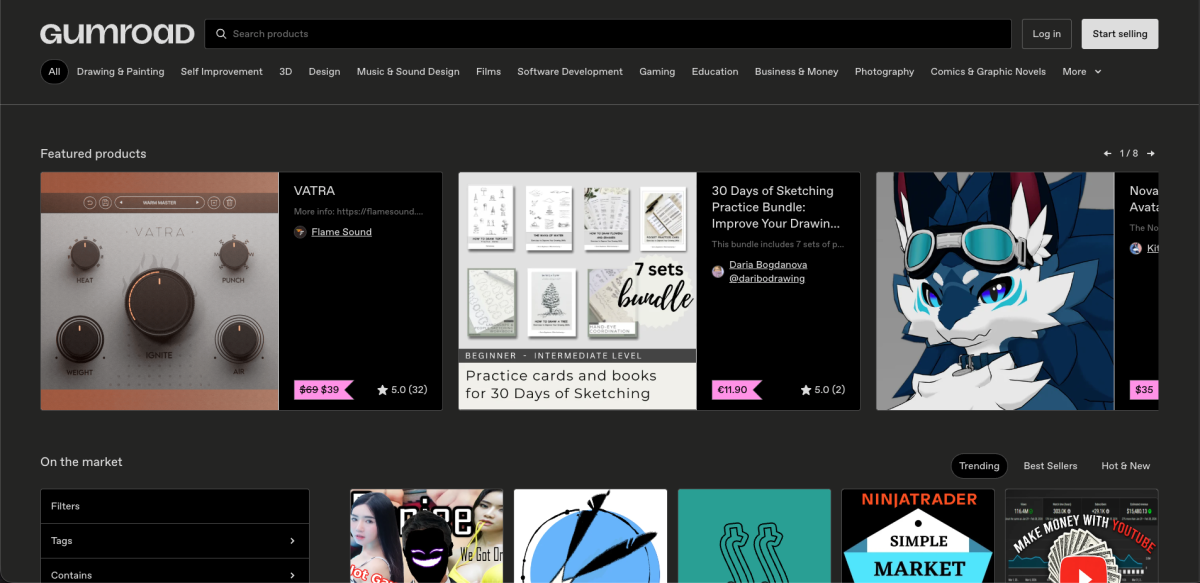
Gumroad has Discover, its own marketplace where new buyers can find your product without you driving the traffic. The catch: it costs 30% of the sale, triple the direct-sale rate, and plenty of sellers report barely any traffic actually comes through it. You're paying a steep premium for exposure that will likely not show up.
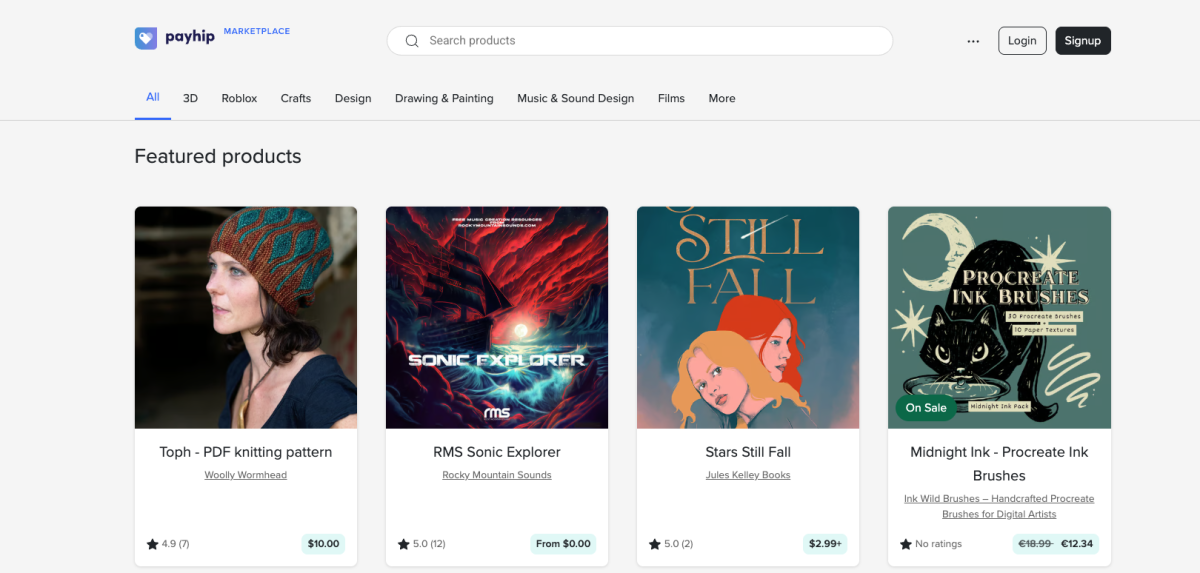
Payhip runs a smaller, more low-key marketplace. It won't get you found the way Etsy or Gumroad Discover claims to, but it also doesn't take a cut for existing. What you make from a sale is what you keep, no matter where the buyer found you.
✅ Winner: Payhip
In either case, Marketplace is not going to bring 100% of your sales; you still need to bring your own traffic to your store. But Payhip at least doesn't charge you extra.
Is Payhip actually a good Gumroad alternative?
Short answer: for most digital product sellers, yes. Payhip covers everything Gumroad does, digital downloads, memberships, and subscriptions, then adds courses, coaching, and physical products on top, all without gating any of it behind a higher plan. If you're specifically looking for a Gumroad alternative because the flat 10% fee is eating into your margins, Payhip's tiered structure is the more direct fix, especially if you plan on making more than $100/month.
Where it's not automatically the better pick: if all you want is a link and a price tag, with zero setup and zero decisions, Gumroad still wins on speed. Payhip's extra customization means a few more steps before you're live (but you can still get it live within an hour and never worry about the setup again).
So is Payhip a good alternative to Gumroad? If fees matter more to you than a five-minute setup, yes. If you just want something selling today with no fuss, Gumroad still has its place.
Payhip vs Gumroad: Which one should you choose
Here's the honest breakdown for each use case:
You're testing a single product and don't want to commit to anything → Gumroad. Paste a link, set a price, you're done. There’s no monthly plan to worry about.
You want an actual storefront, not just a link → Payhip. Its store builder gives you real customization: themes, branding, and a page that looks like a business, not a simple product drop.
You're planning to sell subscriptions or recurring memberships → both platforms support it, but Payhip offers more billing flexibility (custom intervals, multiple tiers) without pushing you to a higher plan to unlock it.
You care about which payment option shows up at checkout → Payhip. More gateways means more ways for a subscriber to actually pay, not just PayPal or a card.
You're comparing whether Payhip offers more for the price → it does. Same features whether you're on the free plan or Pro; Gumroad works the same way at every volume, but the fee never drops.
You're deciding whether to choose Payhip over Gumroad specifically for cost → run your own numbers, but past roughly $500/month in sales, most creators find fees are higher on Gumroad than on Payhip's paid tiers.
If you're still using Payhip to test the waters and haven't decided, try Payhip's free plan first, it costs nothing until you actually sell something, so there's no real reason not to compare Payhip against Gumroad hands-on before picking either one.
FAQ
What payment processor does Payhip use, PayPal or Stripe?
Payhip connects to both Stripe and PayPal directly, plus regional gateways like Mollie, Square, and Razorpay depending on your country. You're not locked into just PayPal or Stripe, you can offer both, or swap based on where your customers are.
Does Gumroad accept PayPal and Stripe?
Gumroad processes card payments and PayPal, but doesn't give you a choice of underlying processor the way Payhip does. It's simpler, but with PayPal and Stripe both wired in, Payhip gives customers more ways to pay at checkout.
How much is the fee per sale on Payhip vs Gumroad?
Payhip's fee on each sale starts at 5% on the free plan, drops to 2% on Plus, and hits 0% on Pro. Gumroad charges a flat 10% + $0.30 per transaction on top of the underlying $0.30 per transaction card processing fee, no matter how much you sell.
Can I sell digital products and memberships on the same account?
Yes, on both platforms. Payhip supports digital products and memberships, courses, coaching, and physical products all under one account, with no feature locked behind a higher plan.
Does Payhip have email marketing tools?
Yes, Payhip includes a basic email tool for building an email list and messaging past customers directly, without needing a separate email marketing tool subscription. It's not a full email marketing platform like Kit or beehiiv, but it covers basic outreach to existing buyers.
Is Payhip good for ecommerce beyond digital downloads?
Yes. Payhip functions as a full ecommerce setup: physical products, inventory tracking, and checkout, not just a download delivery tool.
With 5+ years in the creator, entertainment, and publishing spaces, Mia shortlists, reviews, and ranks leading tools that actually make your life easier.