Simple Visualizations Show How COVID-19 Spreads Indoors And How We Can Avoid It
Recently, Spanish newspaper El País released a few helpful visualizations showing how COVID-19 spreads through the air, and they will help you understand the importance of wearing face masks.
Spanish newspaper El País released a few helpful visualizations showing how coronavirus particles spread indoors
Image credits: elpaisinenglish One of the visualizations showed six people sitting in an unventilated room for four hours. Even with all of them socially distancing and wearing masks, after spending all that time speaking loudly, 5 out of 6 people will get infected. However, the risk drops significantly if the room is ventilated and the gathering only lasts 2 hours.[1/7] The coronavirus is spread through the air, especially in indoor spaces, and scientists now openly acknowledge the role played by aerosols in the pandemic. EL PAÍS recreated three common settings to see how contagion works, and above all how to prevent it ? pic.twitter.com/72g6IEDSkb
— El País English Edition (@elpaisinenglish) October 28, 2020
The first setting showed people gathered in a living room
Image credits: elpaisinenglish[2/7] The first setting is a gathering of six people inside a living room, where one of the individuals is infected. Regardless of the distance between them, if they are not wearing face masks and the space is not ventilated, everyone will be infected within four hours pic.twitter.com/exjDIRuWfh
— El País English Edition (@elpaisinenglish) October 28, 2020
The second one showed how the virus spreads inside a bar
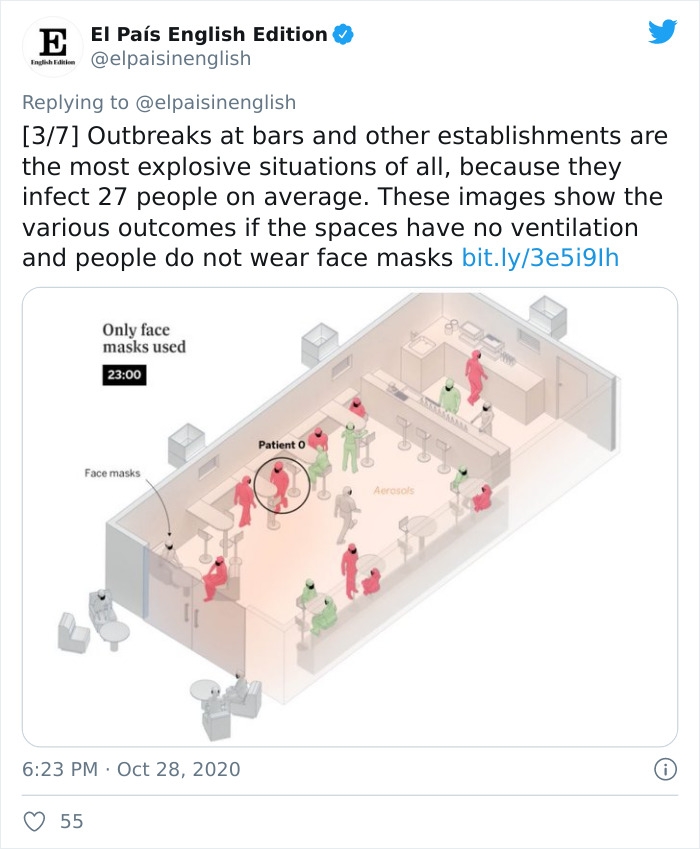 Image credits: elpaisinenglish
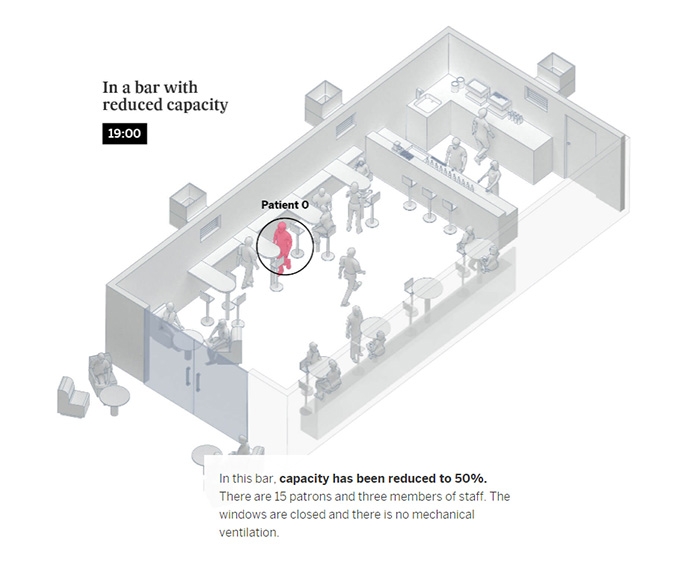 Image credits: El País
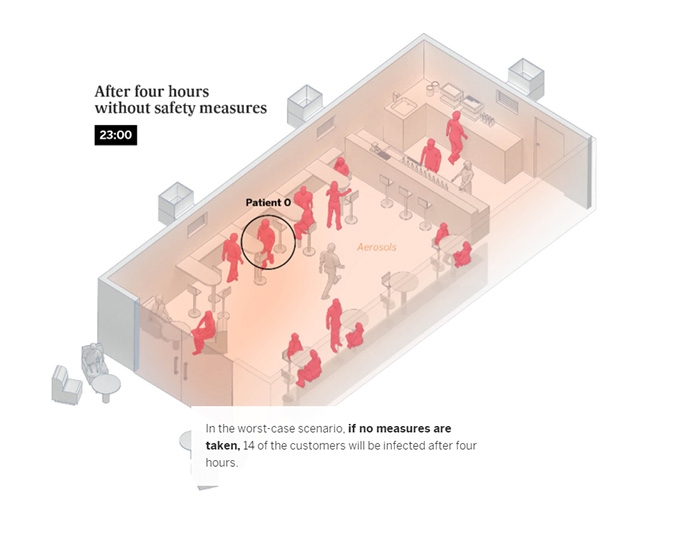 Image credits: El País
The newspaper explained that if the windows are closed and there's no mechanical ventilation, 14 out of 15 patrons will get infected within 4 hours.
Image credits: El País
The newspaper explained that if the windows are closed and there's no mechanical ventilation, 14 out of 15 patrons will get infected within 4 hours.
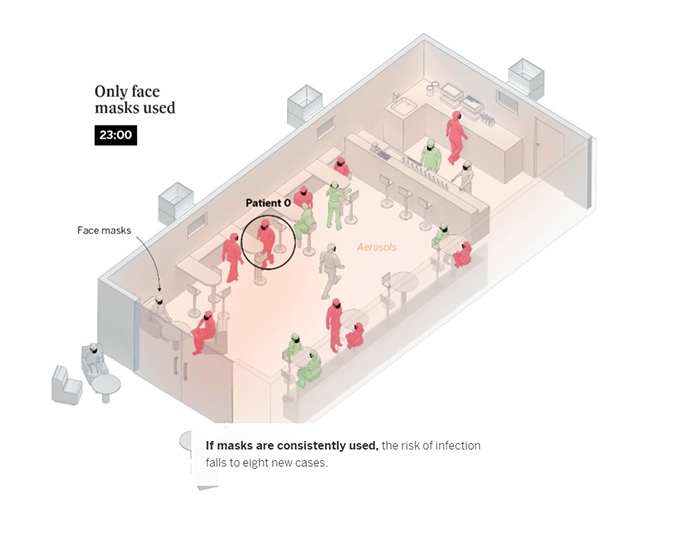 Image credits: El País
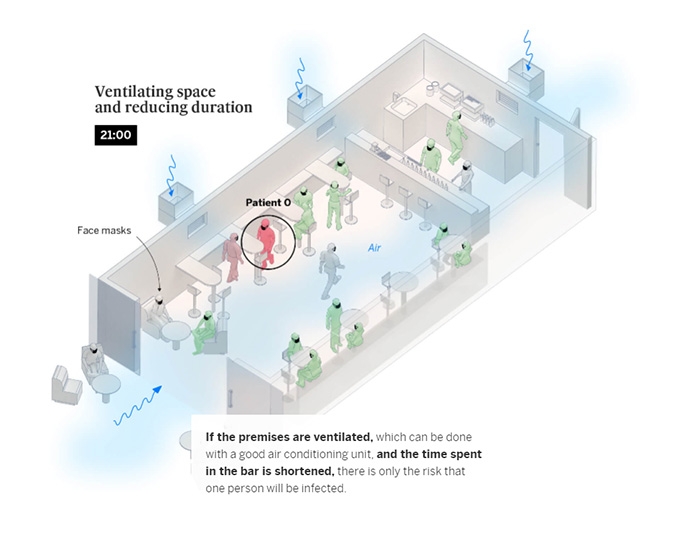 Image credits: El País
However, if masks are worn all the time, sufficient ventilation is provided, and the time is spent at the bar is shortened, the number drops to just one case.
Image credits: El País
However, if masks are worn all the time, sufficient ventilation is provided, and the time is spent at the bar is shortened, the number drops to just one case.
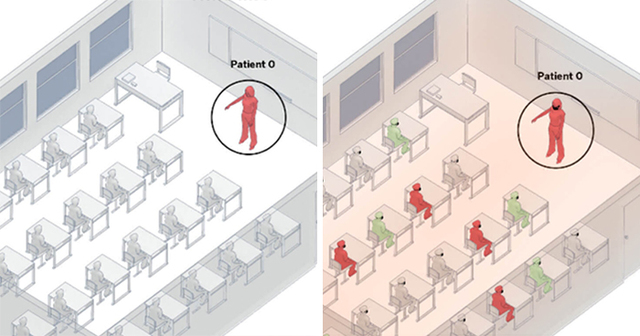
The newspaper also showed how it spreads in classrooms
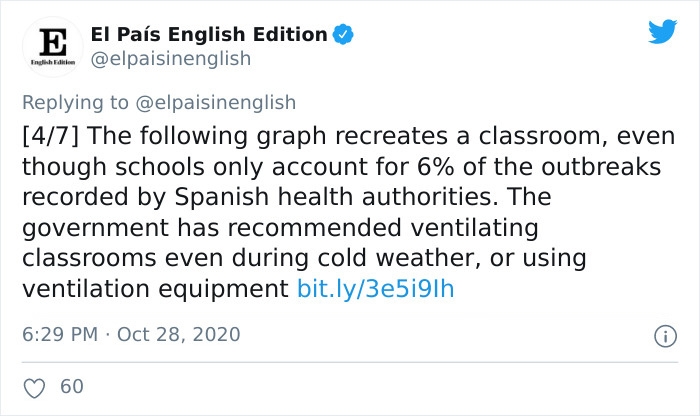 Image credits: elpaisinenglish
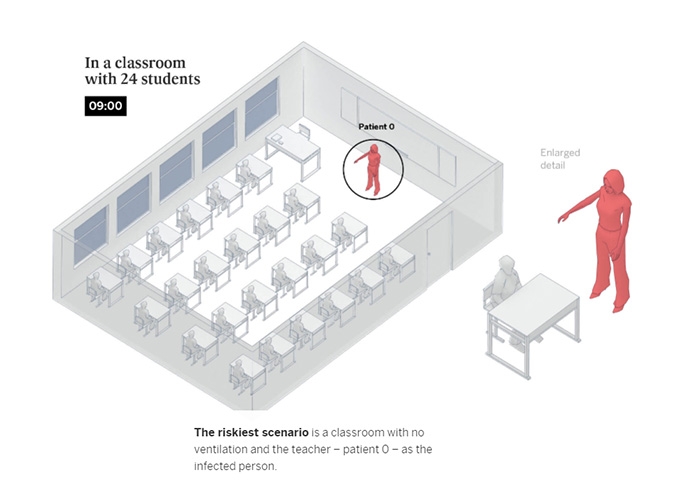 Image credits: El País
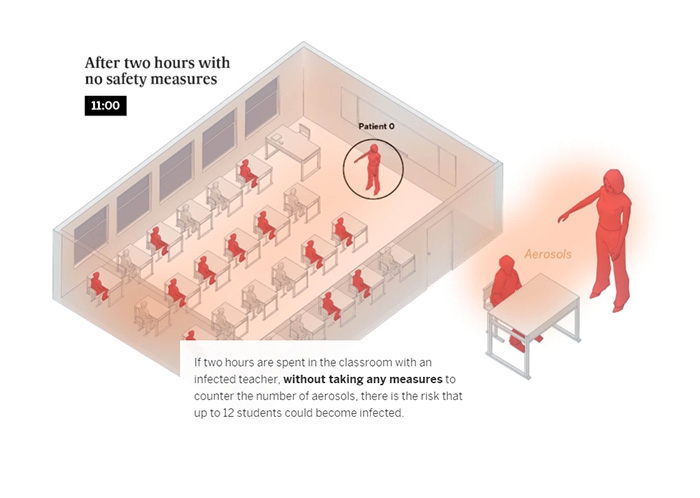 Image credits: El País
If the teacher is infected and the classroom is not ventilated, up to 12 students could be infected within two hours.
Image credits: El País
If the teacher is infected and the classroom is not ventilated, up to 12 students could be infected within two hours.
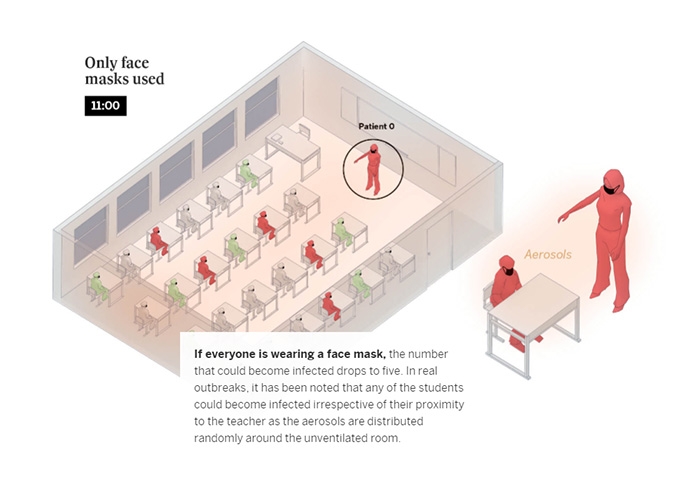 Image credits: El País
If everyone wears a face mask, the number drops to just five cases. "In real outbreaks, it has been noted that any of the students could become infected irrespective of their proximity to the teacher as the aerosols are distributed randomly around the unventilated room," explained El País.
Image credits: El País
If everyone wears a face mask, the number drops to just five cases. "In real outbreaks, it has been noted that any of the students could become infected irrespective of their proximity to the teacher as the aerosols are distributed randomly around the unventilated room," explained El País.
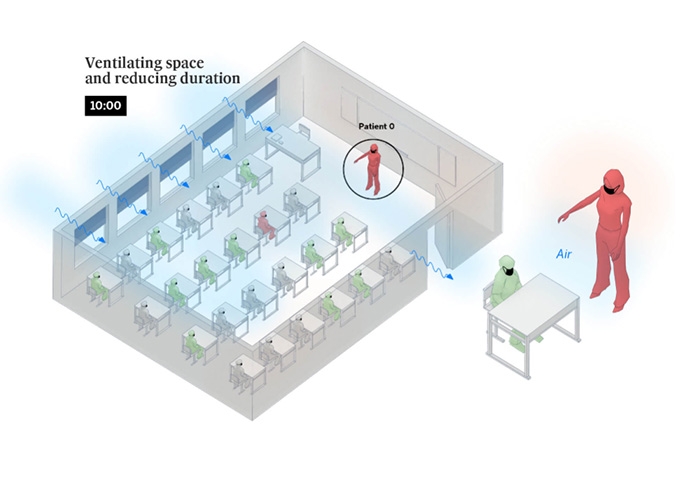 Image credits: El País
El País also analyzed how particles spread when talking, shouting, and being silent
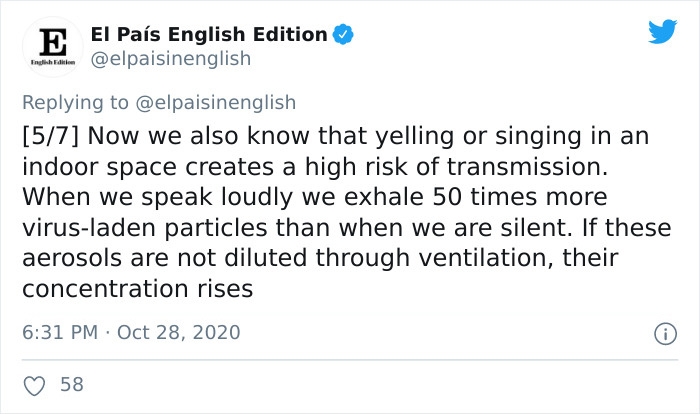 Image credits: elpaisinenglish
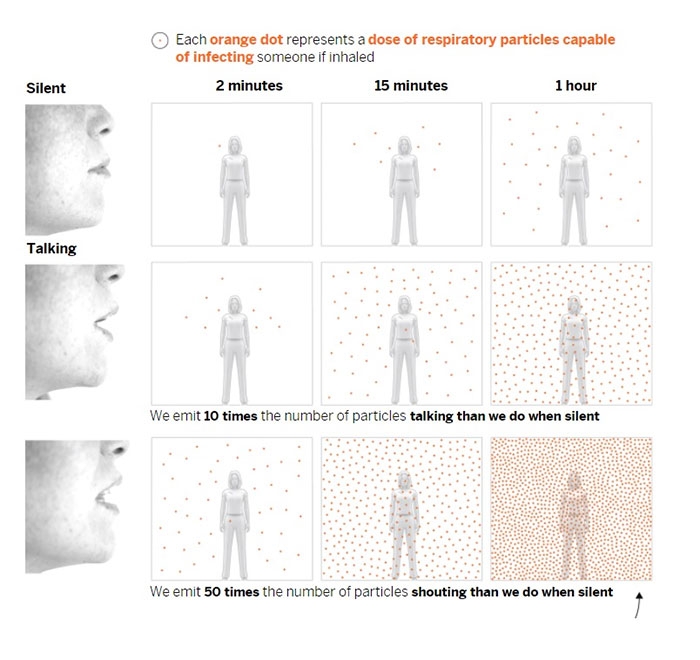 Image credits: El País
"The Estimator assumes that people practice the two-meter social distancing rule and that no one is immune," explained the experts that made the study. "Our calculation is based on a default value for the general population, which includes a wide range of masks (surgical and cloth), and a loud voice, which increases the amount of aerosols expelled."
Image credits: El País
"The Estimator assumes that people practice the two-meter social distancing rule and that no one is immune," explained the experts that made the study. "Our calculation is based on a default value for the general population, which includes a wide range of masks (surgical and cloth), and a loud voice, which increases the amount of aerosols expelled."With 5+ years in the creator, entertainment, and publishing spaces, Demilked shortlists, reviews, and ranks leading tools that actually make your life easier.