.jpg)
Kajabi vs Teachable vs Thinkific: Best platforms to sell online courses (2026)
Teachable, Kajabi, and Thinkific are the top 3 tools most creators pick to create and sell online courses. We put them through the same testing process to find a winner, and ideal use case for each.
We tested Kajabi, Teachable, and Thinkfic by building the same self-paced course: same content, setup, and pricing. In this article, we’ll show which one will help you sell a course faster, which one costs the least once you factor in transaction fees, and which one online course creators outgrow first.
If you're past the “should I sell courses" stage and ready to create and sell online, we’ll help you pick the best course builder platform for you (and get you an exclusive deal for your pick).
Kajabi vs Teachable vs Thinkific: At a glance
If you just want the short answer: here's how the three online course platforms stack up against each other.
| Top pick Teachable | Thikific | Kajabi | |
|---|---|---|---|
| Best for | Selling fast, with automation built in from day one | Growing, branding control | Running your whole online business in one tool |
| Starting price | ~$39-59/mo (billed annually) *10% OFF with code MAGIC10 | ~$36-49/mo (billed annually) | ~$149-179/mo (billed annually) |
| Free plan | No (trial only) *30-day trial offer for our readers | No (trial only) | No (trial only) |
| Transaction fees | Up to 5-7.5% on entry plans | 0% on all paid plans | 0% on Kajabi Payments |
| Built-in email marketing | No — needs Zapier + third party | No — needs Zapier + third party | Yes, full automation suite |
| Website/funnel builder | Sales pages only | Sales pages only | Yes, full site builder |
| Course structure | Limited on entry plan | Unlimited on all paid plans | Unlimited on all paid plans |
| Mobile app for students | Yes | Add-on | Yes |
| Demilked score | 9.1 / 10 | 8.9 / 10 | 8.7 / 10 |
The best online course platforms for creators, compared
Here's what building on each online course platform actually feels like once you're past the signup.
Best online course platform for beginners: Teachable
The fastest online course platform to launch and scale, with built-in tax handling, automation, and AI tools in the Starter plan.
Verdict: The fastest way to sell your courses from idea to first sale, with enough customization and automation (tax handling, payouts, upsells) to avoid 3+ more extra tools. Overall, the best online course creation toolkit in 2026.
Teachable supports different types of sales, not just pre-recorded courses online, and automates a lot of the operational work so growth doesn't mean more hours. Learning experience is customizable to the max, and even the Starter plan gets you built-in AI creation and translation tools.
Don’t want to commit straight away? 🤔 We got an extended 30-day trial for our readers.
Test the platform for an entire month for free, instead of just 7 days.
➡️ Claim here
What we liked
Create courses with drag-and-drop online course builder
Built-in AI tools + automatic video subtitles in 70+ languages
U.S. sales tax, EU/UK VAT, and 45+ countries covered
Daily payouts, no reserve held back
35+ local payment methods and localized checkout
Assisted migration if you're moving from another platform
What we disliked
5-7.5% transaction fees on entry plans eat into margin fast
No native email marketing
Branding and affiliate tools locked behind paid tiers
Our experience with Teachable
Although Teachable now supports coaching, digital downloads, and even memberships, its strongest suit is still online course software.
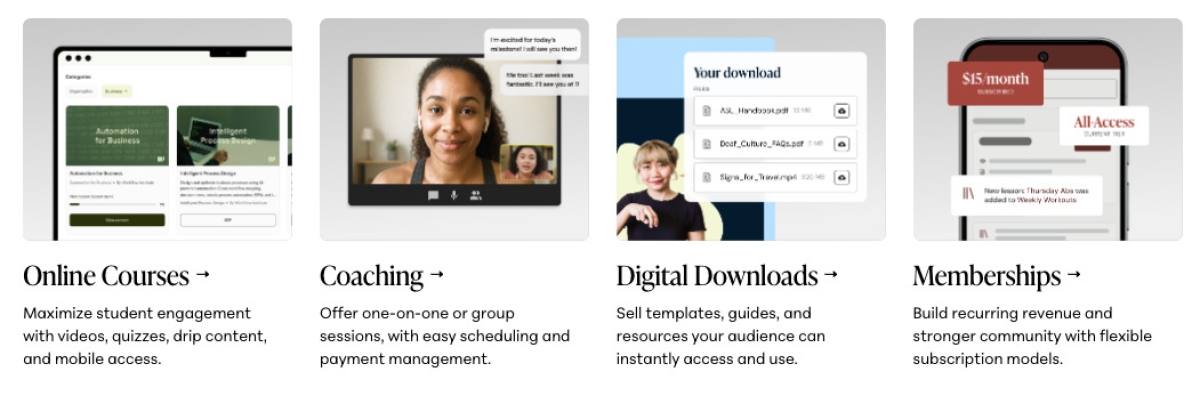
The course builder itself is the strongest part of the experience: customize student experience, drag lessons into sections, preview as a student would see it, and publish.
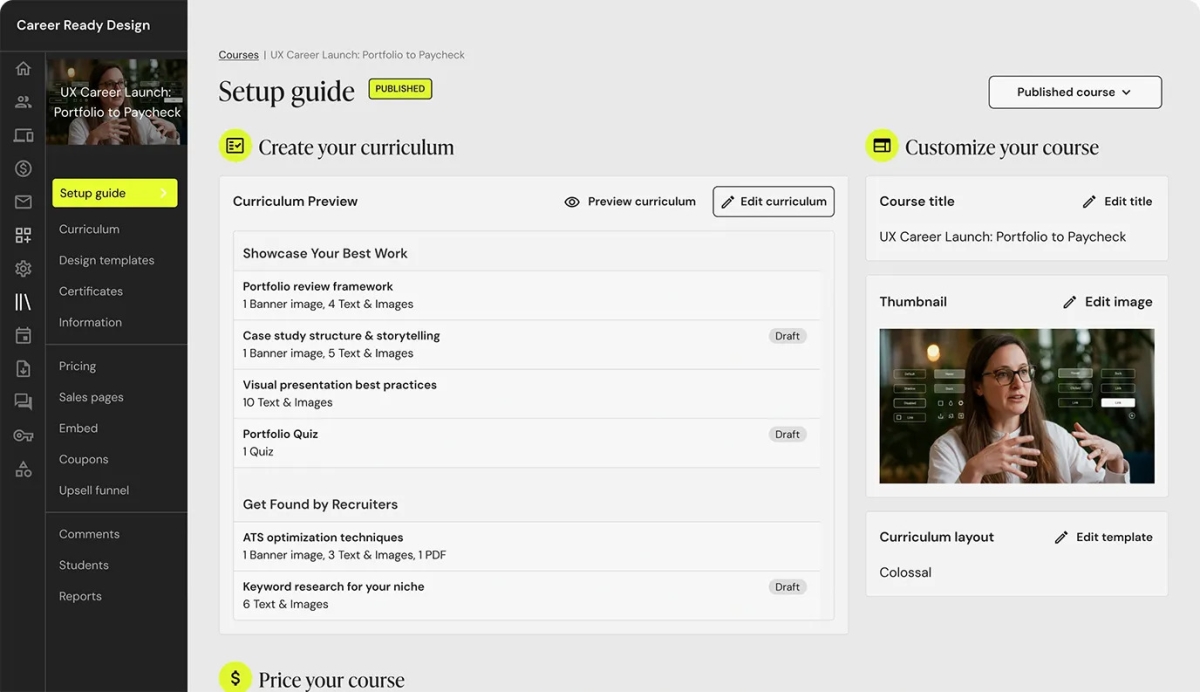
The course builder handles drip content and customize options cleanly. Cross-promotional tools surface other digital downloads or courses to existing students without manual email work. Automated upsells and order bumps live directly in the dashboard, so it’s easy to turn a single course into multiple sources of income. Simple analytics help you track course sales.
Coupons, flexible payment plans, and support for Paypal, with 35+ local payment methods, mean international students rarely hit a checkout wall.
Tax handling is a great bonus. Teachable automatically collects and remits sales tax and VAT across 45+ countries. With same-day payouts, it’s a full revenue engine. Just take a look at the full list of features:
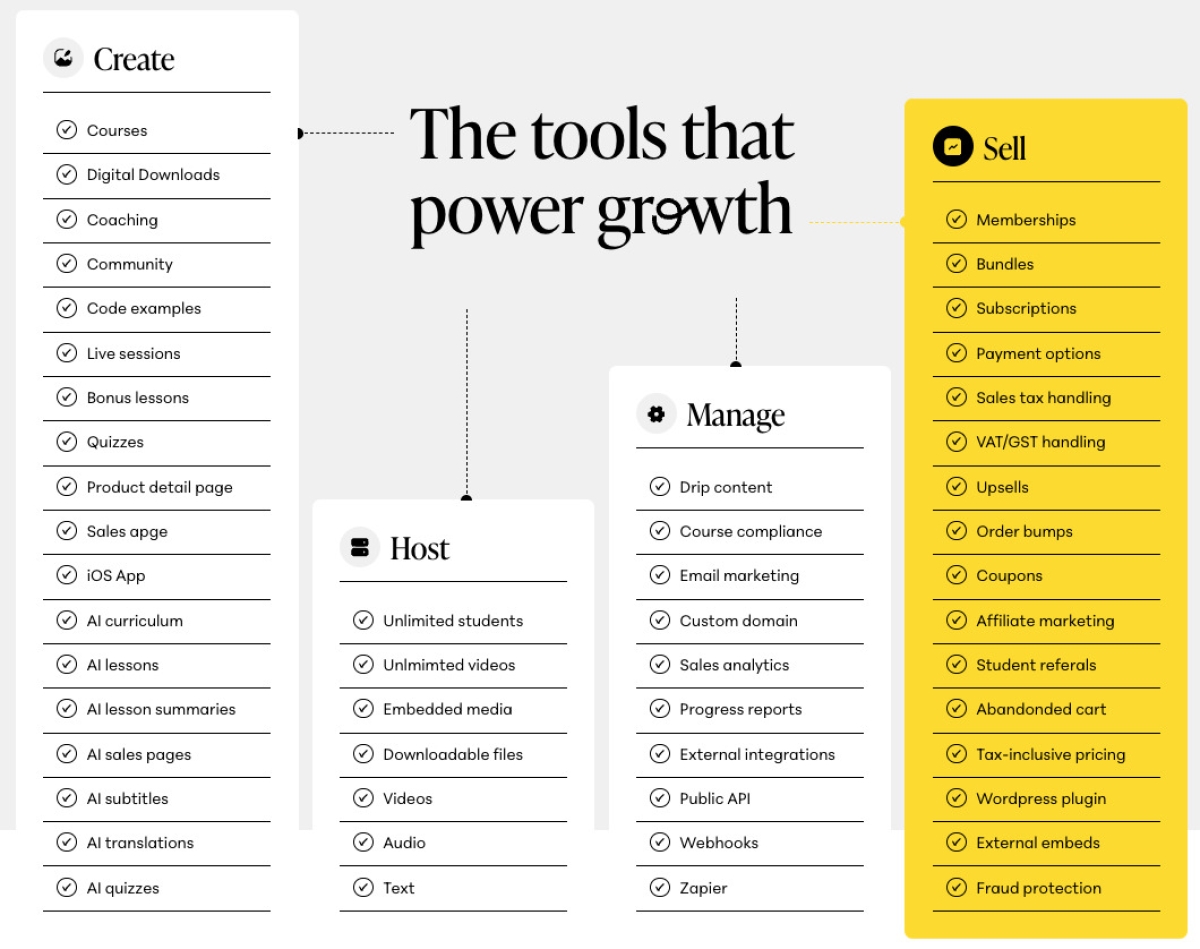
Students get offline access through the top-rated iOS and Android apps, and referral tools turn your existing student base into a marketing channel.
Teachable pricing
We got our readers an exclusive discount: 10% OFF on your first year.
➡️ How to claim
Teachable Starter costs $39/mo (billed monthly) or $29/mo (billed annually). This will get you 5 courses, 7.5% transaction fee, and up to 100 active students. This plan is perfect for beginners who want to deal with minimal setup headaches.
But once you start expanding (100-1000 active students), it makes sense to upgrade to Builder, at $89/mo (billed monthly) or $69/mo (billed annually). It’s quite a jump in price, but it gets you a 0% transaction fee, so the math makes sense.
Once online course business starts becoming your only source of income, go for Growth at $189/mo (billed monthly) or $139/mo (billed annually). At this point, you’ll also get to remove Teachable branding, unlock course certificates, and can sell 50 individual courses at a time. Extra online course tools like custom admin permissions and free subtitles and translations also come in handy for scaling course sales.
Note: Paypal and other payment processing fees are not factored into the price. This is true for all online course creation software.
Best learning management system for growing: Thinkific
A learning management system built for scale, perfect for both solopreneurs and institutions.
Verdict: Thinkific is a learning management system built not just for subject-matter experts and solopreneurs, but also big institutions, academies, and products, with customization and compliance to match.
You will (likely) never outgrow Thinkific, but as a starting point for a complete beginner trying to monetize their knowledge, this might be a bit overwhelming.
What we liked
Easy to rebuild and restructure courses after launch
Handles on-demand and live courses in one system
Strong learner analytics for all plans
AI course prompts and mobile app
Perfect for growing — you won’t hit a ceiling
Sales, marketing, and AI features in one place
What we disliked
Pricy compared to competitors
Limited native email marketing integrations
Customization capped on lower-tier plans
Our experience with Thinkific
The course builder is flexible on format: text, video, downloads, PDFs, audio, and presentations, all supported natively. You can go for either self-paced courses or scheduled and cohort formats in the same system. That’s great for both a solopreneur’s evergreen content packaged as a course, and a highly-structured academy-like experience.
Live Lessons via Zoom cover real-time teaching, and completion certificates go out automatically once a learner finishes.
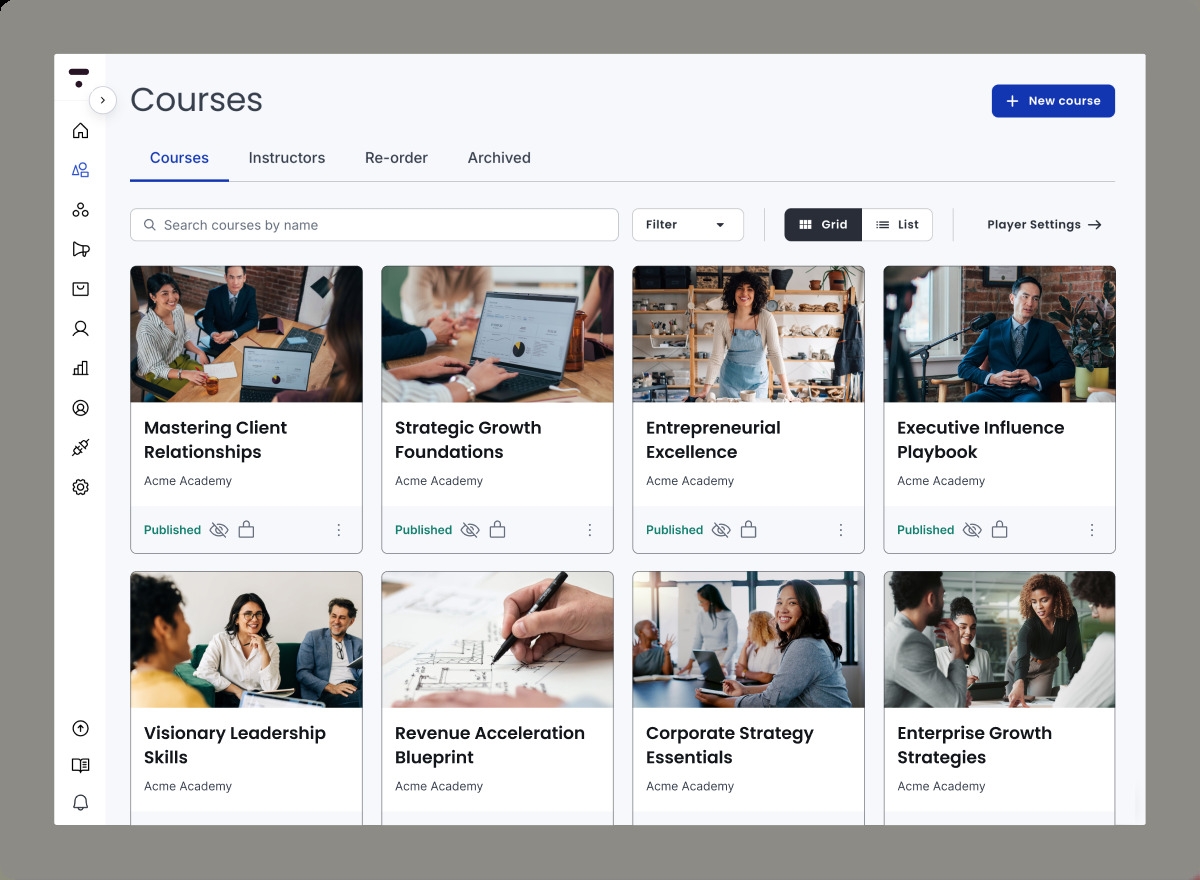
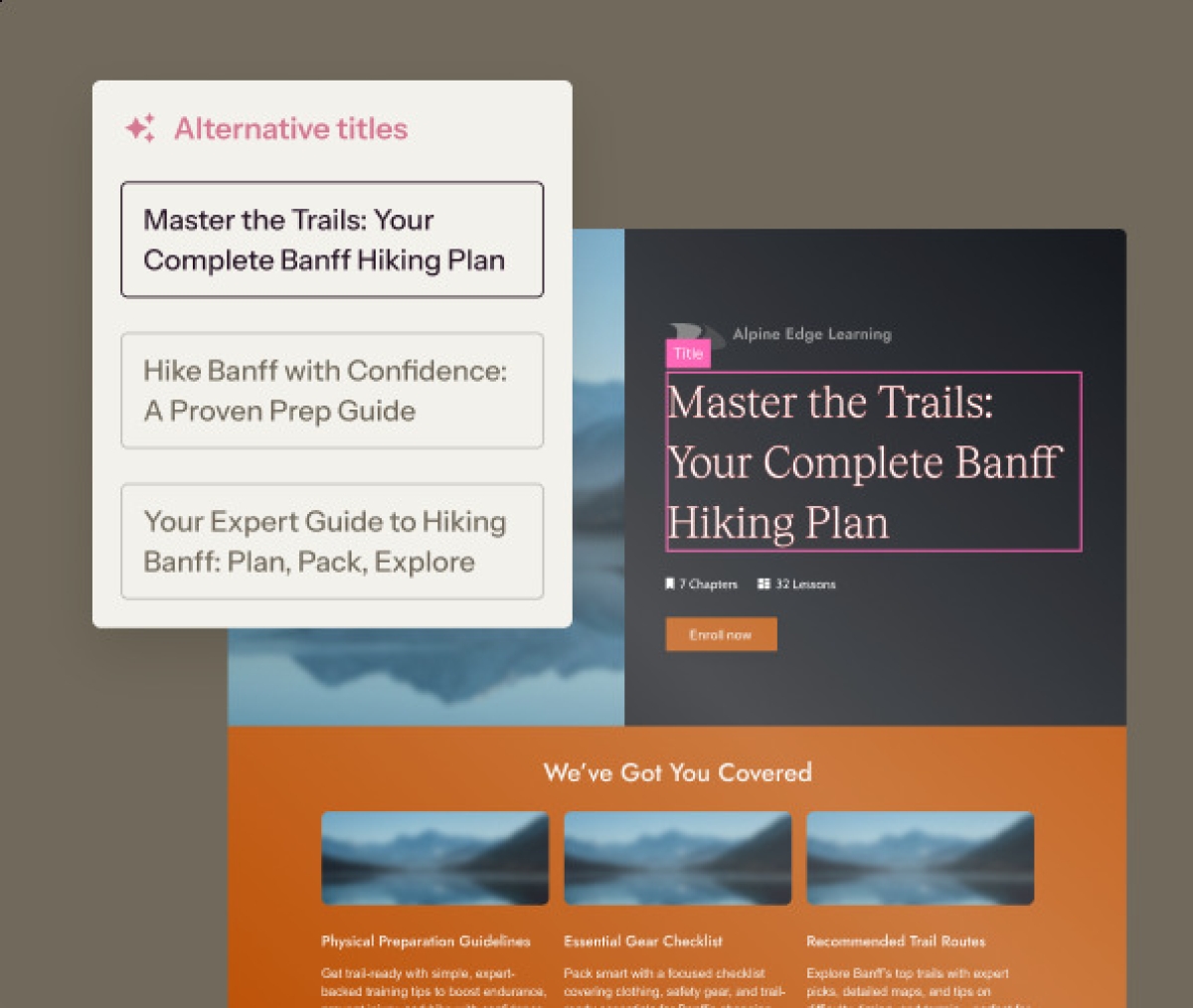
The built-in AI teaching assistant (Thinker) answers learner questions directly from your own course content, which reduces support load without adding a separate tool to the stack.
On the creation side, the AI course outline generator and AI landing page builder cut real setup time, and the bulk content importer lets you bring existing material in rather than rebuilding lesson by lesson.
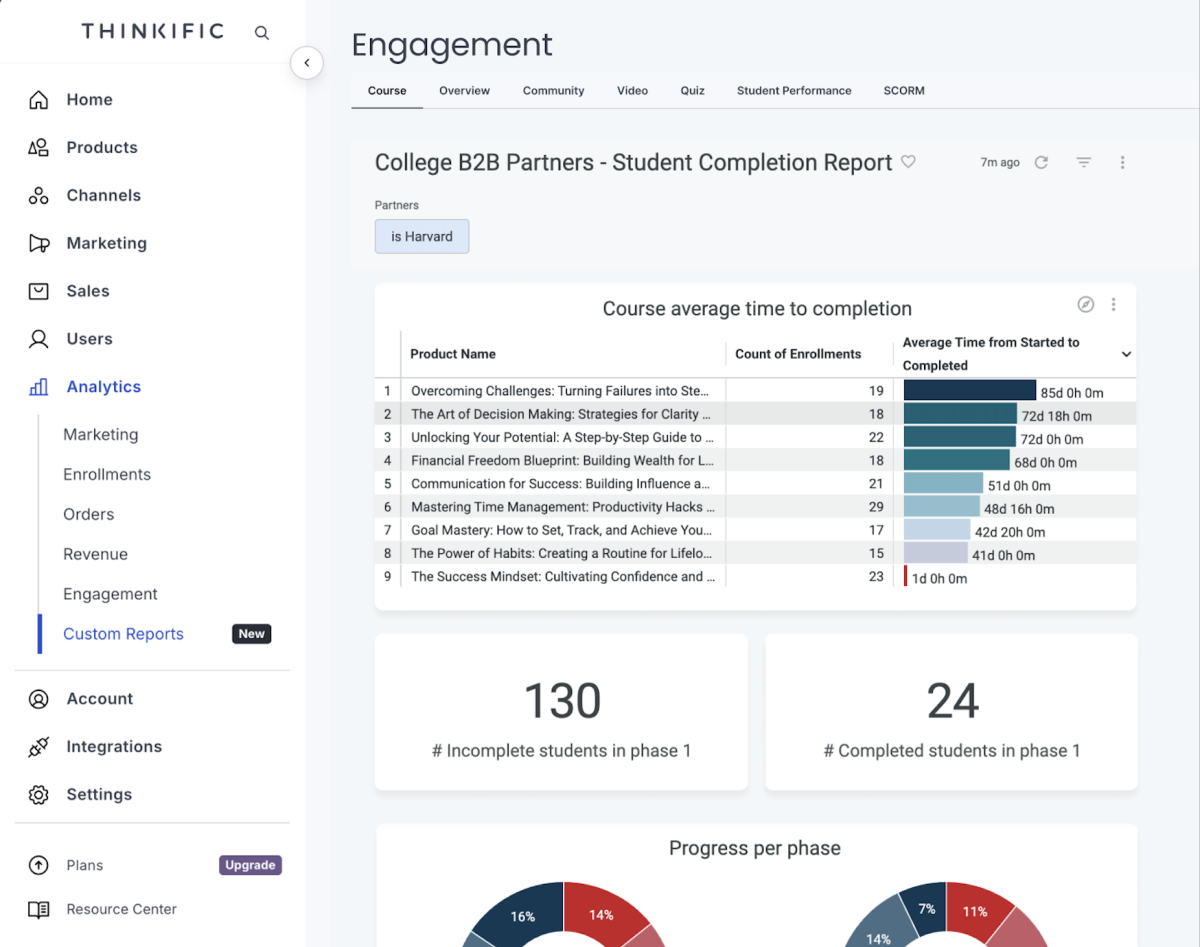
Thinkific Analytics tracks engagement, revenue, and performance in one dashboard, whether you're one expert checking completion rates or a company tracking training compliance across departments.
Communities connect directly to courses too, letting learners move between structured lessons and discussion without leaving the platform.
Teachable pricing
Thinkific Basic costs $54/mo (billed monthly) or $40/mo (billed annually). This gets you unlimited courses, 1 community, up to 5 digital products, and eCommerce essentials like checkout, order bumps, and coupon codes. Solid for someone publishing their first course and building an audience from scratch.
Our pick is Start, at $109/mo (billed monthly) or $82/mo (billed annually). It's a real jump from Basic, but it unlocks the features that actually let you sell, not just publish: live cohorts and coaching, completion certificates, assignments and quizzes, bundles and payment plans, and memberships for recurring revenue. It's the first plan with full commerce tools included.
Once you're running a company-scale operation or managing bulk B2B sales, Grow at $219/mo (billed monthly) or $164/mo (billed annually) adds branding removal, 3 communities, group orders for company licenses, invoicing, and phone support. This is the tier academies and larger businesses land on.
Best for all-in-one digital product and online course platform: Kajabi
The all-in-one platform for creators running a full business, not just a course.
Verdict: Kajabi is an all-rounder built to run your entire business, not just deliver a course. But narrowed down to courses specifically, it's built around structured, guided learning that's designed to actually get finished, not just watched once and abandoned.
If you already have an ecosystem of many digital products (courses, downloadables, etc.), Kajabi is a top-tier choice for monetizing all your assets in one place, handling sales and marketing. But if you’re just starting out, this is overkill that will likely scare you away with too many features, options, and customization.
What we liked
Reduces tool-stacking: courses, email marketing, payments, and community all live in one system
Course builder and templates are clean and straightforward
Checkout flow feels smooth and professional
Strong support: responsive chat, extensive video tutorials, and an active user community
What we disliked
Priced higher than Teachable or Thinkific
Steep learning curve early on , confusing with too many tabs and options
No autosave in places , manual saving still required
Email template sections feel limited
Our experience with Kajabi
Kajabi supports two course formats out of the box: Evergreen Courses, available the moment a student purchases, and Cohort Courses, scheduled groups that move through material together with live video sessions.
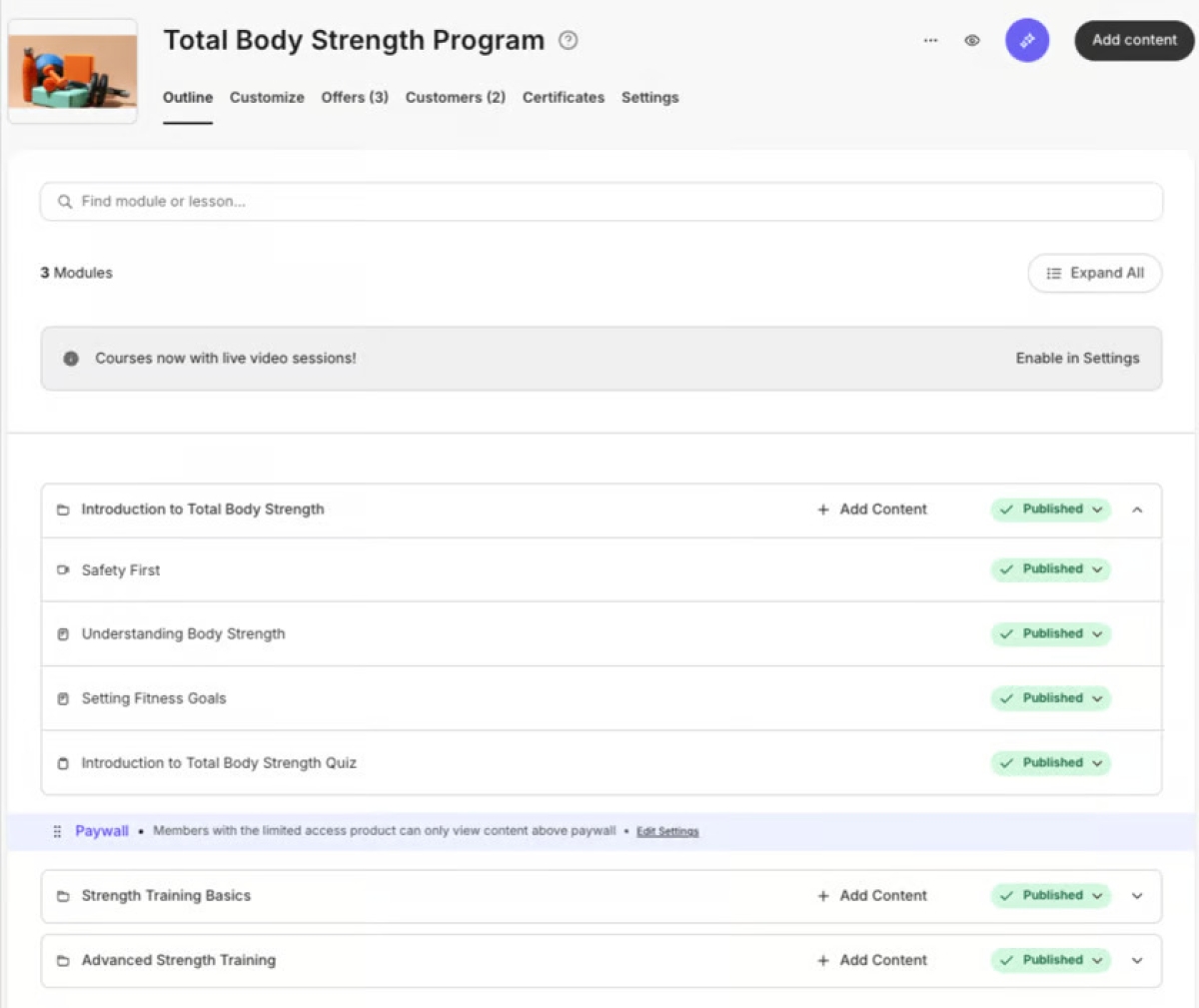
The guided-learning tools are where Kajabi earns its best elearning reputation: drip content and scheduled releases, progress tracking with completion insights, assessments and quizzes placed anywhere in the course curriculum, and modular organization. There's no cap on lessons, so growing a curriculum over time doesn't hit a ceiling.
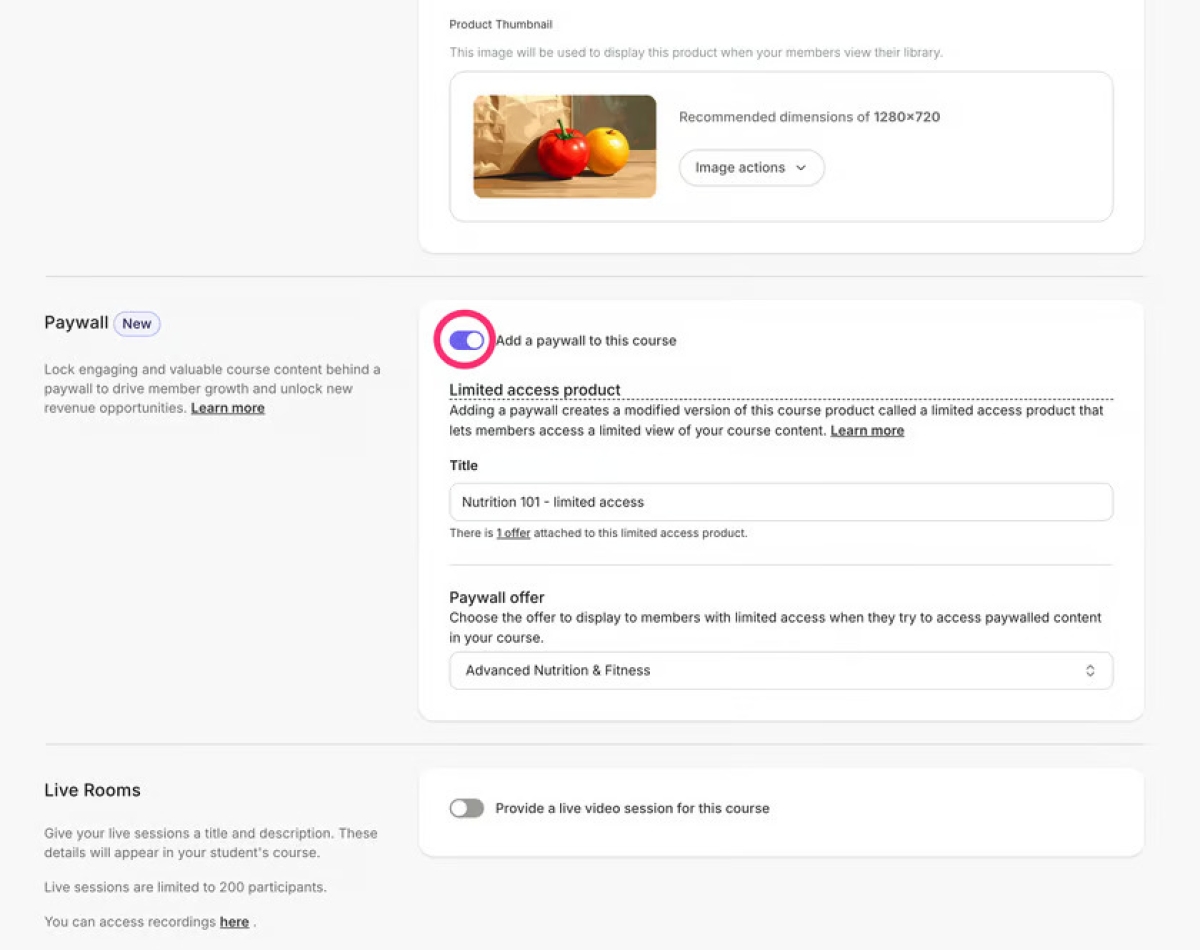
A few smaller details matter more than they look: the Paywall feature lets you offer a free preview before the purchase wall kicks in, useful for converting undecided leads.
Course certificates are sent automatically once a student finishes, a small touch that goes a long way toward what makes your course feel like a real credential rather than a video playlist. Course content is protected by default, videos are view-only inside the platform and can't be downloaded unless you explicitly allow it.
Kajabi pricing
Kajabi Basic costs $179/mo (billed monthly) or $143/mo (billed annually). This gets you 1 website, 5 products, and up to 2,500 contacts, enough for a small catalog: a flagship course, maybe a couple of digital downloads.
All core tools (courses, email marketing, funnels, checkout) are included from this tier up, Kajabi doesn't gate features behind higher plans, it gates capacity.
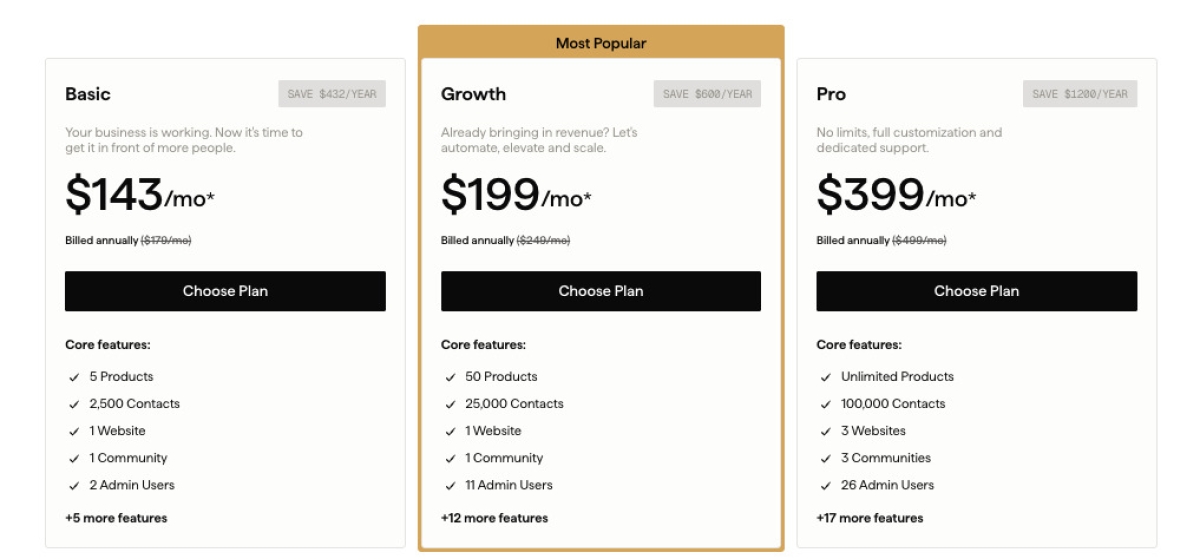
Once your contact list or product catalog outgrows Basic, Growth at roughly $199/mo (billed annually) unlocks more contacts, more admin users, and deeper automation, and is generally the tier where creators with an active email list actually land.
Once you're running a full team or need branded mobile, API access, or a custom code editor, Pro sits at $499/mo (billed monthly) or $399/mo (billed annually). This is built for agencies and established businesses, not solo creators just getting started.
What makes a good online course platform for creators?
How we test 👀
We build a real course on each one, not a demo account, so the pros and cons here come from IRL experience.
Every platform gets scored on our Demilked Trust Score: Integration (25%), ROI (25%), Learning Curve (20%), Customisation (20%), and Price (10%).
Read more about our testing process here.
Not every online course platform is built the same way, and the differences matter more once you're actually running a business on top of one. Here's what separates the ones worth paying for from the ones you'll outgrow in six months.
Course structure and delivery. A good platform lets you build a real course curriculum, not just a folder of videos. That means modules, sequencing, drip content, and a course delivery experience that feels intentional to the student, not like they stumbled into a file directory.
Ownership of your course content. Your course content should be exportable. If a platform makes it hard to get your videos and materials out, that's a red flag before you've uploaded a single lesson, not after.
Engagement and completion tools. Course certificates, quizzes, and progress tracking aren't decoration, they're what gets students to finish what they paid for. Completion rates matter for testimonials, refund rates, and referrals.
Clarity on course topic and positioning. The platform itself won't fix a vague course topic or unclear promise, but a good one gives you the sales page tools to make that promise sharp before a visitor ever sees your curriculum.
Whether it's a real learning management system or just a video host. Some tools marketed as course platforms are closer to a glorified educational platform for hosting video than an actual learning management systems setup with structured progress tracking. Know which one you're buying before you commit a year of content to it.
Access to your course material long-term. Make sure exports, backups, and downloadable course material are actually possible, not just promised in a sales page FAQ.
Which one should you choose?
Skip the feature-by-feature rabbit hole and use this instead:
Teachable is the best online course platform for most creators, full stop. It launches fastest, and it's no longer just the stripped-down beginner tool: tax handling across 45+ countries, daily payouts, automated upsells, and AI creation tools all come built into the entry plan. For the vast majority of people reading this, Teachable is the right call and you can stop reading here.
Kajabi and Thinkific both do specific things better, but only if you're already past the point Teachable is built for:
Choose Kajabi instead if → you're running a full business around your expertise, not just selling a course. Email marketing, funnels, community, and a website builder replace three or four separate subscriptions. You'll pay a real premium and take on a steeper learning curve for that convenience.
Choose Thinkific instead if → you've scaled past a single creator into a team, academy, or company training program. Unlimited courses on every plan and SCORM support (on Plus) make it the right fit for institutional or compliance-driven training, use cases Teachable isn't built for.
Stick with Teachable if → you're not sure yet whether course creation is going to stick. It's the cheapest to launch and the easiest to walk away from if it doesn't work out, which matters more than any feature comparison at the early stage.
The honest bottom line: unless you specifically need Kajabi's all-in-one business infrastructure or Thinkific's institutional scale, Teachable wins. It does more than it used to, for less money, with less setup, and that combination is hard for the other two to beat.
FAQ
Is there a free online course platform for creators?
Not anymore among the big three. Kajabi, Teachable, and Thinkific all dropped their free tiers in 2026 and now offer trial periods instead. We got an extended 30-day trial for Thinkific for our readers. Test the platform for an entire month for free, instead of just 7 days: Claim here.
What's the difference between a learning management system and an online school?
A learning management system (LMS) is the software: video hosting, quizzes, progress tracking. An online school is what you build on top of it, your branding, your curriculum, your student community. Kajabi, Teachable, and Thinkific are all LMS platforms that let you build an online school; they're not schools themselves.
Are these the same as massive open online courses?
No. Massive open online courses (MOOCs) like the ones on Coursera or edX are typically free or low-cost, built for huge audiences, and run by institutions. Kajabi, Teachable, and Thinkific are built for individual creators selling their own paid courses at a smaller scale, with direct control over pricing and student relationships.
Should I use a course marketplace instead?
A course marketplace like Udemy gives you built-in discovery but takes a large revenue cut and controls your pricing. If you already have an audience or plan to build one, a standalone platform like the three here keeps more of the revenue and the student relationship in your hands.
Can I use these platforms for coaching sessions instead of pre-recorded courses?
Yes, all three support live elements. Kajabi and Thinkific both offer live session scheduling for coaching sessions or cohort-based teaching, not just self-paced video.
Do any of these platforms include AI course creation tools?
Kajabi has leaned hardest into AI course and content generation tools (outline generators, ad copy, sales page drafting). Teachable and Thinkific offer lighter AI assistance, mostly around quiz generation and lesson structuring.
Are Kajabi, Teachable, and Thinkific good for online training beyond just courses?
Yes. All three handle online training use cases like onboarding, certification programs, and internal team training, not just consumer-facing courses, though none are purpose-built enterprise LMS tools the way something like TalentLMS is.
With 5+ years in the creator, entertainment, and publishing spaces, Mia shortlists, reviews, and ranks leading tools that actually make your life easier.