
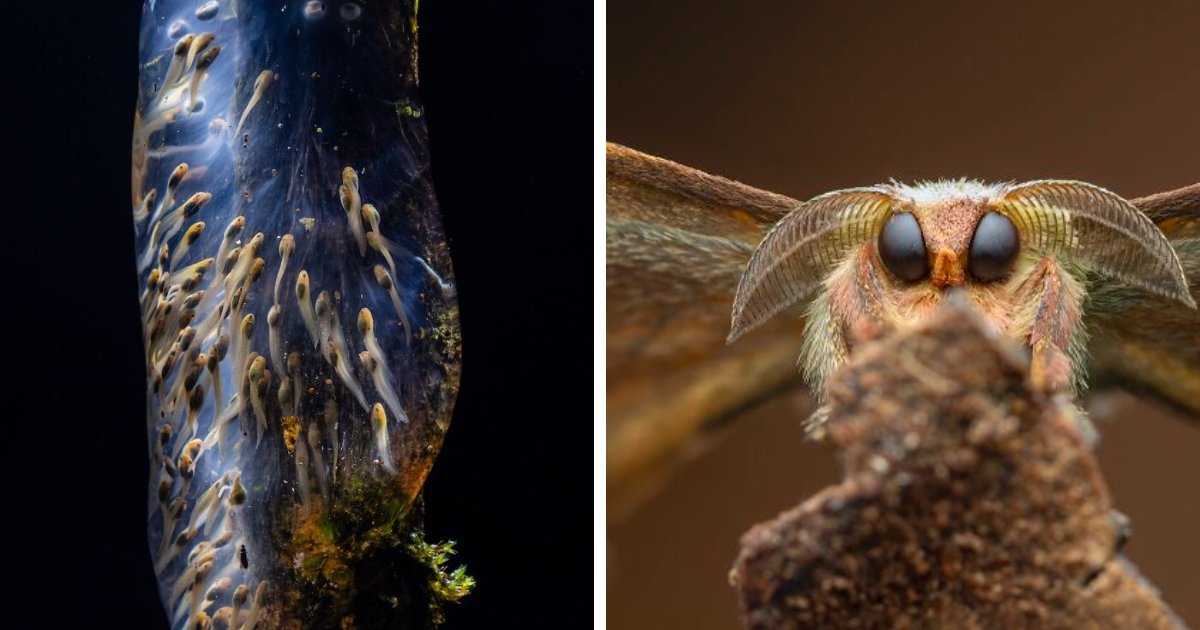
20 Remarkable Winning Photos From Close-Up Photographer Of The Year Competition
More info: cupoty.com | Instagram | Facebook | x.com
#1 Animals, 1st Place: Amphibian Galaxy By Filippo Carugati
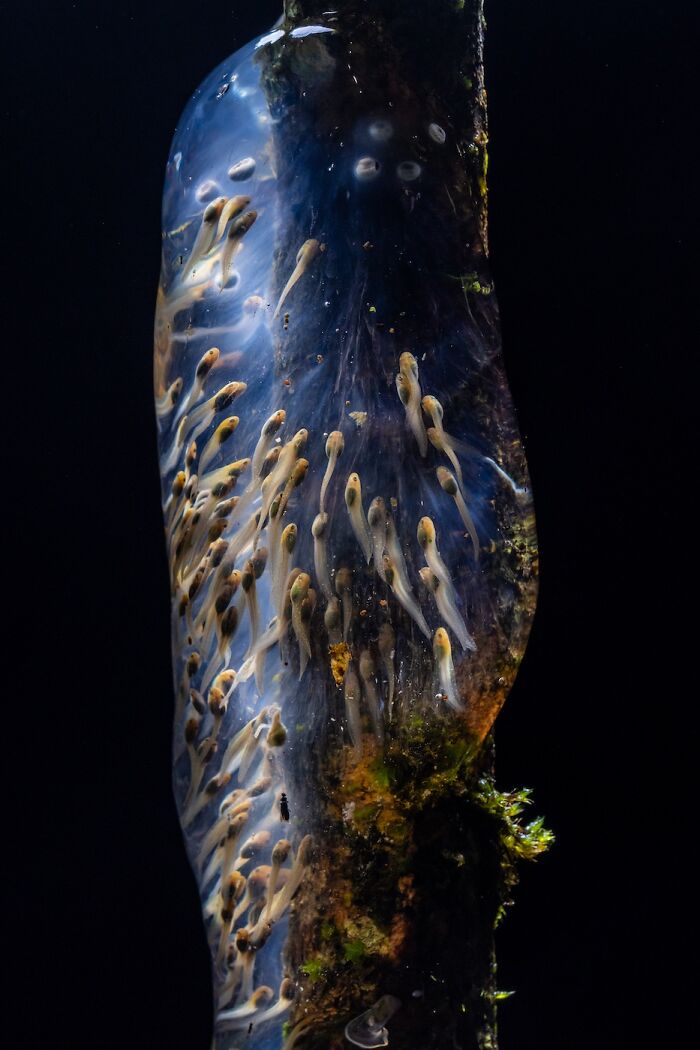
Image source: cupoty
A Malagasy frog (Guibemantis sp.) egg clutch hangs on a small trunk next to a pond in Maromizaha rainforest, Madagascar.
‘Conducting fieldwork during cyclone season gave me the opportunity to witness a wonderful natural spectacle: Malagasy frogs’ mass reproduction. The Maromizaha rainforest, where I spent six months collecting data for my PhD thesis, hosts an outstanding richness of amphibians, with at least 74 endemic species. For many Malagasy frogs, reproduction peaks correspond with winter months, a period characterised by higher temperatures and intense rainfall.
During my nocturnal explorations, I was deeply impressed by the variability in shapes, colours, and sizes of the numerous egg clutches deposited on leaves, branches, and trunks. In this shot, I documented a large egg clutch (20–30cm) hanging on a small trunk. Inside this egg aggregation, several tadpoles were swimming peacefully through the gelatinous substance. Using an external remote-controlled flash, I lit the subject from behind, enhancing the shapes of the converging tadpoles and the colourful mixture within the gelatine, which suggested a cosmic appearance.’
#2 Fungi & Slime Moulds, 2nd Place: Cribraria Cluster By Barry Webb
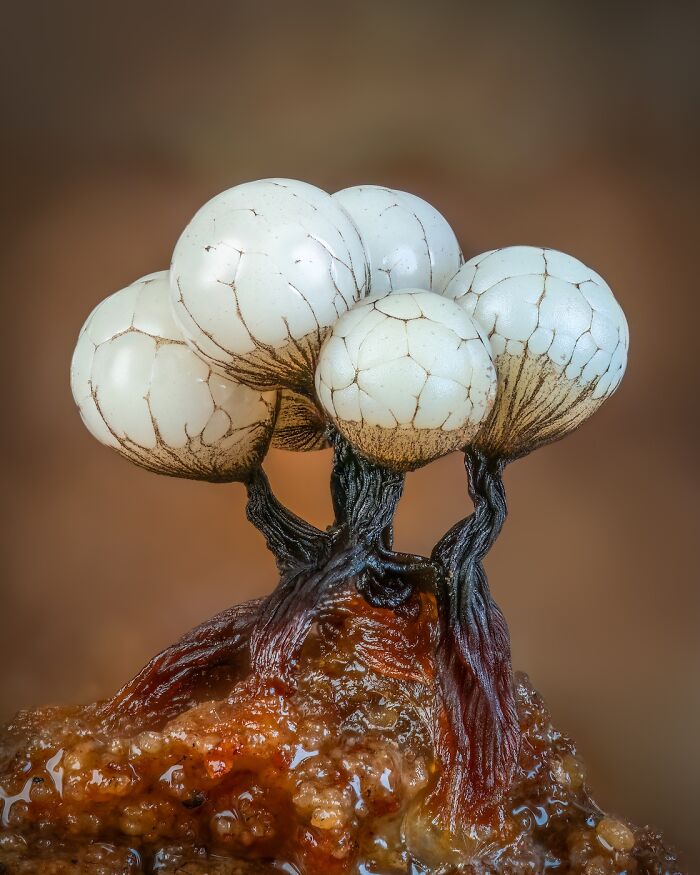
Image source: cupoty
A cluster of 1.5mm tall, immature Cribraria rufa slime moulds in ancient woodland, South Buckinghamshire, England.
‘I was pleased to find this group of Cribraria rufa slime moulds growing so close together, as they are more usually found singly or spaced apart. A focus bracket of 103 shots was taken to create the image. A tripod was used as it was taken in natural light.’
#3 Plants, 2nd Place: Love Poem By Alex Pansier
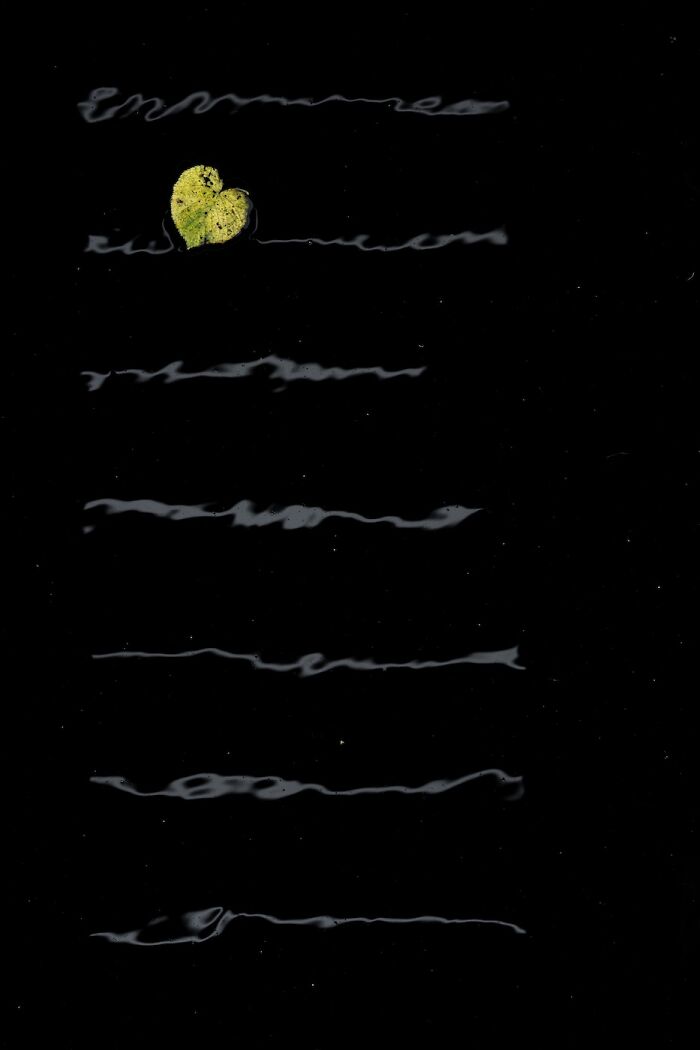
Image source: cupoty
A single, heart-shaped leaf drifting over rhythmic water reflections in Den Bosch, The Netherlands.
‘The repeating reflections on the water reminded me of handwritten text. As the heart-shaped leaf drifted slowly with the stream, it passed the lines of light like a word moving across a page. I leaned over the water and photographed from above, then rotated the frame 90 degrees in post-production to make the lines read more like written sentences. Shooting at f/11 kept the leaf sharp whilst keeping the background minimal. I just cleaned up the tones and darkened the water to isolate the subject. It felt like nature writing a small poem in that moment.’
#4 Underwater, 2nd Place: Ethereal Frogfish By Daniel Sly
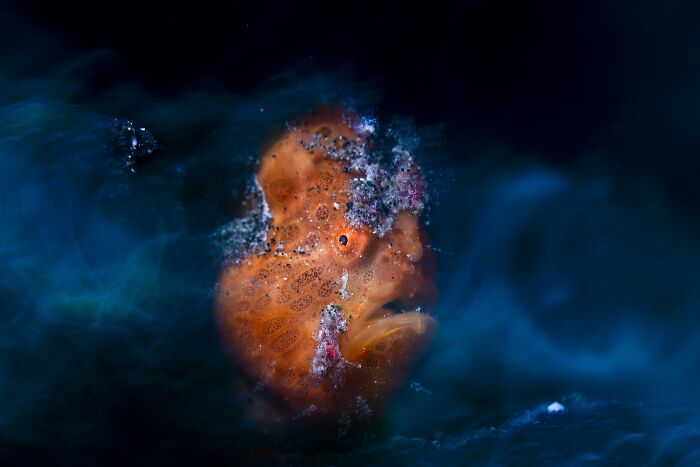
Image source: cupoty
An orange painted frogfish (Antennarius pictus) on the black volcanic sands of Lembeh Strait, Indonesia.
‘An orange painted frogfish waits motionless on the black volcanic sands of Indonesia’s Lembeh Strait, perfectly disguised as it prepares to ambush unsuspecting prey. This image captures the unusual stillness of these masters of camouflage, predators that rely on patience rather than speed. To highlight the frogfish against the dark seabed, I used a narrow beam of light, combined with a slow shutter speed and intentional rotational movement of the camera. This technique allowed the blue ambient water to bleed into the frame and created the ethereal swirl of the surrounding sand substrate, turning a moment of complete stillness into something otherworldly.’
#5 Underwater, 3rd Place: Featherhome By Luis Arpa
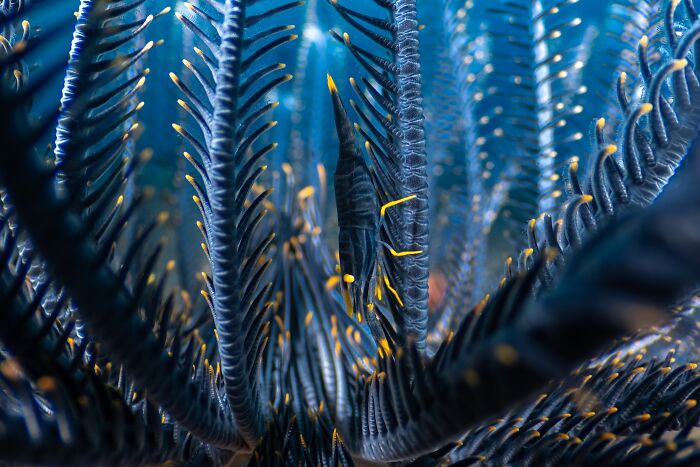
Image source: cupoty
A crinoid shrimp (Laomenes amboinensis) photographed in Tulamben, Bali.
‘I’ve always been fascinated by the smallest creatures of the reef, those that most divers overlook. For a long time, I wanted to photograph these tiny critters from their own perspective, to show what their miniature world might look like if you were right there with them. In Tulamben, Bali, whilst exploring feather stars, I came across this crinoid shrimp. Perfectly camouflaged in both colour and pattern, it clung tightly to its host, spending most of its time motionless, relying on the feather star for protection and food drifting in the current. With the help of a ‘bug-eye’ wet lens, I was able to get very close and still keep most of the crinoid in frame. That unusual perspective gave exactly the feeling I was hoping for, a view that pulls you inside the shrimp’s fragile, hidden world, where beauty and survival depend entirely on blending in.’
#6 Young, 1st Place: Guardians Of The Hive By Rithved Girish
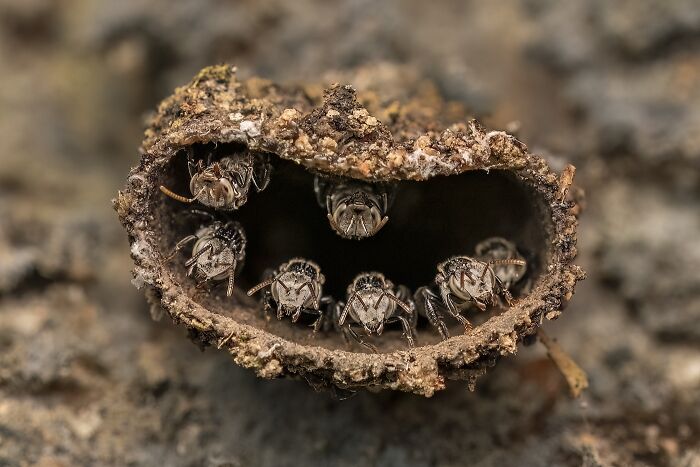
Image source: cupoty
Stingless bee (likely Tetragonula sp.) nest in Mezhathur, Kerala, India.
‘During my summer holiday in Kerala, India, I encountered a nest of stingless bees, likely from the Tetragonula family. Fascinated by the tiny wonders of nature, I make it a point to explore and learn more about the natural world whenever I visit India. These small yet remarkable bees had carefully built their home using wax, resin, and mud, creating a unique tube-shaped entrance to safeguard their colony. The guard bees at the entrance remained alert, ensuring the safety of their hive from potential threats. No bait or attractants were used whilst capturing this moment, allowing their natural behaviour to remain undisturbed. This image serves as a reminder of the vital role these tiny creatures play in maintaining ecological balance.’
#7 Animals, 3rd Place: Spider Web By Bence Máté
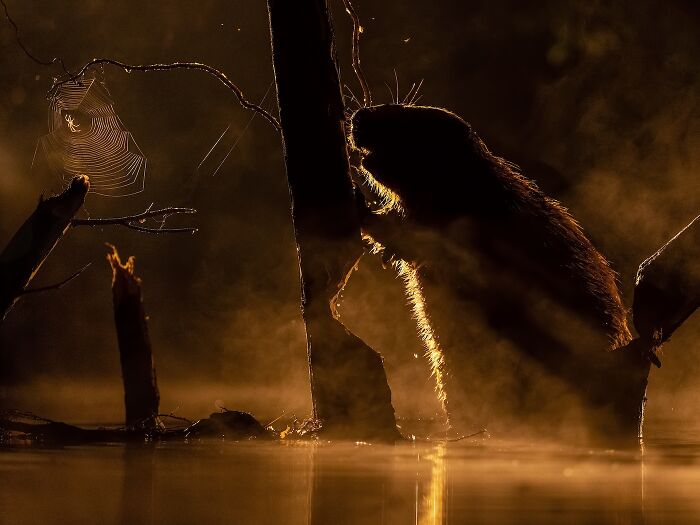
Image source: cupoty
A Eurasian beaver (Castor fiber) approaches a spider’s web in Kiskunság National Park, Hungary.
‘Years ago, I managed to intervene at the last minute to stop the water department from clear-cutting trees along a 2km stretch of canal. Since then, we’ve worked together. I monitor and notify them of any trees obstructing water traffic, while they avoid unnecessary clear-cutting, preserving a thriving habitat.
Beavers returned to this area in 2015, nearly two centuries after they were wiped out across most of Europe. Thanks to conservation efforts, their numbers have surged since the early 2000s, making them one of the few species to successfully reclaim their native range. Their dam-building not only retains water but also creates vital wetlands.’
#8 Invertebrate Portrait, 1st Place: Good Boy By Laurent Hesemans
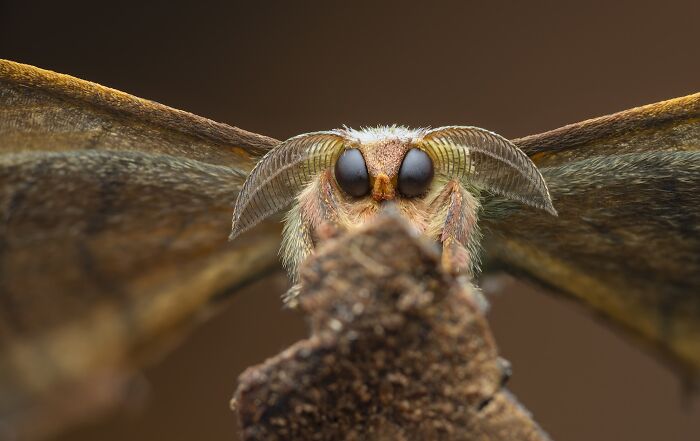
Image source: cupoty
A moth (Bombycidae sp.) in Tinamaste, Costa Rica.
‘A favourite quarry of many macro photographers, it is always a lovely opportunity to spend time with members of the Bombycid family. Incredibly photogenic, the large eyes and antenna positions of these moths, especially the males, always lend their portraits a somewhat melancholy feeling. They are a lesson in beautiful subtlety and a reminder to always give even the simplest arthropods and small creatures a second, closer look.’
#9 Invertebrate Portrait, 2nd Place: Thomisus Onustus On Guard By Wayne Sayers
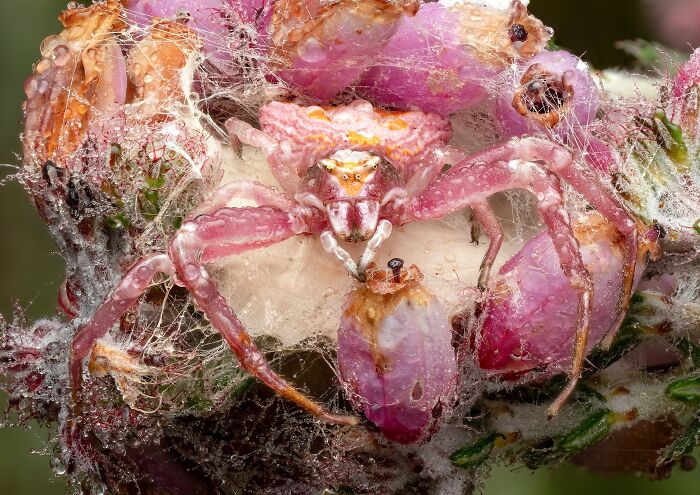
Image source: cupoty
A female heather crab spider (Thomisus onustus) guards her recently laid eggs in Dorset, UK
‘I first encountered these colourful spiders last year and was amazed to learn they’re native to the UK. They are a heathland specialist, and living near Dorset heathland gave me the opportunity to search for them again this summer. One behaviour I wanted to capture was a female guarding her egg sac. After many trips to several sites, I found a population just 15 minutes from home. Most females were tucked beneath their egg sacs or hidden amongst heather flowers, making clean shots difficult. This individual stood out because her perch was unusually open. The forecast predicted still conditions, a welcome break from weeks of gusty wind that had made stacking impossible. I set out at 4:30am, hoping the calm would hold. The cool night air had left a light dew on the heather and creatures. When I arrived, I found the spider in clear view atop her egg sac, perfectly positioned. On returning, days later, she was gone along with many others I’d spotted.’
#10 Fungi & Slime Moulds, 3rd Place: Twilight Of The Gods By Cédric Rousseau
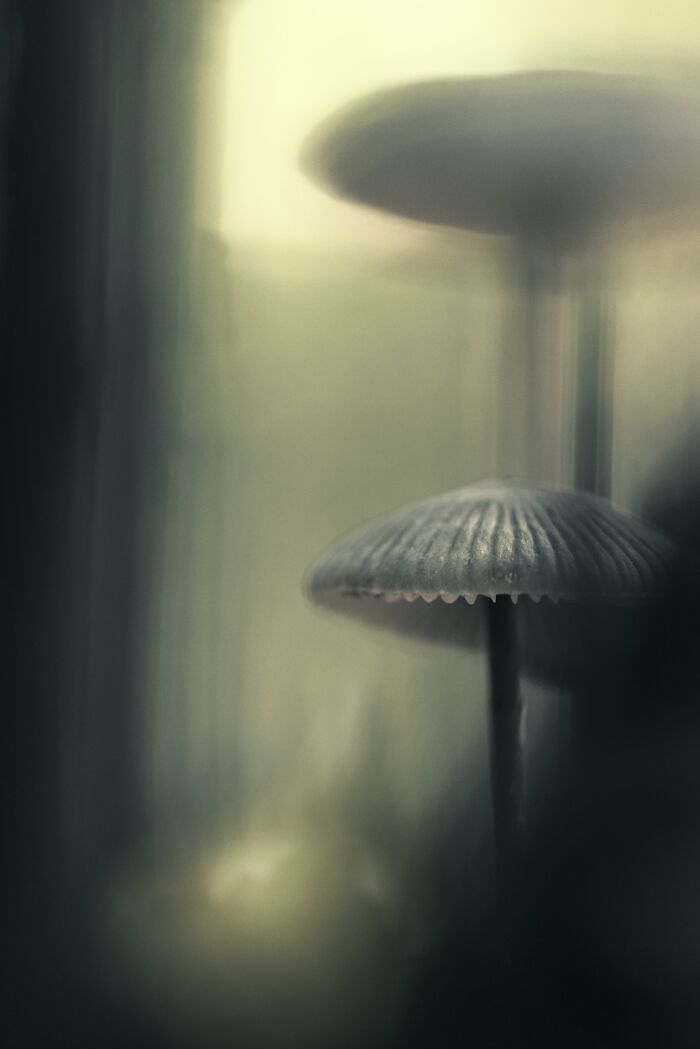
Image source: cupoty
A group of fungi (Mycena sp.) growing on the forest floor in Raismes–Saint-Amand forest, northern France.
‘Mushrooms, even the most ordinary ones, are amongst my favourite subjects for close-up photography. I love portraying them in a painterly way, using a very shallow depth of field to gently merge the surrounding vegetation and light to create a particular mood. I’m not entirely sure why the mysterious, almost solemn atmosphere of this image — with these slightly imposing mushrooms reaching towards the sky — brought to mind the monumental music of Richard Wagner, especially Siegfried’s death in Götterdämmerung. Is this what the entrance to Valhalla might look like? Probably not, yet I can’t help feeling that this music would suit the image perfectly.’
#11 Underwater, 1st Place: Fractal Forest By Ross Gudgeon
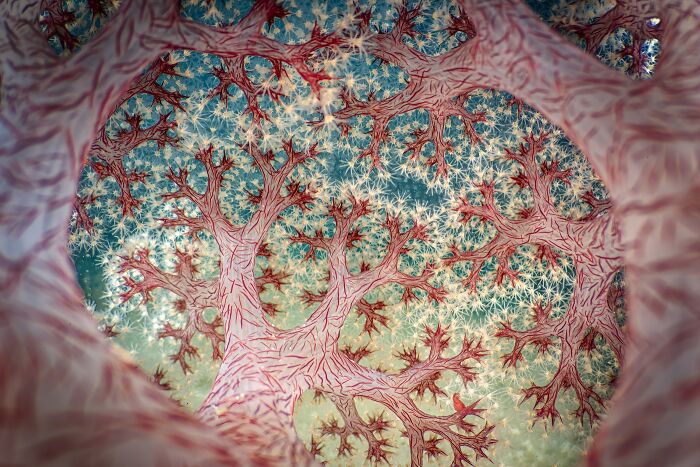
Image source: cupoty
The inside of a cauliflower soft coral in Lembeh Strait, Indonesia.
‘Named for its characteristic cauliflower-like appearance, this coral has numerous small, rounded, bump-like polyps that give it a puffy texture. This unique perspective was made possible by the Nauticam EMWL (Extended Macro Wide Lens), an underwater version of the probe or insect eye lens. Due to its long length, small diameter, close focus, and wide field of view, this lens allows for perspectives impossible with conventional lenses. I decided to experiment with the EMWL on the soft coral to capture a different view of a common life form. I carefully threaded the end of the EMWL through the branches of the soft coral so as not to damage them, creating an image looking from the inside out.’
#12 Young, 3rd Place: Emerald Glow By Jameson Hawkins-Kimmel
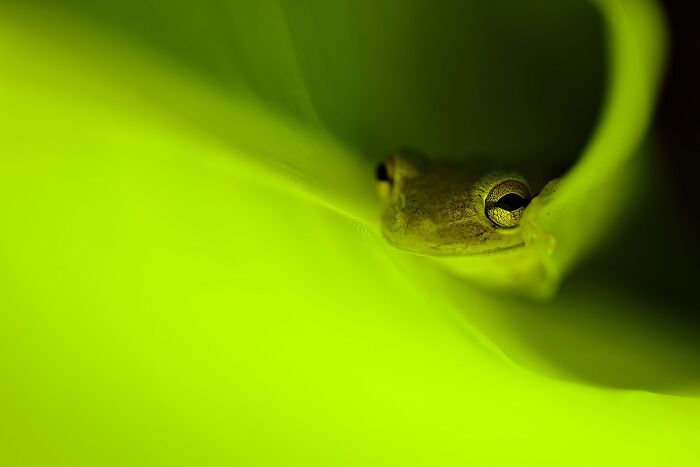
Image source: cupoty
Cuban tree frog (Osteopilus septentrionalis) in the photographer’s backyard, Florida, USA.
‘During the heat of the day, I uncovered this Cuban tree frog hiding in the leaf of a banana tree in my backyard. The frog was very calm and allowed me to slip a torch under the leaf to create this effect. My 100mm lens ensured that I didn’t need to get too close, so as not to stress out the frog. The result may be one of the most impressive shots of my career so far!’
#13 Arachnids, 2nd Place: I Feel I’m Being Watched By Guillaume Correa Pimpao
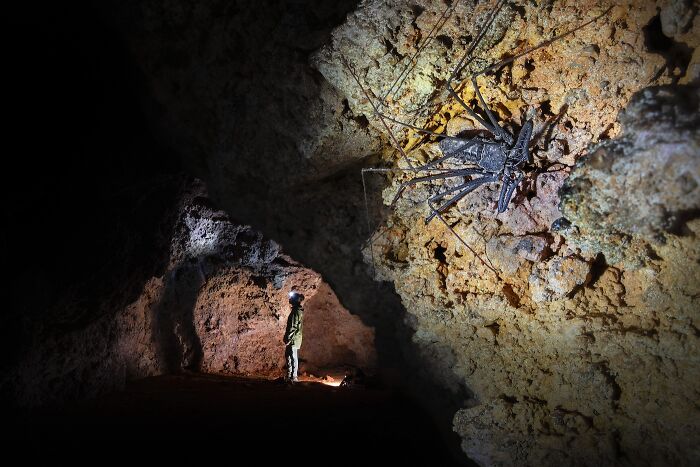
Image source: cupoty
A whip spider (Amblypygi sp.) observes an explorer from a cave wall in the municipality of Ouanary, French Guiana
‘This photograph was taken inside a remote cave in the Ouanary region of French Guiana, a place that reveals its inhabitants only to those who move quietly and use minimal light. While carefully exploring the cave I encountered several whip spiders, harmless chelicerates that can appear nightmarish. One individual was positioned on a wall overlooking the main chamber, where my partner was admiring the colourful rock formations. The scene inspired me to play with scale and perspective, turning the spider into a looming creature about to seize an unsuspecting human.’
#14 Arachnids, 1st Place: Dinner By Artur Tomaszek
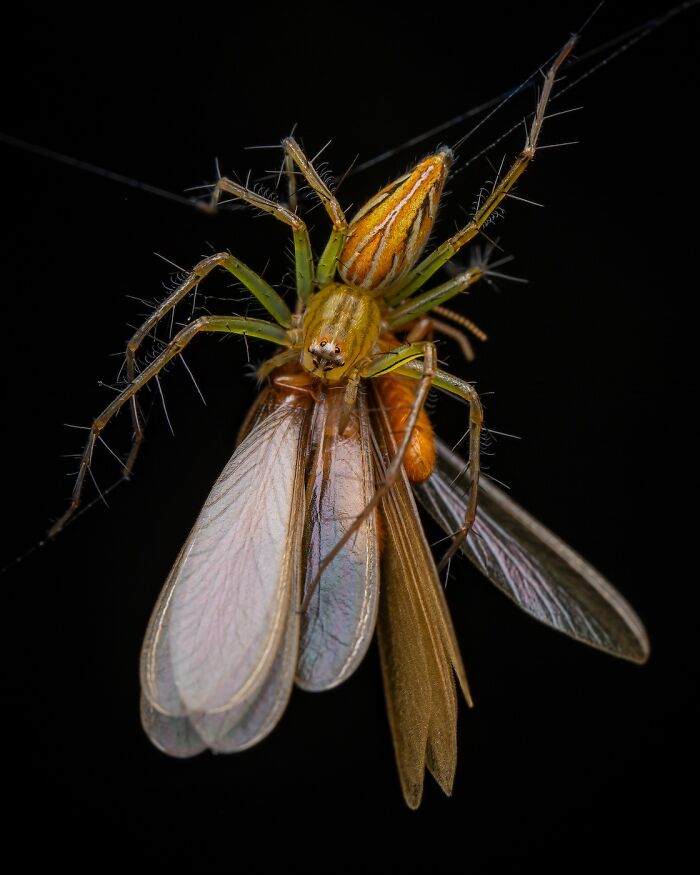
Image source: cupoty
A lynx spider (Oxyopes sp.) feeds on a few termites in Hong Kong.
‘Lynx spiders are ambush predators that actively hunt prey by sight. Though they produce and use silk, they do not build webs to capture prey. I came across this one during a moth survey on a particularly memorable night. It had been a very hot spring with little rain, but that evening it suddenly started raining, prompting thousands of termites to begin their mating dance and swarm in the air. This provided an excellent opportunity for the lynx spider to make its catch of the night. The main difficulty in capturing the picture was the thousands of termites flying in my face, attracted by the camera’s flash. In the end, the spider managed to catch two or three termites at once, creating this striking scene.’
#15 Insects, 1st Place: Blue Army By Imre Potyó
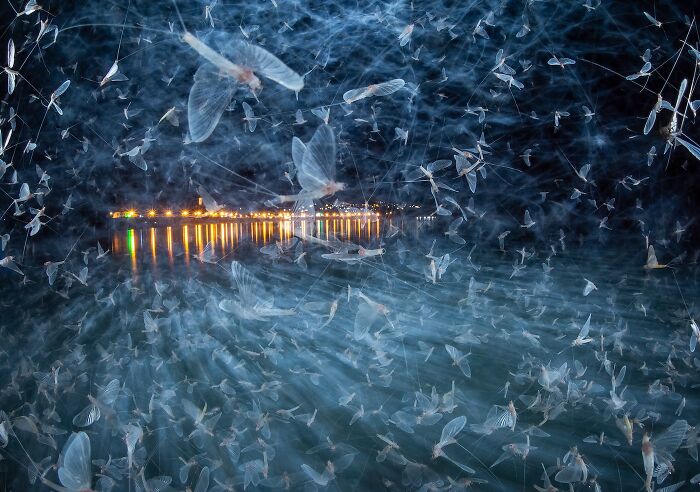
Image source: cupoty
Danube mayflies (Ephoron virgo) swarm in Szentendre, Hungary.
‘After a few decades, the spectacular endangered Danube mayfly has returned to the river Danube, probably due to increasing water quality after disappearing from the rivers of Middle Europe owing to water pollution. The summer of 2024 was memorable for fans of these mayflies, as the season — likely extended by dry, hot days and persistently low water levels — lasted nearly a month. On 25 occasions, we waded deep into the strong currents, surrounded and overwhelmed by the mayflies. A massive swarm numbering in the millions is approaching the illuminated city of Szentendre. The lights lure the mayflies out due to their positive phototaxis. During the late August festival, dense clouds of mayflies engulfed the restaurants, vendors, wine bars, and concerts, becoming an unmissable and alarming spectacle. The mayflies circled around the lights for a long time, unable to break free, and sadly perished on the asphalt. Such an evening can result in ecological damage worth billions, as mayflies writhing and drying on pavements, roads, and ledges perish along with the egg clusters that represent their offspring.’
#16 Insects, 2nd Place: Love Under The Stars By Valeria Zvereva
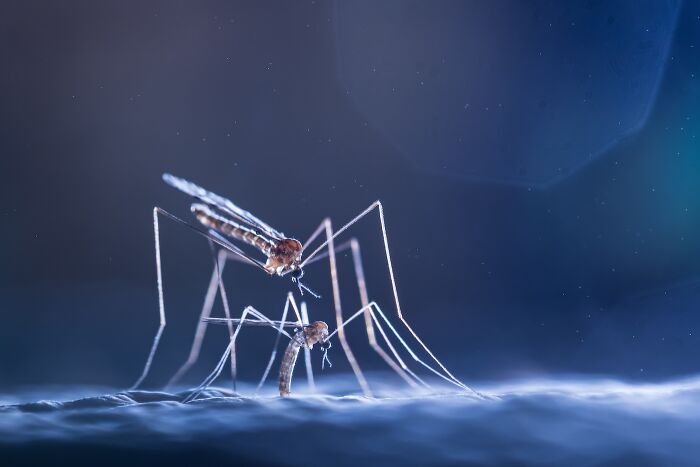
Image source: cupoty
Mating games of mosquitoes (Limoniidae) on a fallen tree in Moscow region, Russia.
‘One day in June, whilst wandering through the forest, I came across a fallen tree whose surface was covered with a white crust of tree fungus. Large mosquitoes were circling above. I think it was a mating game, with some of them sitting on the fungus crust, waiting for a partner. Shining a torch, I noticed that the tree fungus was releasing spores. Perfect for a romantic night out.’
#17 Plants, 3rd Place: In The Embrace Of Shadows By Tibor Litauszki
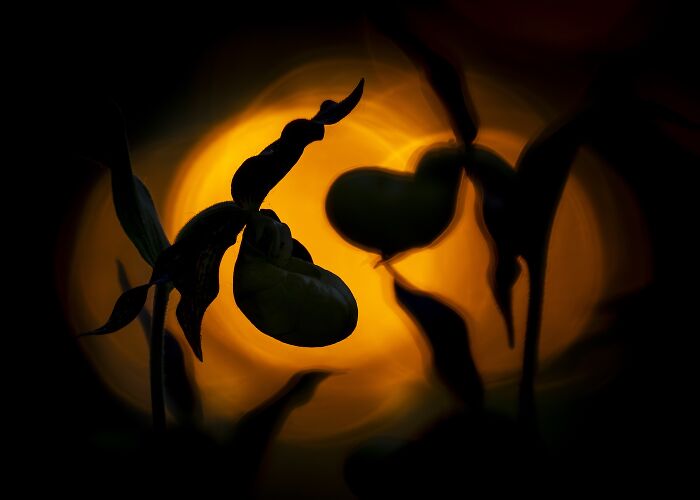
Image source: cupoty
Two lady’s-slipper orchids (Cypripedium sp.) shining in the sunset in Germany.
‘The image captures a mysterious, almost dreamlike moment, where the dark silhouettes of the lady’s-slipper orchids perform a subtle dance on the edge of light and shadow. Taken with a telephoto lens, the photograph focuses not on details, but on atmosphere. In the background, golden orbs of sunlight filtering through the leaves gently embrace the plants.’
#18 Butterflies, 2nd Place: The Invasion By Pedro Luna
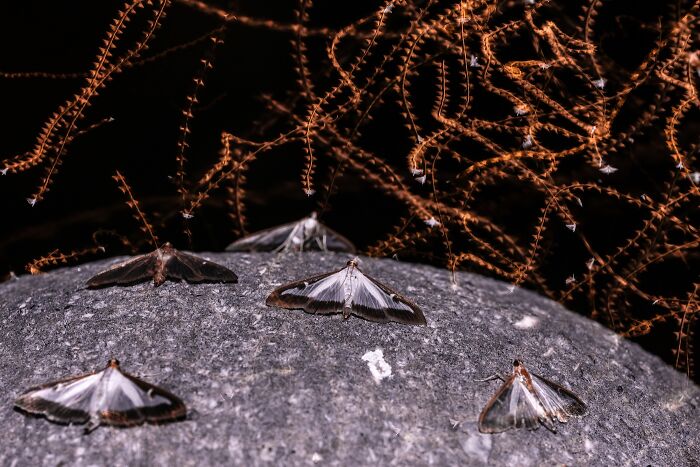
Image source: cupoty
Invasive box tree moths (Cydalima perspectalis) swarm in Ripoll, Spain.
‘The invasive box tree moth is a pest native to Asia that has been destroying large natural populations of box trees in Catalonia for several years. This double-exposure photograph was taken in-camera. The first photograph was taken on a pole in the square, simulating a planet, and the second photograph was taken with a long exposure, capturing the flight of the moths to simulate their arrival on the supposed planet.”
#19 Intimate Landscape, 1st Place: Dreamy State By Sho Hoshino
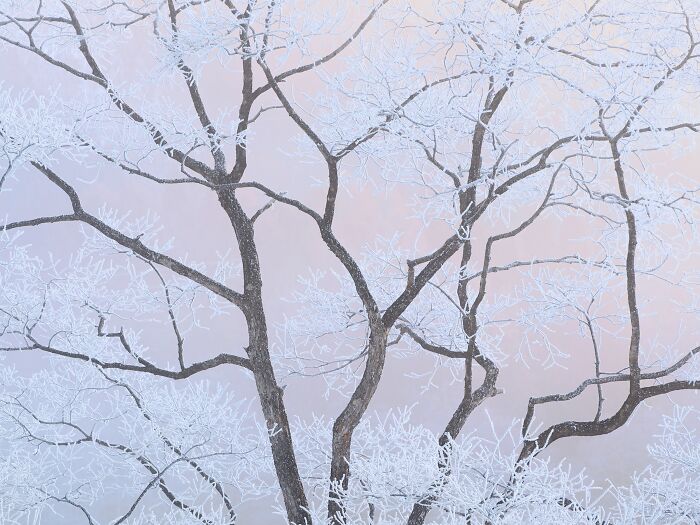
Image source: cupoty
A tree covered with rime ice in Nagano Prefecture, Japan.
‘I took this photograph when frost-covered trees stood before a mist that turned pink in the morning sunlight. The composition relies on soft, pale tones, anchored by the dark, intricate shape of the tree trunk and its distorted form. I intentionally excluded the base of the tree to highlight the complexity of its trunk. I also wanted to emphasise the special conditions of frost and mist, so I waited for the moment when the background turned pink. Although the scene depicts the freezing cold of winter, the warm colour tones give it a gentle sense of warmth rather than loneliness.’
#20 Invertebrate Portrait, 3rd Place: Fake Sun By Giovanni Vicari
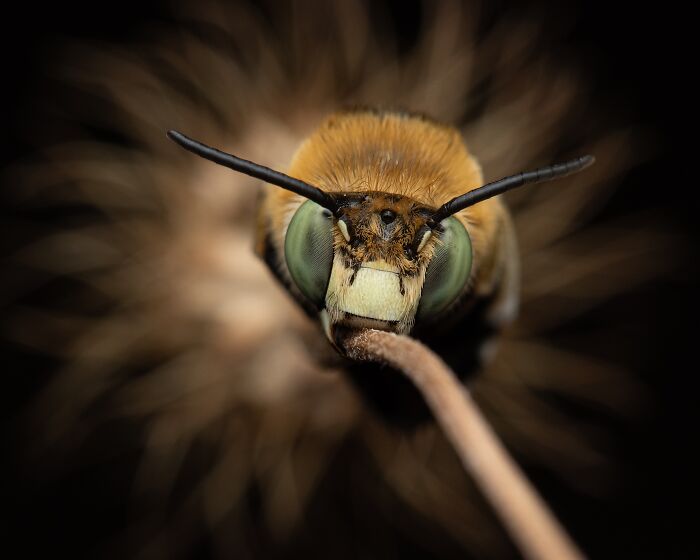
Image source: cupoty
A solitary bee (Amegilla sp.) sleeps on a dry stem at night in Fiano Romano, Italy.
‘I’ve observed these solitary bees extensively during their nocturnal roosting and noticed that they often choose dry but sturdy stems ending with a dry inflorescence. I decided to exploit the position of the bee to make this inflorescence appear in the background like a “fake night sun”. With my left hand, I held the stem still (which was not cut) taking care not to wake the bee, whilst with my right I took the photo, trying to focus on the subject’s eyes.’






Got wisdom to pour?