beehiiv vs Kit vs Substack: Best newsletter platform for creators (2026)
If you're a solo creator deciding between beehiiv, Kit, and Substack, we tested all three so you don't have to. Here's which one is actually right for you.
This article contains affiliate links. If you purchase a tool through them, we may earn a commission — at no extra cost to you. It never influences our rankings or what we recommend.
Tools covered in this article
beehiiv vs Kit vs Substack: Quick comparison
If you’re a solo creator starting a newsletter or searching for an upgrade, you’re likely deciding between the three top options that are custom-built for you: beehiiv, Kit, and Substack.
At the first glance, they all let you send emails, grow a list, and charge readers. But pick the wrong one, and you’ll end up losing money, time, and growth you can’t get back.
We signed up to all three, built real newsletters, and tested every monetization feature hands-on. Here's everything you need to make the call.
| Top pick beehiiv | Kit | Substack | |
|---|---|---|---|
| Free plan | Yes (up to 2,500 subs) | Yes (up to 10,000 subs) | Yes (unlimited subs) |
| Starting paid price | $34.40/month (Scale) | $33/month (Creator) | Free (10% revenue cut) |
| Revenue cut on paid subs | 0% | 0% | 10% |
| Built-in ad network | ✅ Yes (beehiiv Ads) | ❌ No | ❌ No |
| Built-in referrals | ✅ Yes (Boosts + referrals) | ❌ No | ❌ No |
| Paid subscriptions | ✅ Yes | ✅ Yes | ✅ Yes |
| Automations | ✅ Yes (paid plans) | ✅ Yes (paid plans) | ❌ Basic only |
| Segmentation | ✅ Yes | ✅ Yes (best on the market) | ❌ Limited |
| Built-in website | ✅ Yes | ✅ Yes | ✅ Yes (Substack.com profile) |
| Content discoverability | ❌ No built-in network | ❌ No built-in network | ✅ Substack network |
| Best for | Monetization | Audience growth & automation | Writing-first, zero setup |
| Demilked score | 9.1 / 10 | 8.6 / 10 | 8.1 / 10 |
How we tested the best newsletter platforms
Every tool was tested and scored using the Demilked Trust Score: the same five-pillar framework we apply to every tool we review on this site. Read more here.
beehiiv: the best newsletter platform for monetization
The all-in-one newsletter platform built for growth: built-in ads, referral engine, website, and the cleanest editor.
Verdict: The most complete monetization newsletter platform in the category. Best choice for creators who want to generate revenue before they have a large paid subscriber base.
beehiiv launched in late 2021, founded by former Morning Brew employees to help independent creators do what Morning Brew did, at any scale. The result is a platform with all revenue features in a way no direct competitor has.
→ Read our full beehiiv review: Is it actually the best newsletter platform in 2026?
What beehiiv does well 👍
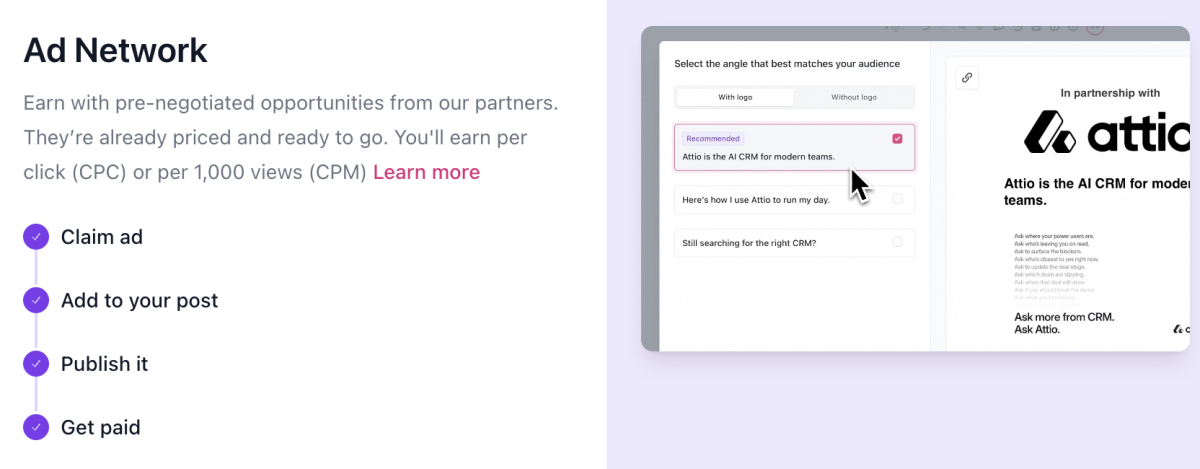
Ad network: You opt in, advertisers bid for placements, and you get paid per impression, no matter if your readers are paid subscribers yet. No other platform in this comparison offers this.
Boosts: A native referral marketplace where other newsletters pay you per confirmed subscriber you send their way. Newsletters with 1,000-2,000 engaged readers have generate income from this alone.
0% revenue cut on paid subscriptions: Substack takes 10%. beehiiv takes nothing. On $5,000/month in subscription revenue, that's $6,000/year you keep.
Free plan up to 2,500 subscribers: One of the most generous free tiers in the category: website, newsletter, and core features included at zero cost.
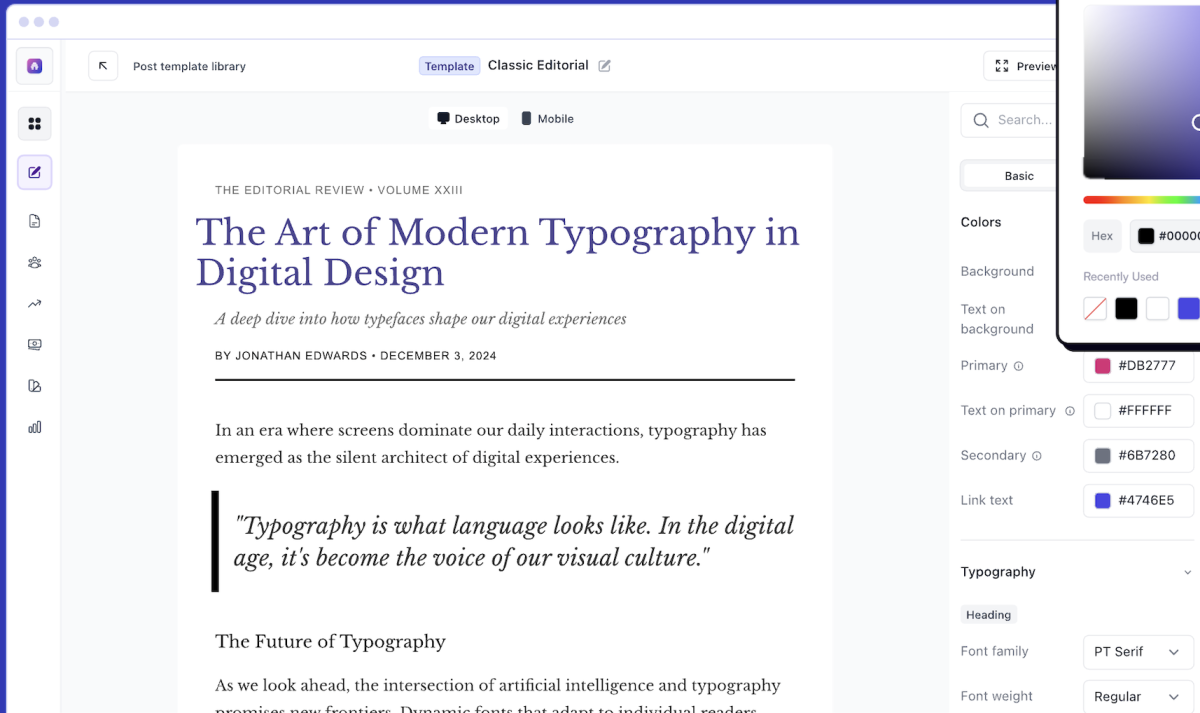
Clean editor with Basic/Advanced modes: The onboarding doesn't overwhelm. You build into the advanced features gradually, not all at once.
Where beehiiv falls short 👎
Analytics are still in beta: open rates and click rates are there, but deep segmentation, cohort analysis, and per-link attribution are not. If detailed data is critical, factor this in.
Automations are solid for standard sequences but not as powerful as Kit's for complex audience-branching workflows.
14-day trial is shorter than you'd want for a proper test of all advanced features.
beehiiv pricing
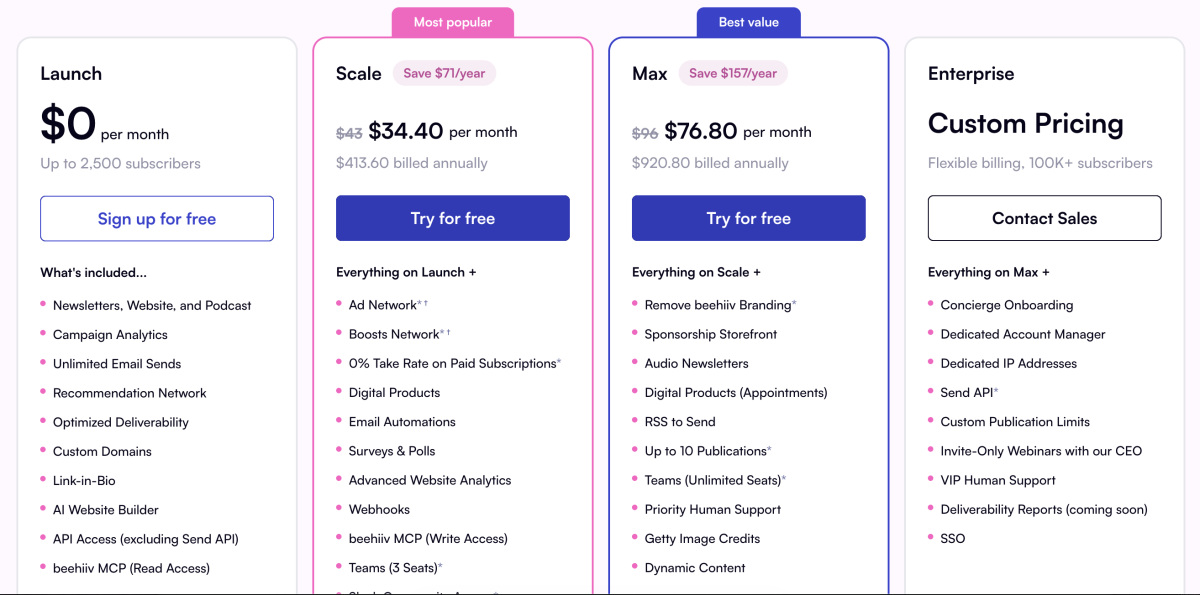
Free plan: up to 2,500 subscribers.
Scale: $34.40/month (if billed annually).
Max: $76.80/month (if billed annually).
Enterprise available.
No revenue cut on any paid plan.
Kit: the best newsletter platform for automation
The creator commerce platform: advanced automations, subscriber segmentation, and native digital product sales.
Verdict: The most powerful tool for creators who need deep analytics and pro-level automations, commerce integrations, and intricate subscriber segmentation.
Kit (formerly ConvertKit) rebranded in 2024 from just an email tool to a full-suite creator commerce platform. The automation engine is the strongest in this comparison, and its subscriber tagging and segmentation is a level above beehiiv and Substack, tailored for anyone running complex audience-based workflows.

What Kit does well 👍
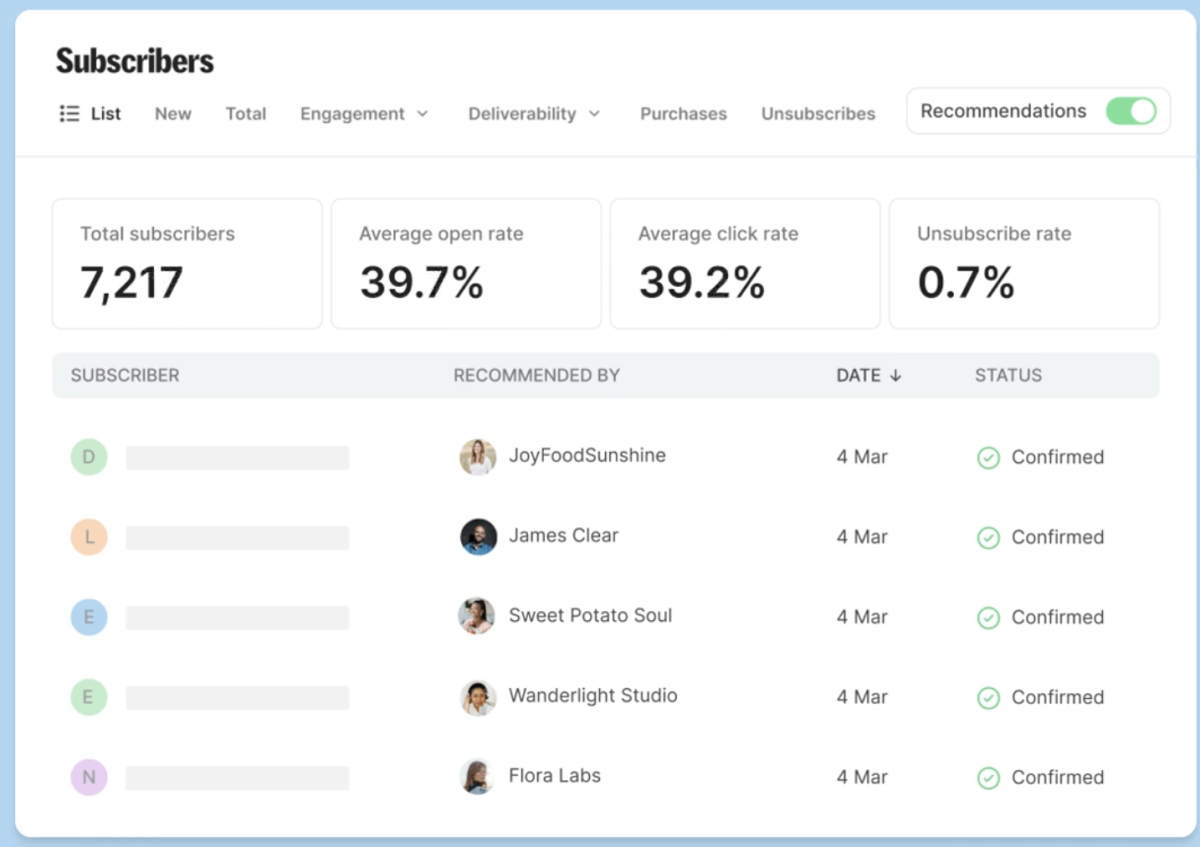
Automations: If you want “if they clicked this link, tag them and send this sequence,” Kit handles it better than either competitor.Visual workflow builder with conditional branching, tag-based triggers, and subscriber behavior logic.
Subscriber segmentation: This is standard for email marketers, but not many solo creator tools offer this. Tag and segment your list by behavior, interest, purchase history, or custom fields.
Creator commerce: Sell digital products, courses, and paid communities directly from Kit. beehiiv has a simpler alternative, Substack doesn't at all.
Free plan up to 10,000 subscribers: The most generous free tier in this comparison by subscriber count, but automations and commerce features are paywalled.
Integrations: Connects with Teachable, Gumroad, Shopify, Zapier, and most of the creator tool ecosystem. More integration depth than beehiiv or Substack, but not necessary for many.
Where Kit falls short 👎
Pricing scales steeply: at 50,000 subscribers, Kit gets very expensive relative to Beehiiv.
No built-in ad network or Boosts equivalent: monetization is entirely dependent on your own audience paying you directly.
The editor is functional but less polished than beehiiv's. Highly designed and visual newsletters will find it limiting.
No built-in content discoverability: you won't get organic exposure through Kit the way Substack's network can surface you.
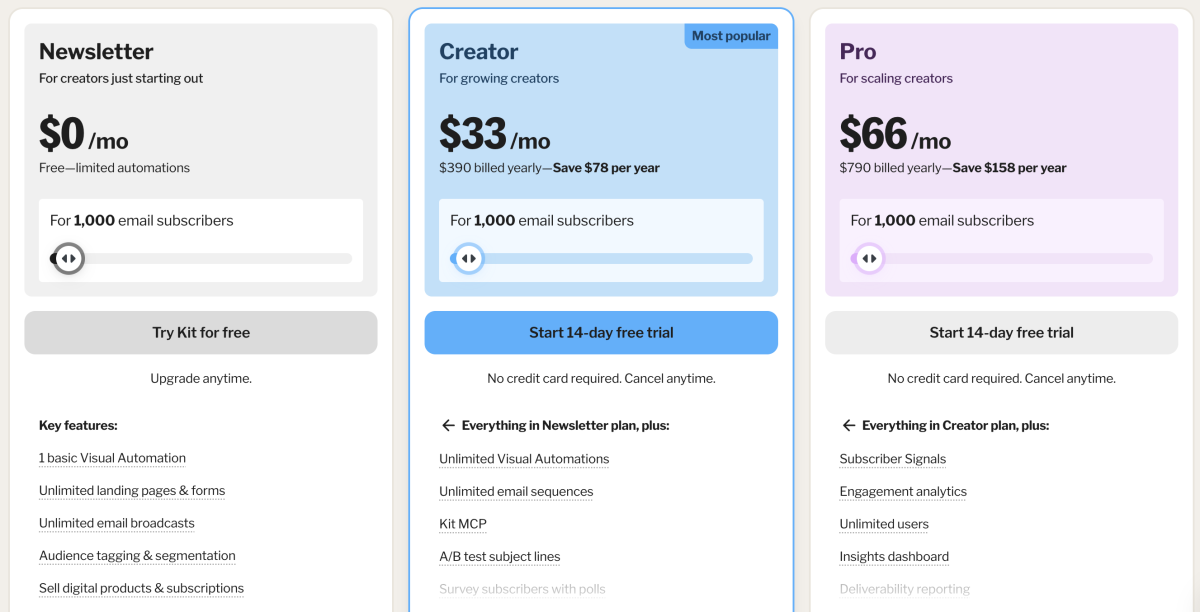
Kit pricing
Free plan: up to 10,000 subscribers (core features only).
Creator: $33/month (if billed annually).
Creator Pro: $66/month (if billed annually).
Price scales by subscriber count.
Substack: the best newsletter platform for writers
The writing-first newsletter platform with a built-in reader network and zero upfront cost.
Verdict: The fastest way to go from idea to published newsletter, with a built-in reader network that can drive organic discovery. But the 10% revenue cut stings at scale, and the feature set is the thinnest in this comparison.
Substack's product philosophy is minimalistic by design: write, publish, grow. It removes every decision that isn't about the writing itself. There's no automation builder, no ad network, no referral engine. For a lot of creators, that's exactly the point. The tradeoff is a 10% cut on all paid subscription revenue and limited control once you want to do anything more sophisticated.
→ Read more about how to grow your Substack from 0 to 1,000 subscribers.
What Substack does well 👍
Zero setup, immediate publishing: No onboarding wizard, no credit card, no decisions to make. Sign up and publish within 5 minutes. Nothing in this comparison is faster to start.
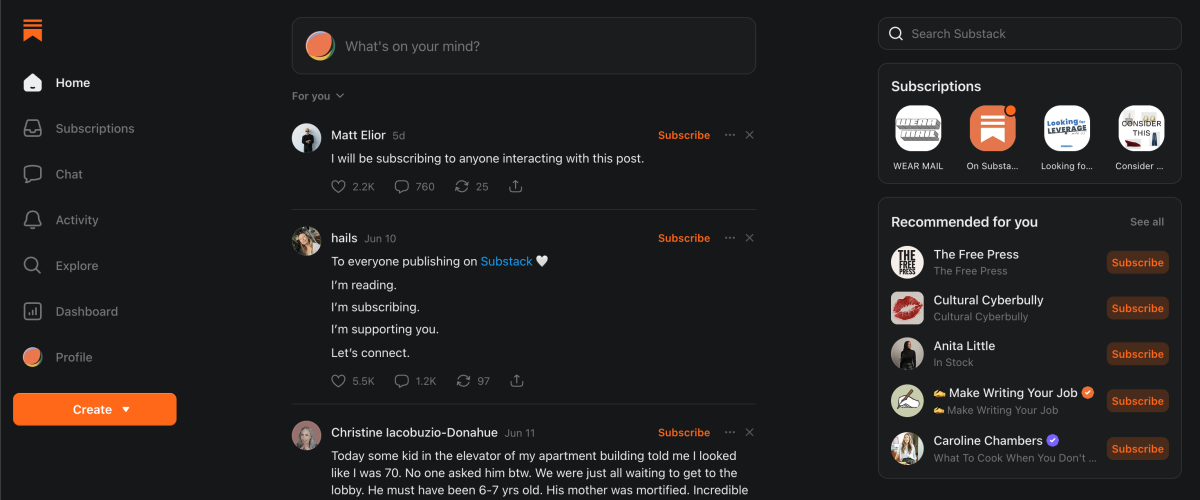
Built-in reader network: Substack's internal discovery (Recommendations, the Substack feed, and Notes) can surface your writing to readers who don't know you yet. beehiiv and Kit have no equivalent.
Integrated comments and community: Readers can reply, comment, and have threaded discussions inside Substack. It's closer to a community platform than a pure email tool.
Unlimited free subscribers: No subscriber cap on the free plan. You only start paying (via their revenue cut) when your readers pay.
Podcast and video support: Substack natively hosts audio and video posts in addition to written newsletters, no third-party hosting needed.
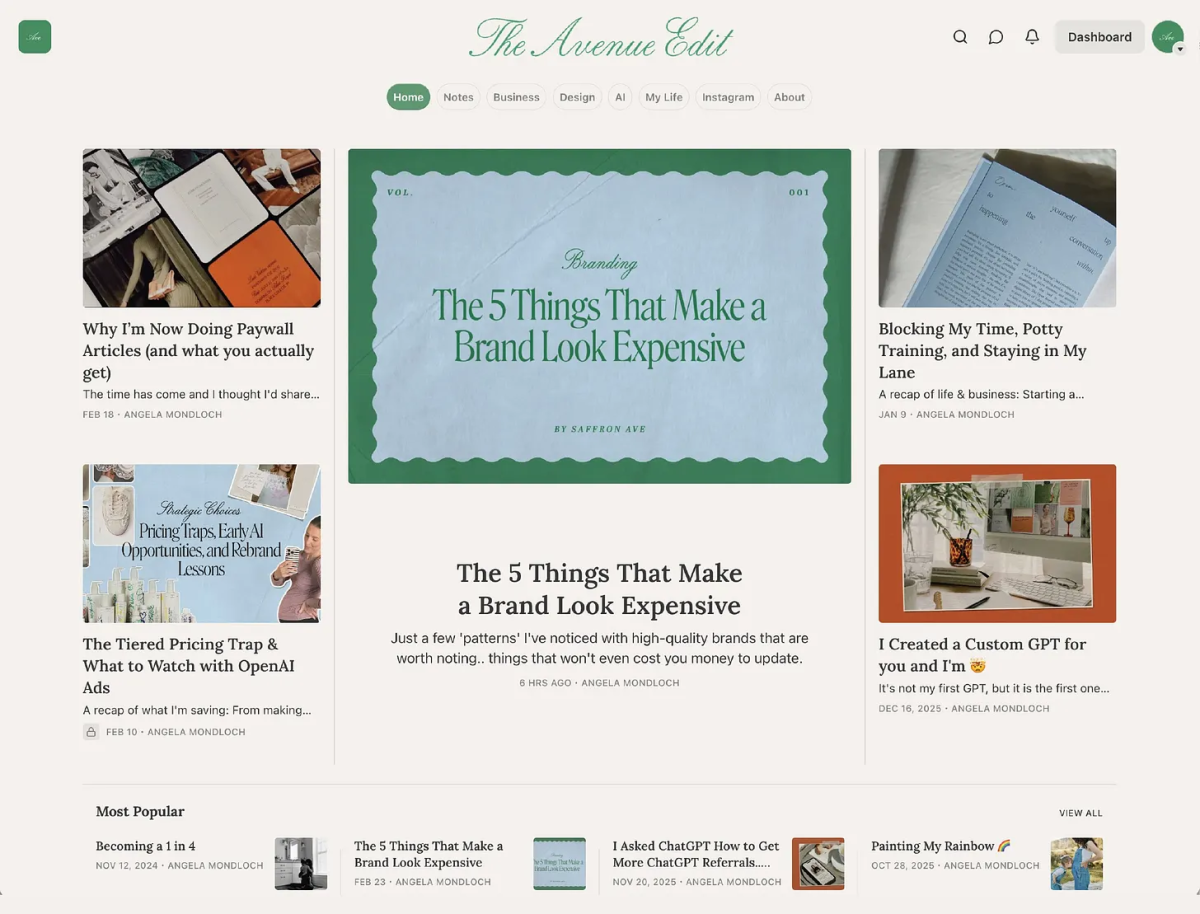
Image credits: The Avenue Edit on Substack
Where Substack falls short 👎
10% revenue cut: On $5,000/month in paid subscription revenue, you're giving Substack $500/month (or $6,000/year) that you'd keep on beehiiv or Kit.
No email automations: welcome sequences (though there is one welcome email), drip campaigns, and behavior-based triggers don't exist.
No subscriber segmentation: you can't send different content to different audience segments.
No native ad revenue: you can't monetize without paid subscribers.
Limited design customization: your Substack looks like every other Substack. You can make it a bit more creative, but the format is quite limiting.
Substack pricing
Free to use.
Substack takes 10% of all paid subscription revenue plus Stripe processing fees (~2.9% + 30¢). No fixed monthly cost until you're earning.
beehiiv vs Kit vs Substack: Head-to-head by category
Here's who wins each decision that actually matters for solo creators:
Best for monetization: beehiiv
beehiiv wins, and it's not close. The ad network generates revenue before you have a single paid subscriber. Boosts lets you earn from your audience without charging them. And the 0% revenue cut means you keep everything from paid subscriptions. Kit monetizes well if you sell products, but has no passive revenue options. Substack's 10% cut is a structural disadvantage at scale.
✅ Winner: beehiiv — ad network, Boosts, and 0% revenue cut make it the clear monetization leader
Best for email automation and subscriber segmentation: Kit
Kit by a significant margin. The visual automation builder, conditional logic, and tag-based segmentation are a full product category above what beehiiv and Substack offer. If your newsletter strategy involves behavioral triggers, product purchase sequences, or audience segments, Kit is the only real option here.
✅ Winner: Kit — best automations and segmentation for creators who run list-based strategies
Best free newsletter platform: beehiiv & Kit
Kit's free plan goes to 10,000 subscribers — the highest cap in this comparison. beehiiv's free plan is capped at 2,500 but includes the website, monetization access, and the full feature set. Substack is free with no subscriber cap, but you give up 10% of revenue the moment readers pay. For creators who want to test before committing, Kit wins on raw subscriber count. For creators who want to start monetizing early, beehiiv wins on features.
✅ Winner: Kit (by subscriber count) / beehiiv (by features). Depends on what you're optimizing for on the free tier
Best for getting started with zero technical knowledge: Substack
Substack. There are no decisions to make. Sign up, name your newsletter, write. You're live in under 5 minutes. beehiiv's onboarding is friendly but involves more setup. Kit's feature depth means more decisions upfront.
✅ Winner: Substack — minimal setup and decisions, go live in minutes
Best for organic discoverability: Substack
Substack. Its internal recommendation network, Notes feed, and cross-newsletter discovery features are genuinely unique — beehiiv and Kit have no equivalent. If you're starting from zero with no existing audience, Substack gives you the best shot at being found organically.
✅ Winner: Substack — the only platform in this comparison with a built-in reader discovery network
Best for creators already paying for multiple tools: beehiiv
If you're currently running a separate newsletter tool, referral platform, website, and paid subscription layer, beehiiv consolidates all of it into one bill. At scale, that bill is almost certainly lower than what you're paying across multiple tools.
✅ Winner: beehiiv — replaces newsletter + website + referral tool + paid subscriptions in one plan
Which newsletter platform should you choose in 2026?
The right answer depends on what you're actually trying to do. Here's a direct if/then:
If you want to monetize before you have paid subscribers → beehiiv. The ad network and Boosts give you revenue streams no other platform in this list offers.
If you need advanced email automations and subscriber segmentation → Kit. No other creator tool in 2026 matches its automation depth.
If you're starting from zero and just want to write → Substack. Zero setup, zero cost, and the best chance of organic discovery while you're small.
If you're currently paying for 3+ separate tools → beehiiv. It replaces newsletter platform + website + referral tool + paid subscriptions in one subscription.
If you sell digital products or courses alongside your newsletter → Kit. Its native commerce and deep integrations with product platforms (Gumroad, Teachable, Shopify) make it the natural choice.
If community and discussion matter as much as the newsletter itself → Substack. Comments, replies, and the Notes feed create a reader relationship none of the other platforms come close to.
If you're on Substack and frustrated by the 10% cut → beehiiv. The migration path is well-documented, and the revenue math usually works out immediately for newsletters above $2,000/month in subscription income.
With 5+ years in the creator, entertainment, and publishing spaces, Mia shortlists, reviews, and ranks leading tools that actually make your life easier.