
30 Fascinating Facts About The Human Body That Might Make You See Yourself Differently
Independently testedUnbiased Demilked scoreFree to implementTools included
#1
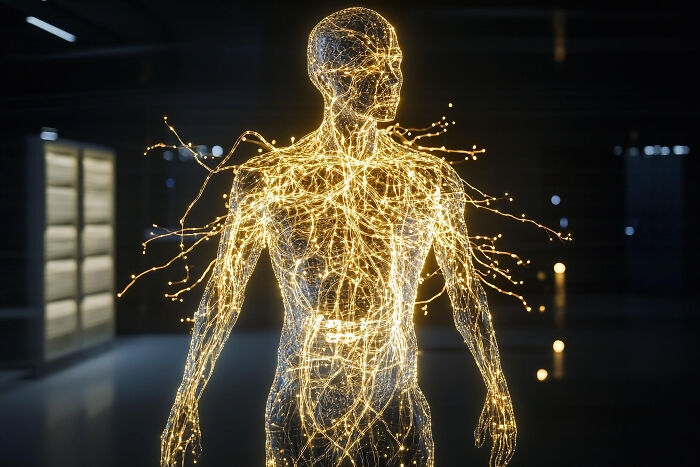 Image source: DrColdReality, tanitost
How about the recurrent laryngeal nerve, the nerve that runs from the brain to the larynx? Now you'd think that in humans, that would be a pretty short trip.
And you'd be wrong.
In fact, the nerve comes down from the brain, goes screaming right past the larynx and down to the vicinity of the heart, where it loops under the aortal arch, then finally comes back up to the larynx. And that is true for all mammals. In giraffes, the thing can be about 10 meters long.
And the reason it is that way is that evolved from a nerve that used to go from a fish brain to fish gills, and the shortest path was underneath the heart. But as fish evolved, their shape changed, and eventually they acquired a neck, moving the brain to a different place in the body. It's WAY easier for evolution to just make something longer as opposed to rewiring it, so the RLN just got longer and longer, still looping under the heart.
Reason #4821 why we know evolution is real.
Image source: DrColdReality, tanitost
How about the recurrent laryngeal nerve, the nerve that runs from the brain to the larynx? Now you'd think that in humans, that would be a pretty short trip.
And you'd be wrong.
In fact, the nerve comes down from the brain, goes screaming right past the larynx and down to the vicinity of the heart, where it loops under the aortal arch, then finally comes back up to the larynx. And that is true for all mammals. In giraffes, the thing can be about 10 meters long.
And the reason it is that way is that evolved from a nerve that used to go from a fish brain to fish gills, and the shortest path was underneath the heart. But as fish evolved, their shape changed, and eventually they acquired a neck, moving the brain to a different place in the body. It's WAY easier for evolution to just make something longer as opposed to rewiring it, so the RLN just got longer and longer, still looping under the heart.
Reason #4821 why we know evolution is real.
#2
 Image source: NerdyWeightLifter, freepik
So, you know how people with schizophrenia tend to hear voices, telling them all kinds of potential bad stuff...
Well, what do you think happens to people who were born deaf, but then get schizophrenia?
It turns out that if they were taught sign language, the "voices" come out as visions of disembodied hands signing at them to tell them the same kinds of bad stuff.
OTOH, people born blind apparently never get schizophrenia.
Image source: NerdyWeightLifter, freepik
So, you know how people with schizophrenia tend to hear voices, telling them all kinds of potential bad stuff...
Well, what do you think happens to people who were born deaf, but then get schizophrenia?
It turns out that if they were taught sign language, the "voices" come out as visions of disembodied hands signing at them to tell them the same kinds of bad stuff.
OTOH, people born blind apparently never get schizophrenia.
#3
 Image source: punkolina, ponomarencko
A baby girl is born with all of the eggs she will ever produce. This means when her mother was a fetus, the egg that would someday become her was carried in her maternal grandmother’s womb.
I adored my maternal grandmother and was extremely close to her. Knowing that she carried and nurtured part of me is such a beautiful thought.
Image source: punkolina, ponomarencko
A baby girl is born with all of the eggs she will ever produce. This means when her mother was a fetus, the egg that would someday become her was carried in her maternal grandmother’s womb.
I adored my maternal grandmother and was extremely close to her. Knowing that she carried and nurtured part of me is such a beautiful thought.
#4
 Image source: ameliacanlove, freepik
Oh okay I learned this fun one after some dumb little embryo stupidly implanted in my fallopian tube & kept trying to grow until the tube explode. Next thing ya know, I was in a hospital bed post-op from live saving surgery down an organ, one that I had no intention of parting ways with.
Fearful that I had essentially lost half my reproductive organs, the surgeon gave me an anatomy lesson.
So, typically when an egg is released by the left ovary, the left fallopian tube will snatch it up, same for the right side. I thought, “this is a bummer guess I have like half the opportunity to get pregnant again.” NOPE. My remaining tube can CREEP ACROSS my uterus to snatch up an egg released by the ovary on the opposing side.
Image source: ameliacanlove, freepik
Oh okay I learned this fun one after some dumb little embryo stupidly implanted in my fallopian tube & kept trying to grow until the tube explode. Next thing ya know, I was in a hospital bed post-op from live saving surgery down an organ, one that I had no intention of parting ways with.
Fearful that I had essentially lost half my reproductive organs, the surgeon gave me an anatomy lesson.
So, typically when an egg is released by the left ovary, the left fallopian tube will snatch it up, same for the right side. I thought, “this is a bummer guess I have like half the opportunity to get pregnant again.” NOPE. My remaining tube can CREEP ACROSS my uterus to snatch up an egg released by the ovary on the opposing side.
#5
 Image source: angelvapez, standret
The brain is a very needy drama queen in many ways. It often acts like a selfish tyrant when it feels the need to protect itself... it can and *will* jeopardize nearly every other bodily system to save itself.
For example, fainting is essentially the brains super cool way of saying "I want better blood flow, but i'm not getting it, therefore I will *force* the body to be horizontal".
When you're on the floor, gravity acts in favor of better circulation to the brain than standing upright (the heart and brain are then on the same level).
Other examples can include glucose hoarding, blood shunting, and cushing's reflex, to name a few.
Image source: angelvapez, standret
The brain is a very needy drama queen in many ways. It often acts like a selfish tyrant when it feels the need to protect itself... it can and *will* jeopardize nearly every other bodily system to save itself.
For example, fainting is essentially the brains super cool way of saying "I want better blood flow, but i'm not getting it, therefore I will *force* the body to be horizontal".
When you're on the floor, gravity acts in favor of better circulation to the brain than standing upright (the heart and brain are then on the same level).
Other examples can include glucose hoarding, blood shunting, and cushing's reflex, to name a few.
#6
 Image source: yakshamash, freepik
Your tattoo ink is held in place by an army of living immune cells (macrophages) that don't know what to do with it. As they age and disappear, new guys come to the front line to hold the ink in place.
Image source: yakshamash, freepik
Your tattoo ink is held in place by an army of living immune cells (macrophages) that don't know what to do with it. As they age and disappear, new guys come to the front line to hold the ink in place.
#7
 Image source: disease-detective, drobotdean
When you do not get enough sleep, your brain can actually start eating itself. Microglial cells, which are responsible for cleaning up waste in the brain, begin breaking down and consuming healthy neurons and connections, not just damaged ones. This process, known as astrocytic phagocytosis, increases when you are sleep-deprived. Over time, this can lead to memory problems, slower thinking, and an increased risk of diseases like Alzheimer’s.
Image source: disease-detective, drobotdean
When you do not get enough sleep, your brain can actually start eating itself. Microglial cells, which are responsible for cleaning up waste in the brain, begin breaking down and consuming healthy neurons and connections, not just damaged ones. This process, known as astrocytic phagocytosis, increases when you are sleep-deprived. Over time, this can lead to memory problems, slower thinking, and an increased risk of diseases like Alzheimer’s.
#8
 Image source: tssohal, freepic.diller
That your stomach gets a brand new lining every 3 to 4 days. That’s your body basically saying to not worry about the acid in your stomach is under control. Stomach acid is strong enough to literally eat through metal if it could, so your stomach needs that constant makeover to keep itself from dissolving. Most people have no clue this is happening every single week.
Image source: tssohal, freepic.diller
That your stomach gets a brand new lining every 3 to 4 days. That’s your body basically saying to not worry about the acid in your stomach is under control. Stomach acid is strong enough to literally eat through metal if it could, so your stomach needs that constant makeover to keep itself from dissolving. Most people have no clue this is happening every single week.
#9
Most people think Celiac Disease (a genetic autoimmune disease where the body destroys villi in the small intestine when gluten is consumed, leading to malnutrition, joint pain, ataxia, growth disturbance, and cancer) is something that affects Western populations, but it's actually turning out to be just as common (at around 1% of the population) in South East Asian and African populations as well as testing increases, particularly through immigration to countries where testing is common. The rate may also be similar in other populations as well if testing is ramped up there as well. It's also not a new phenomena - it was first described in ancient Greece, and the Dutch Famine in WWII is what helped narrow down gluten as the culprit for what triggered Celiac - children dying of malnutrition in hospitals actually improved during the Famine because they were no longer fed bread. Image source: tiamatfire#10
 Image source: toon_84, freepik
The nerves for your teeth run quite close to your sinuses.
If you get a sinus infection the swelling can push against the nerves and your brain thinks you have tooth ache. .
Image source: toon_84, freepik
The nerves for your teeth run quite close to your sinuses.
If you get a sinus infection the swelling can push against the nerves and your brain thinks you have tooth ache. .
#11
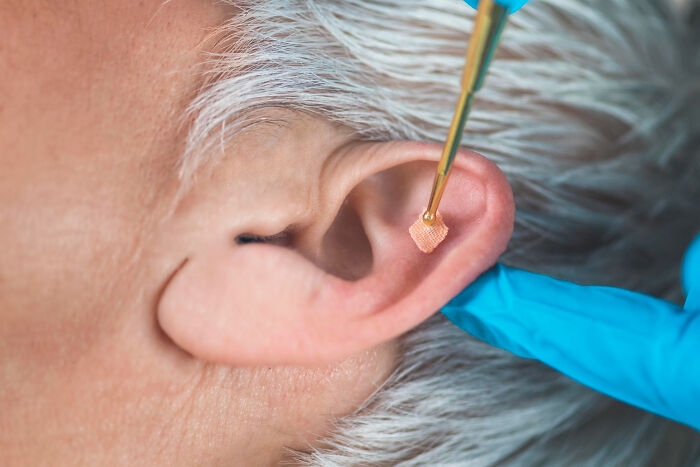 Image source: Defiantfellow, EyeEm
If you get shot in the ear the cartilage is damaged and will show a divot because it’s unrepairable.
Image source: Defiantfellow, EyeEm
If you get shot in the ear the cartilage is damaged and will show a divot because it’s unrepairable.
#12
 Image source: JohnnyWall, hmelevo4ka
Redheads require up to 20% more anesthesia than non redheads.
Image source: JohnnyWall, hmelevo4ka
Redheads require up to 20% more anesthesia than non redheads.
#13
 Image source: extropia, senivpetro
I was just telling my kids about how if you put on special glasses that turn your vision upside-down, after a few days of wearing them your brain will 'correct' your vision back to right-side up. At that point without the glasses your 'normal' vision is upside down and takes a few hours to go back. I believe theres a paper by George Stratton about it.
Image source: extropia, senivpetro
I was just telling my kids about how if you put on special glasses that turn your vision upside-down, after a few days of wearing them your brain will 'correct' your vision back to right-side up. At that point without the glasses your 'normal' vision is upside down and takes a few hours to go back. I believe theres a paper by George Stratton about it.
#14
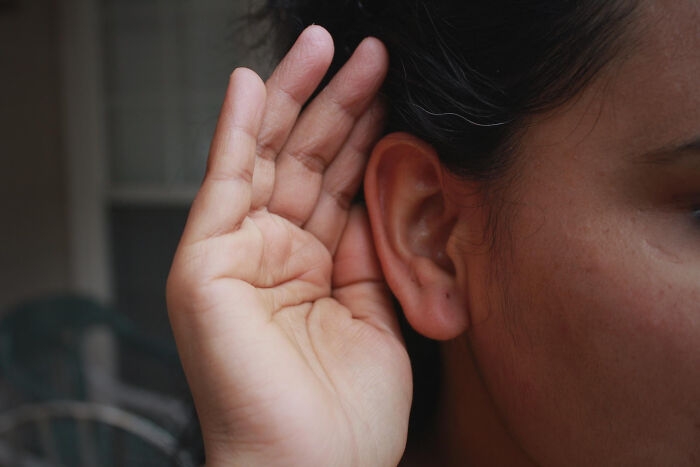 Image source: markmakesfun, EyeEm
Located in the cochlea in your inner ear there are about 16,000 hairs called stereocillia. About 4000 of them are primarily responsible for your ability to hear. If you lost all 4000 hairs you would be deaf. If you lose a substantial amount of those hairs, your hearing will be reduced. Loud sounds, like machinery, explosions, cars and bikes and amplified music destroys those hairs. There isn’t really a “may harm” or “might damage” concept, just the degree of damage done when these loud sounds impact the hairs in the cochlea. Once damaged, these hairs never grow back. You have around 4000 and that is all you will have in your entire life. The more you lose, the worse your hearing will be. Forever.
Image source: markmakesfun, EyeEm
Located in the cochlea in your inner ear there are about 16,000 hairs called stereocillia. About 4000 of them are primarily responsible for your ability to hear. If you lost all 4000 hairs you would be deaf. If you lose a substantial amount of those hairs, your hearing will be reduced. Loud sounds, like machinery, explosions, cars and bikes and amplified music destroys those hairs. There isn’t really a “may harm” or “might damage” concept, just the degree of damage done when these loud sounds impact the hairs in the cochlea. Once damaged, these hairs never grow back. You have around 4000 and that is all you will have in your entire life. The more you lose, the worse your hearing will be. Forever.
#15
 Image source: Hour-Lab140, wayhomestudio
Your brain knows to ignore your nose. . . SITTING. . . RIGHT. . . THERE, because otherwise it would pretty much drive you nuts.
Image source: Hour-Lab140, wayhomestudio
Your brain knows to ignore your nose. . . SITTING. . . RIGHT. . . THERE, because otherwise it would pretty much drive you nuts.
#16
Studies have shown that trauma can be inherited through markers on a person's genome that persist over multiple generations, meaning psychological trauma can be passed down through genetics. For example, if your grandparent experiences a traumatic event in early childhood (say, a parents death) and lacks the appropriate support system to deal with the loss, the trauma they hold from this event can be passed to their child which in turn can be passed to you. Image source: anon#17
 Image source: SympatheticFingers, EyeEm
The tongue is the only muscle attached at only one end.
Image source: SympatheticFingers, EyeEm
The tongue is the only muscle attached at only one end.
#18
 Image source: sharloops, sweet_tomato
If you ever need a kidney transplant, they don’t remove an old kidney they just add a third one.
Image source: sharloops, sweet_tomato
If you ever need a kidney transplant, they don’t remove an old kidney they just add a third one.
#19
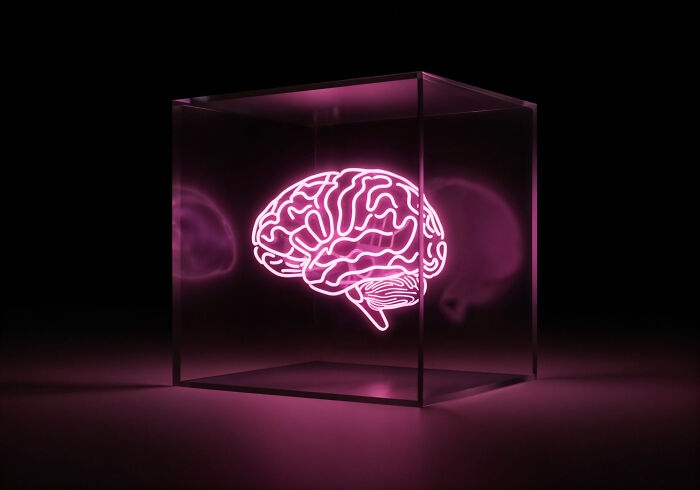 Image source: Young_Old_Grandma, freepik
The human brain is pink, soft, jiggly and friable.
Source: I perform autopsies.
Image source: Young_Old_Grandma, freepik
The human brain is pink, soft, jiggly and friable.
Source: I perform autopsies.
#20
 Image source: RockPrize6980, TriangleProd
So there are these little bugs that live on your face. Pretty much everyone has them.. Demodex they are called. a mite that lives in human hair follicles, usually on your face. You can't wash em off as they bury too deep they eat your oily face sebum and reproduce at night.
Image source: RockPrize6980, TriangleProd
So there are these little bugs that live on your face. Pretty much everyone has them.. Demodex they are called. a mite that lives in human hair follicles, usually on your face. You can't wash em off as they bury too deep they eat your oily face sebum and reproduce at night.
#21
 Image source: Icy-Whale-2253, freepik
I’ll use myself for an example. I have a rare trait called antimetropia, in simple terms that means my eyes have opposite eyesight (one is nearsighted, the other is farsighted). Most people don’t seem to know this is possible. Even when I try to order glasses online… the websites tell me my prescription must be wrong because it’s too unusual.
Image source: Icy-Whale-2253, freepik
I’ll use myself for an example. I have a rare trait called antimetropia, in simple terms that means my eyes have opposite eyesight (one is nearsighted, the other is farsighted). Most people don’t seem to know this is possible. Even when I try to order glasses online… the websites tell me my prescription must be wrong because it’s too unusual.
#22
 Image source: ithkuil, freepik
Have you ever wondered why most animals all seem to basically look alike (at least until you become very familiar with some particular pet or something?) Whereas humans seem to be quite distinct.
Human faces, like our overall bodies, generally from one individual to another, are very similar in shape. We are not really different from other animals that way. People just _seem_ very unique because our brains are highly tuned to differentiate faces.
Also attractiveness in faces, aside from symmetry and masculinity/femininity, is mainly just about being the most average looking face possible. Meaning proportions that are most typical.
"Lactose intolerance" affects half of Americans and it's not a medical condition or flaw in any way. It's just not typical for human adults in general to be able to consume cow's milk. The idea that everyone should be able to drink it mainly comes from the dairy industry and maybe a little bit of racism. Cheese and pizza may be worth whatever the consequences are though :P
It's also not normal for humans to be able to routinely drink alcohol safely. That idea also comes from the alcohol industry.
Image source: ithkuil, freepik
Have you ever wondered why most animals all seem to basically look alike (at least until you become very familiar with some particular pet or something?) Whereas humans seem to be quite distinct.
Human faces, like our overall bodies, generally from one individual to another, are very similar in shape. We are not really different from other animals that way. People just _seem_ very unique because our brains are highly tuned to differentiate faces.
Also attractiveness in faces, aside from symmetry and masculinity/femininity, is mainly just about being the most average looking face possible. Meaning proportions that are most typical.
"Lactose intolerance" affects half of Americans and it's not a medical condition or flaw in any way. It's just not typical for human adults in general to be able to consume cow's milk. The idea that everyone should be able to drink it mainly comes from the dairy industry and maybe a little bit of racism. Cheese and pizza may be worth whatever the consequences are though :P
It's also not normal for humans to be able to routinely drink alcohol safely. That idea also comes from the alcohol industry.
#23
 Image source: Simsandtruecrime, fxquadro
Restless Leg Syndrome can be a symptom of Anemia. Get your iron checked.
Image source: Simsandtruecrime, fxquadro
Restless Leg Syndrome can be a symptom of Anemia. Get your iron checked.
#24
 Image source: naughtmyrealname, freepik
There is only one bone in our bodies connected to no other bones. It is called the hyoid bone and it is in your throat. .
Image source: naughtmyrealname, freepik
There is only one bone in our bodies connected to no other bones. It is called the hyoid bone and it is in your throat. .
#25
 Image source: RestaurantJaded7240, freepik
Our body loves fat but hates muscle because fat is like an energy storage for it and muscle is a "useless weight" for our body. Hence why is building muscle so hard. .
Image source: RestaurantJaded7240, freepik
Our body loves fat but hates muscle because fat is like an energy storage for it and muscle is a "useless weight" for our body. Hence why is building muscle so hard. .
#26
 Image source: tvtoms, katemangostar
The human body has more than 60 sphincters.
Image source: tvtoms, katemangostar
The human body has more than 60 sphincters.
#27
 Image source: Ok_Literature3138, freepik
People think their eyes are in the upper half of their skull. They are basically in the middle of your skull. Halfway between your chin and the top of your head.
Image source: Ok_Literature3138, freepik
People think their eyes are in the upper half of their skull. They are basically in the middle of your skull. Halfway between your chin and the top of your head.
#28
 Image source: LnktheLurker, shurkin_son
When a woman is pregnant, small bits of the baby's DNA cross the uterus barrier and stay in her body even after birth. So every child a woman carried has changed her forever.
Humans have stripes, but we usually cannot see them.
On the same subject, a lot of women are chimeras and don't know about it. They have different DNA in different parts of their bodies. Only a small portion discover it thanks to situations that demand DNA testing.
Image source: LnktheLurker, shurkin_son
When a woman is pregnant, small bits of the baby's DNA cross the uterus barrier and stay in her body even after birth. So every child a woman carried has changed her forever.
Humans have stripes, but we usually cannot see them.
On the same subject, a lot of women are chimeras and don't know about it. They have different DNA in different parts of their bodies. Only a small portion discover it thanks to situations that demand DNA testing.
#29
 Image source: be_a_palm_not_a_tree, benzoix
You can actually smell your lungs while breathing but your brain ignores this smell.
Image source: be_a_palm_not_a_tree, benzoix
You can actually smell your lungs while breathing but your brain ignores this smell.
#30
Oh I learned this one recently: one of the X chromosomes in a person with two X chromosomes is inactive. So they’re technically only using one X chromosome (aka Barr Body). Image source: priv_ishDE
Written by
Demilked Editorial
SaaS Review Specialist · Demilked
With 5+ years in the creator, entertainment, and publishing spaces, Demilked shortlists, reviews, and ranks leading tools that actually make your life easier.