
Honest Payhip review (2026): The best platform to sell digital products
9 min read
MonetizeReview
We tested 12 platforms to sell digital products and found two leaders. See how they compare and pick the best fit for your niche.
Selling a digital product comes down to four steps: pick what you're selling, pick where you're selling it, set a price, and get the link in front of people who'll buy it.
The “where” and “how” are the parts most creators overthink. You don't need a full website or a developer to open your online business. Platforms like Payhip or Podia let you upload a file, set a price, and generate a checkout link in minutes, no code required.
From there, it's about distribution: sharing that link in your bio, your newsletter, or directly with your audience. The product doesn't sell itself, but the setup shouldn't be the hard part.
The products with the best margins are the evergreen ones you make once and sell forever: ebooks, templates, presets, online courses, and coaching calls. No inventory, no shipping, no per-unit cost eating into your price.
What sells depends on what you already have: a skill people ask you about, a process you've built for your own work, or knowledge from a niche you're already known in.
Templates and swipe files sell well because they save the buyer time. Courses sell well when you have proof you've gotten a result yourself. Printables and low-ticket digital downloads work as an easy first product because they're fast to make and cheap enough to be an impulse buy.
Less than most people expect. You don't need a business license, inventory, or a website budget to start. The real cost is the platform fee you pay per sale, and that number swings hard depending on where you sell.
Selling digital products can cost anywhere from 0% to about 26% per sale in 2026, depending on the platform. A store with a flat 0% fee keeps you the most per sale; a marketplace like Etsy, once you factor in listing fees, transaction fees, and ad costs, can eat a quarter of what you make.
On top of whatever the platform charges, Stripe or PayPal takes their standard cut too (roughly 2.9% + $0.30 per transaction), no matter which platform you choose. The platform's monthly fee is often the smaller cost. The per-sale cut is the one that adds up.
Best overall for selling digital products
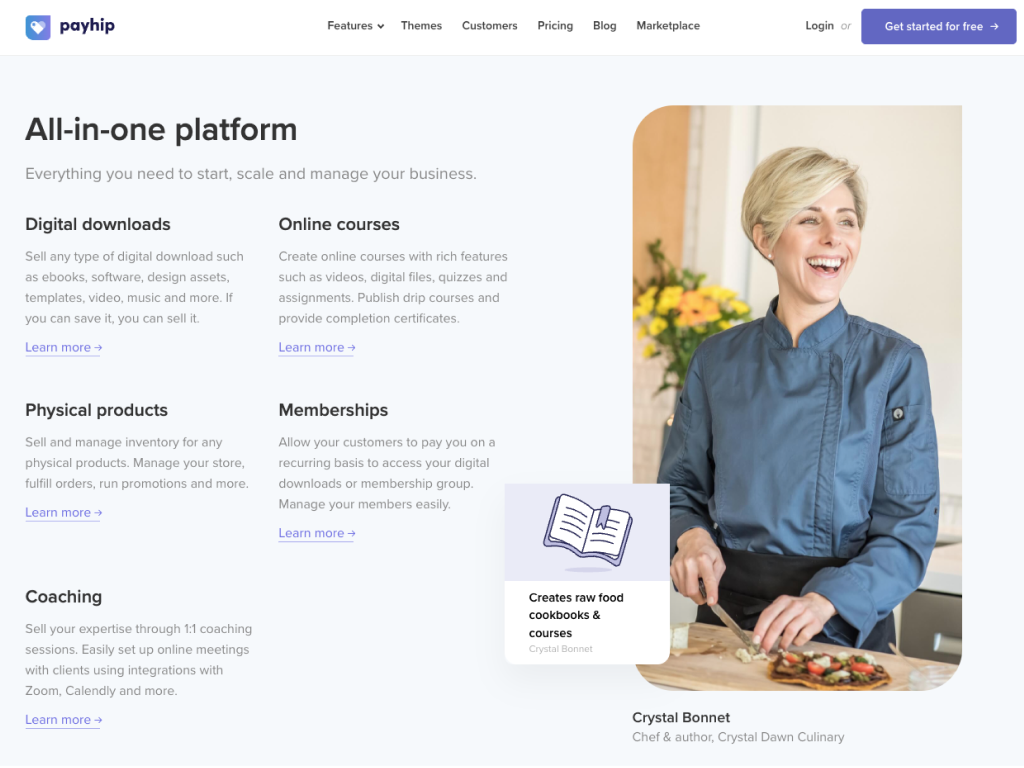
Payhip is dead simple, which earns it the number-one spot on our list. The simplicity of Payhip is intentional by design. It supports all products you can think of: digital downloads, e-books, templates, courses, and physical products.
There are only three tiers to choose from, and the only thing that changes is the percentage of each sale that the platform charges. If you're just starting out, go for a free plan: unlimited products and revenue for a 5% transaction fee. Upgrade when you see real traction for a lower (or zero) transaction fee.
Payhip is a storefront for creators to sell online. It covers digital and physical products, courses, coaching, and memberships, all from one link. You don't need any plugins, hosting, or domain before you can take your first payment.
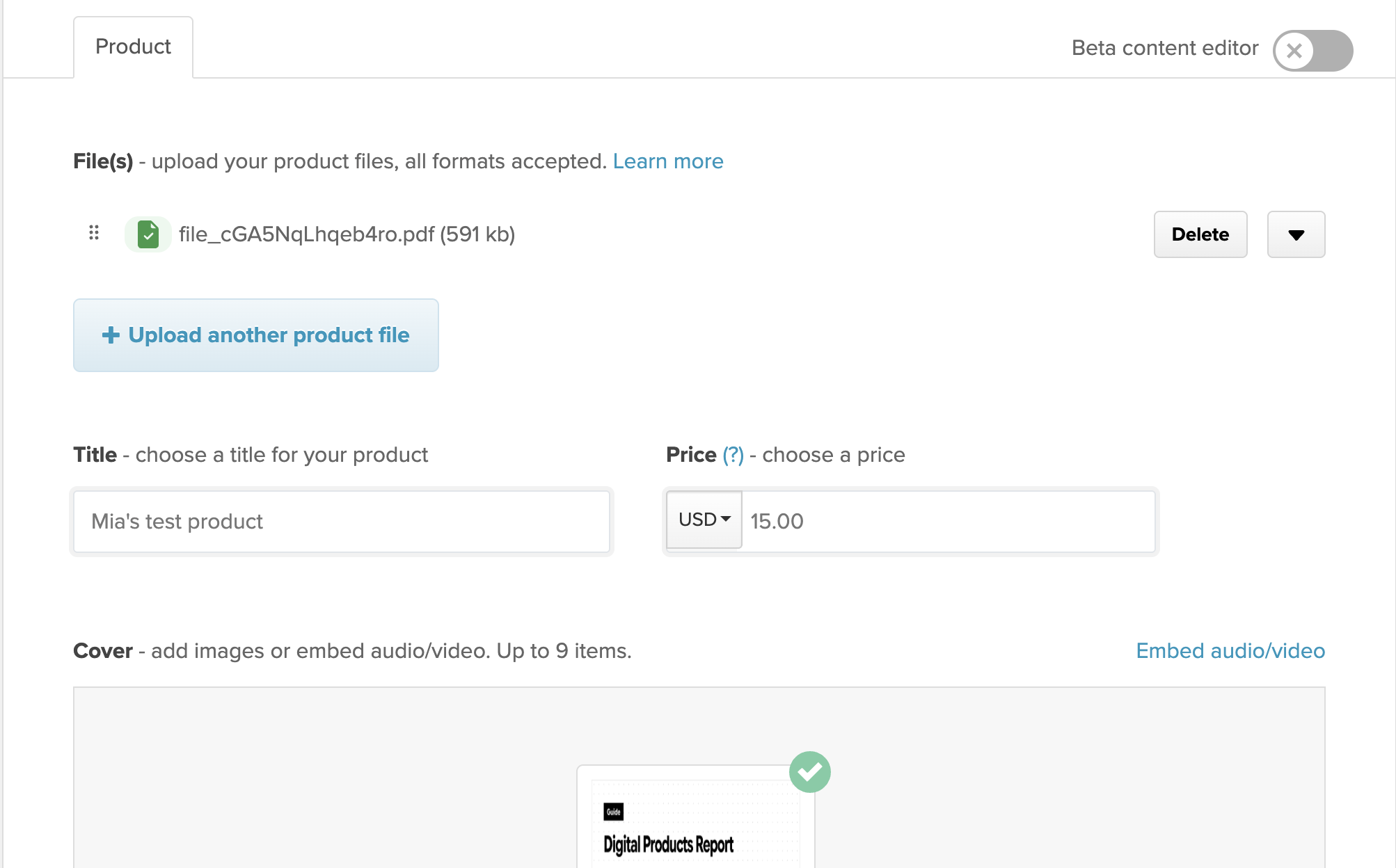
You upload a file, set a price, and connect Stripe or PayPal. That's the whole setup. Payhip handles delivery (buyers get their download or course access automatically after checkout), payment processing, and, if you're selling into the EU or UK, VAT collection and remittance. You can embed a "Buy" button on your own site, sell through a Payhip storefront, or drop a link straight into your bio or newsletter.
It's extremely transparent and dead simple. If you want to start your digital product business within a day, with zero complexity and no loopholes that will catch up later, Payhip is it.
What we liked
Every feature was unlocked on the free plan when we tested it, nothing held back for a paid tier
We hit no product or revenue caps at $0/month
Fees dropped the more we simulated sales: 5% → 2% → 0% across Free, Plus, and Pro
EU/UK VAT was calculated and handled automatically, we didn't touch a VAT form
We were live and selling within minutes, no approval wait
What we disliked
Once we modeled $1,000+/month in sales, the free plan's 5% started costing more than just paying for Plus
The storefront builder was fast to set up but capped on customization, don't expect a fully branded site
Payhip supports all types of digital products you can imagine: ebooks, courses, downloadables, and even physical print-on-demand merch. That, plus the extra simplicity of the platform, makes it the best option for your first digital product.
Digital product hosting & delivery
Upload any file type (PDF, video, audio, zip, software) and delivery fires automatically the moment payment clears on the sales page. Buyers get instant access via email and a personal library page, whether they're grabbing a $5 ebook or a $500 bundle.
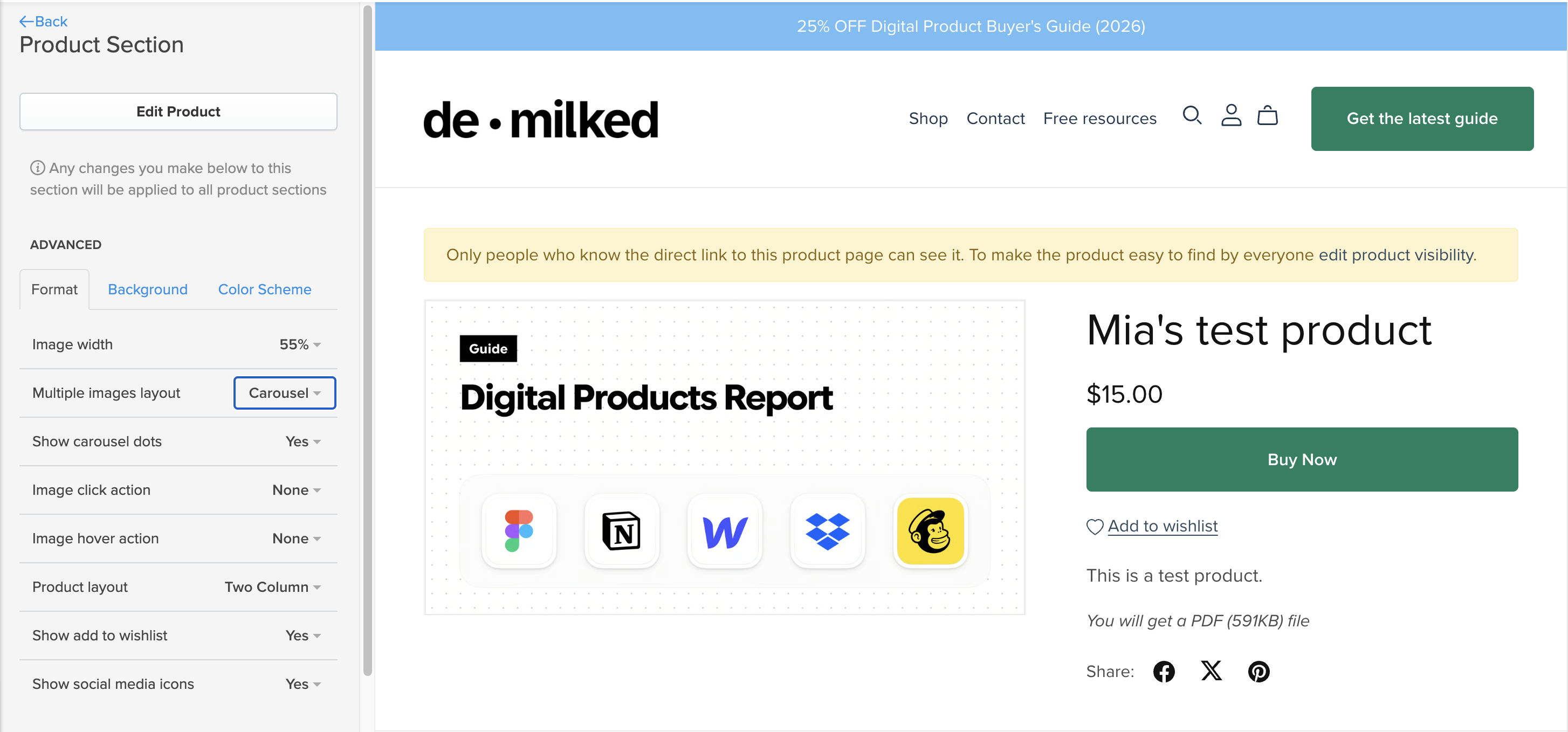
Sales page & course builder
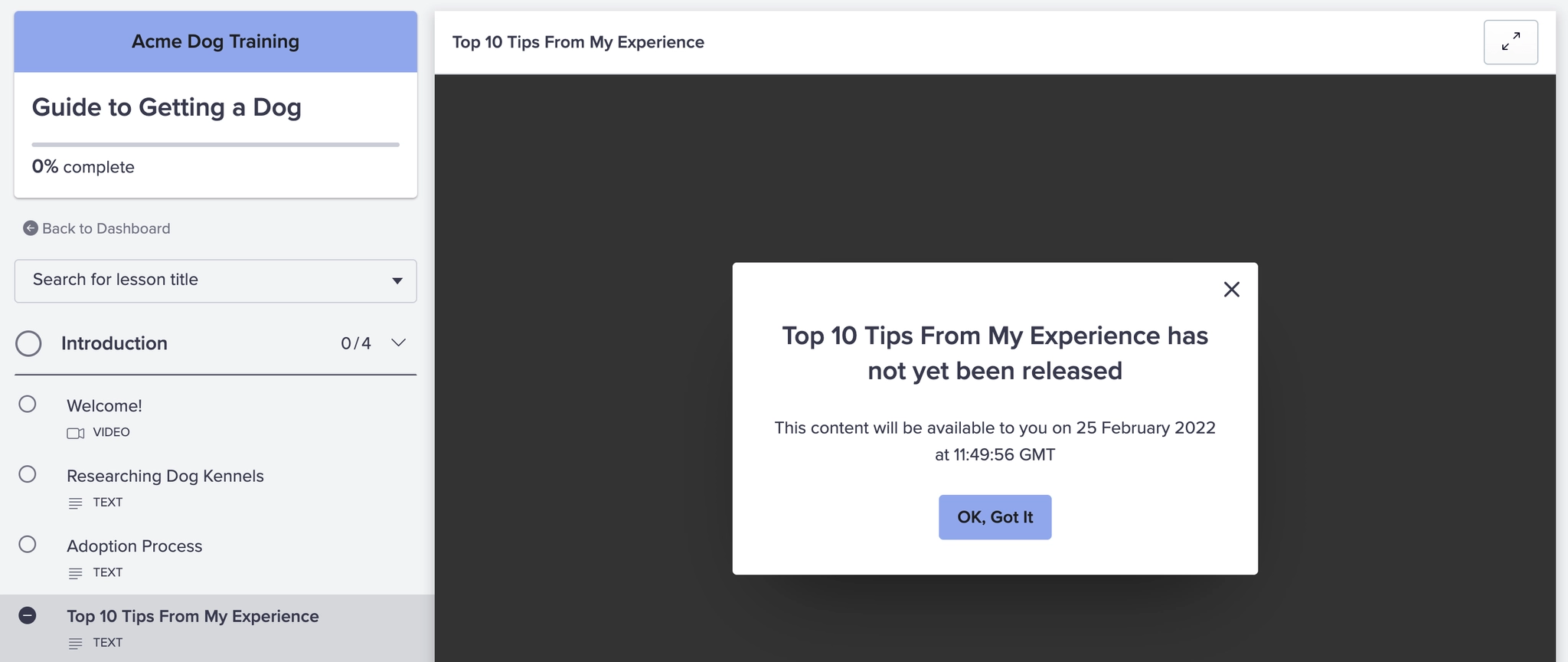
Structure lessons into modules, add video and downloadable resources, and drip content on a schedule instead of dumping it all at once. It won't out-feature a dedicated course platform, but it's included free, with no per-student fee.
Memberships & subscriptions
Turn any product into recurring revenue: gate content behind a monthly fee, run a paid community tier, and let Payhip handle billing cycles and failed-payment retries. Gumroad has no native equivalent.
Global VAT auto-handling
Payhip calculates, collects, and remits USA, Canada, EU, and UK VAT at the point of sale, no MOSS registration or manual filing. Most competitors leave this entirely on the seller.
Anti-piracy protection
PDF stamping embeds the buyer's info in every file, and software sellers get license key generation, enough to discourage casual sharing without adding friction to legit buyers.
For Payhip, pricing is a feature that differentiates it from other platforms and marketplaces. It's essential that the more your digital product sales grow, the fees don't creep up on you.
Payhip is built exactly for that, and that's how it deserves the number-one spot on our list. Everything you need to sell your first digital product and scale to $1000+ in revenue, with flat fees and all features accessible on all tiers.
| Plan | Free | Plus | Pro |
|---|---|---|---|
| Price | $0/mo | $29/mo | $99/mo |
| Transaction fee | 5% | 2% | 0% |
| All features | ✅ All included | ✅ All included | ✅ All included |
| Product/revenue limits | None | None | None |
| Best for | Testing your first product, reaching the first $1K in sales | Consistent sellers clearing ~$1,000/mo | High-volume sellers |
Payhip is almost a universal fit for all solo creators and experts opening their digital business.
Selling your first digital product — Yes, start with Plus
Need a customizable landing page to sell directly to your audience — Yes, Payhip offers more customization to business owners than, say, Gumroad that looks more or less the same
Looking for a no-brainer way to launch your digital product — Yes, you can go live within an hour
Best for launching a course fast with automation built in
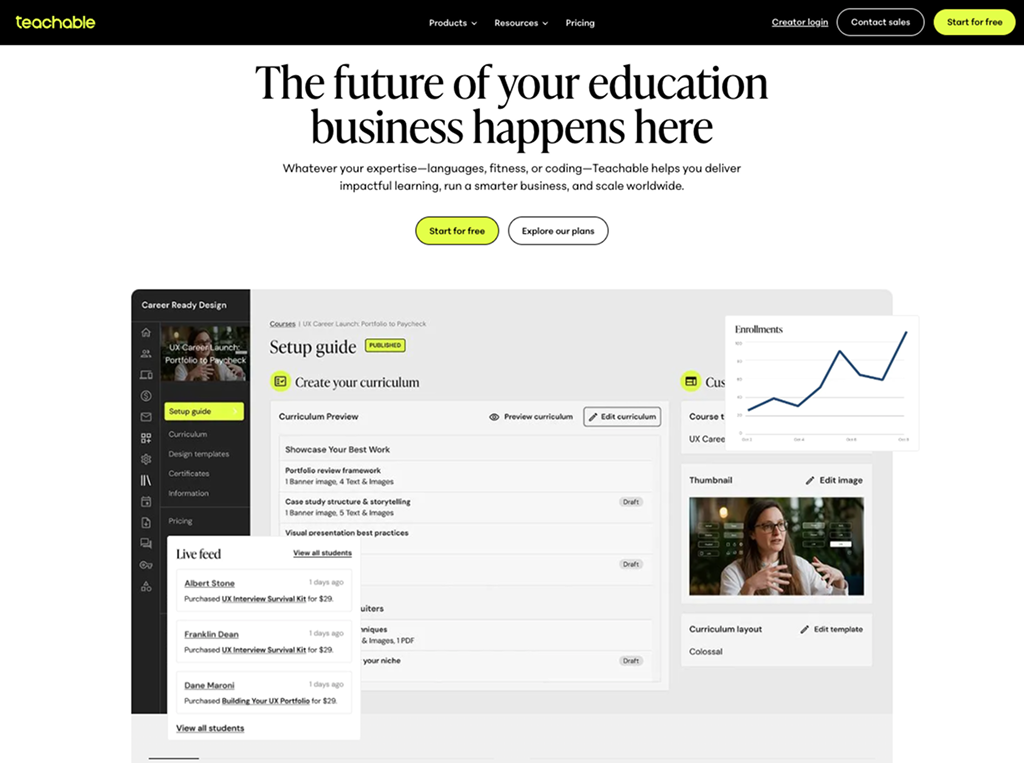
Teachable earns this spot for one reason: it's the fastest path from "I have a course idea" to "I have a paying student," with tax handling, AI tools, and automation already built into the entry plan. It's not the cheapest platform here, but it's the one that gets out of your way the fastest.
Teachable is a course-focused platform for creators selling pre-recorded courses, coaching, digital downloads, and increasingly, memberships. The course builder is drag-and-drop, students get a top-rated mobile app for offline access, and the platform handles sales tax and VAT across 45+ countries automatically.
Where Teachable pulls ahead of Payhip and Podia is depth on the course side specifically: AI creation tools, automatic subtitles in 70+ languages, cross-promotional tools that surface your other products to existing students, and same-day payouts with no reserve held back.
What we liked
Drag-and-drop course builder with a real student preview mode
Built-in AI tools plus automatic video subtitles in 70+ languages
US sales tax, EU/UK VAT, and 45+ countries covered automatically
Daily payouts, nothing held in reserve
35+ local payment methods and localized checkout
Assisted migration if you're moving from another platform
What we disliked
5–7.5% transaction fees on the entry plan eat into margin fast
No native email marketing, you'll need Zapier plus a third-party tool
Branding removal and affiliate tools are locked behind paid tiers
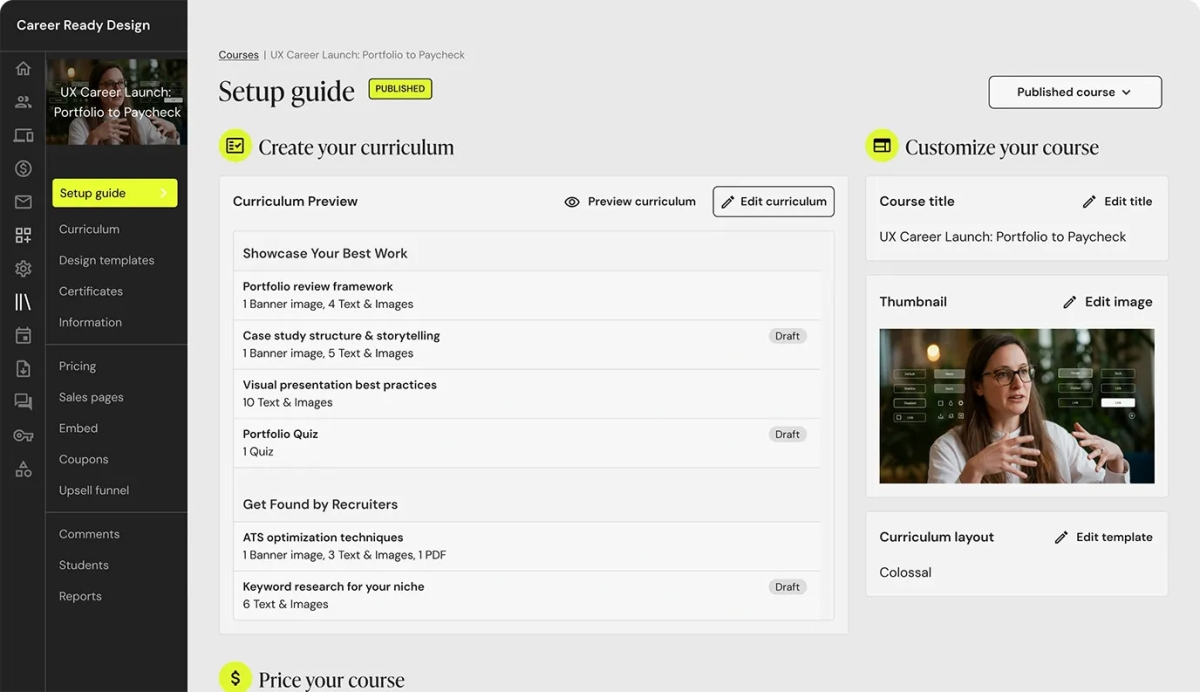
Course builder & student experience
Drag lessons into sections, preview exactly what a student sees, and publish. Drip content and cross-promotional tools surface your other products to existing students automatically, no manual email work required.
Automated tax handling
Teachable collects and remits sales tax and VAT across 45+ countries on your behalf, paired with same-day payouts. Few competitors on this list handle tax this thoroughly.
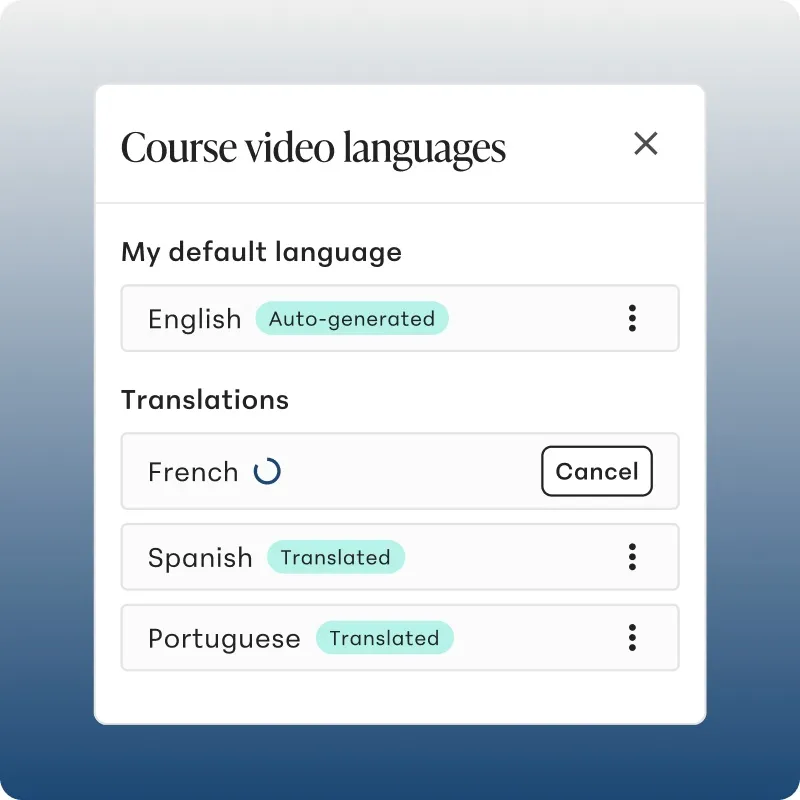
AI tools & subtitles
Built-in AI course creation tools plus automatic subtitle generation in 70+ languages, included even on the Starter plan.
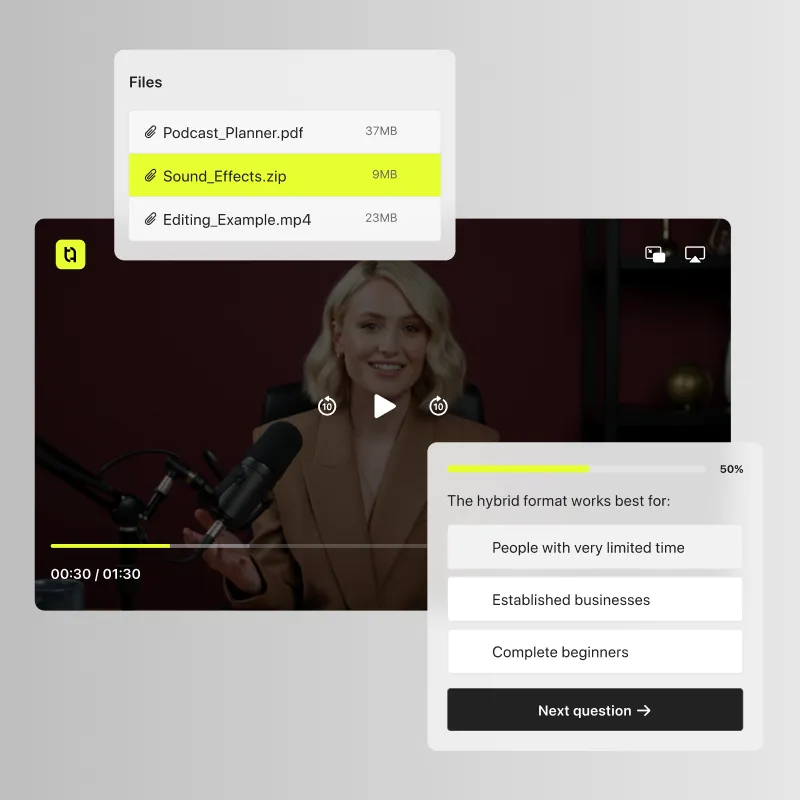
Upsells & analytics
Automated upsells and order bumps live directly in the dashboard, turning one course into multiple income streams, with simple analytics to track what's converting.
Mobile app & payments
Students get offline access through Teachable's iOS and Android apps, and 35+ local payment methods keep international checkout friction low.
| Plan | Starter | Builder | Growth |
|---|---|---|---|
| Price (monthly / annual) | $39 / $29 mo | $89 / $69 mo | $189 / $139 mo |
| Transaction fee | 7.5% | 0% | 0% |
| Courses | 5 | More | 50 |
| Active students | 100 | 100–1,000 | More |
| Branding removal | ❌ | ❌ | ✅ |
Starter works for testing a first course, but the 7.5% fee makes Builder worth the jump once you're past a handful of sales; the math flips in Builder's favor fast. Growth is for creators making course sales their main income, adding branding removal and course certificates.
See Teachable's full pricing →Yes, if you want the fastest launch with the least setup and don't mind paying a transaction fee early on. Skip it if you specifically need Kajabi's full business toolkit or Thinkific's institutional scale, those are better fits past a certain size.
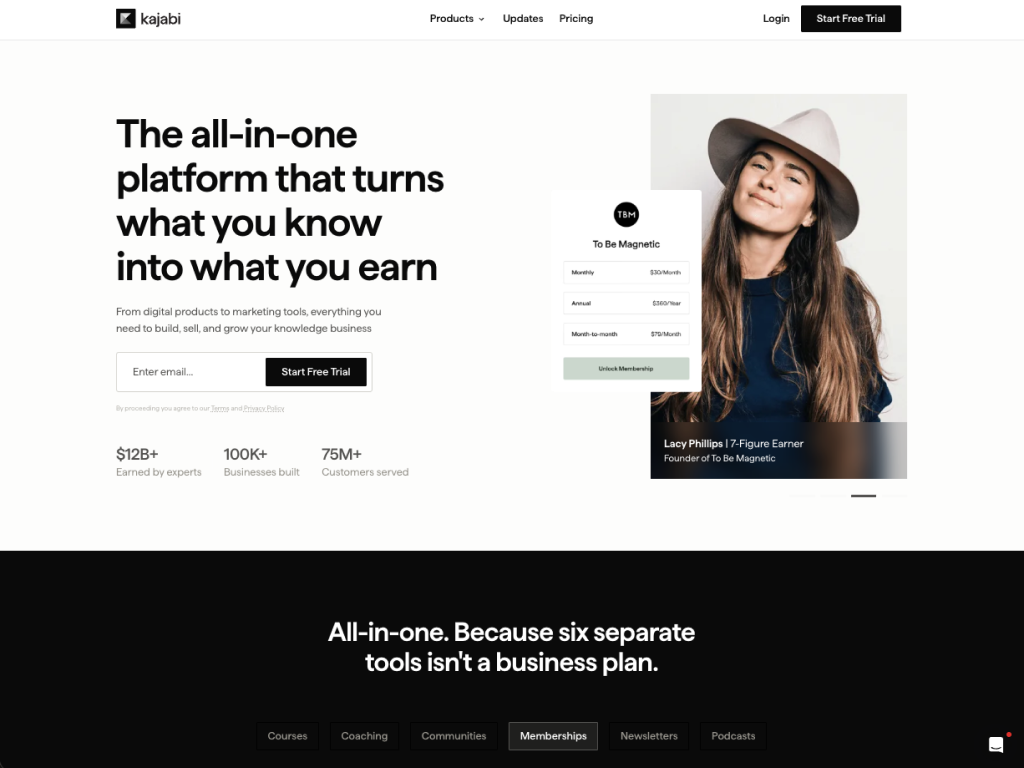
Best for running full digital product business
This is the platform for creators who've already moved past "how do I make digital products" and into running an actual business.
If you're still at the discover-how-to-sell-digital-products stage, Kajabi will feel like way more platform than you need. Once you're managing different digital products under one brand, it starts to make a lot more sense. But it does come at a considerably higher pricetag.
In our testing, Kajabi turned out to be an all-in-one platform for creators selling courses, coaching, memberships, and digital goods, sometimes even physical products, without needing three or four separate tools duct-taped together.
We set up both course formats it offers: Evergreen (available the second someone buys) and Cohort (scheduled groups moving through material together with live sessions). What stood out immediately is that every core feature, email marketing, funnels, checkout, website builder, was already unlocked on the entry plan. Kajabi doesn't lock features behind higher tiers the way some platforms do. It gates capacity instead: more products, more contacts, more admin seats as your business selling activity grows.
What we liked
Courses, email marketing, funnels, checkout, and website builder all live in one login
0% platform transaction fees on every plan through Kajabi Payments
No features gated behind higher tiers, every plan gets the full toolkit
Community spaces built in, useful for engagement without a separate app
Support held up well when we needed it, responsive chat plus a deep tutorial library
What we disliked
Steep learning curve early on
No autosave in some areas, we lost setup progress manually re-entering info
Priced well above Payhip, Podia, and most course platforms we've tested
Email template options felt limited compared to dedicated ESPs
Very expensive compared to competitors
Course & digital product builder
We dripped content, set up progress tracking, and dropped quizzes anywhere in the curriculum without hitting a lesson cap. The Paywall feature, which lets you offer a free preview before the purchase wall kicks in, was one of the small touches that actually moved the needle when we tested it on a real product page.

Email marketing & funnels
This is where Kajabi separated itself from Payhip and Podia in our hands-on testing. A full automation suite comes built in, so we didn't need to bolt on a separate ESP just to price your digital product properly across a funnel or follow up after a launch.
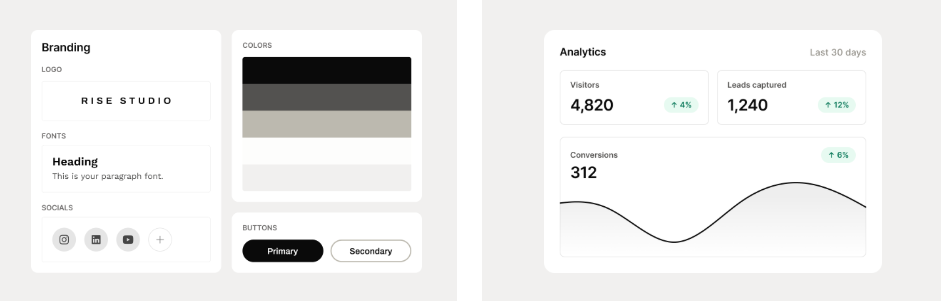
Website & funnel builder
We built our test storefront directly in Kajabi rather than linking out to a separate site. It's a real website builder, not just a single landing page, and it held up fine for a small multi-product catalog.
Checkout & payments
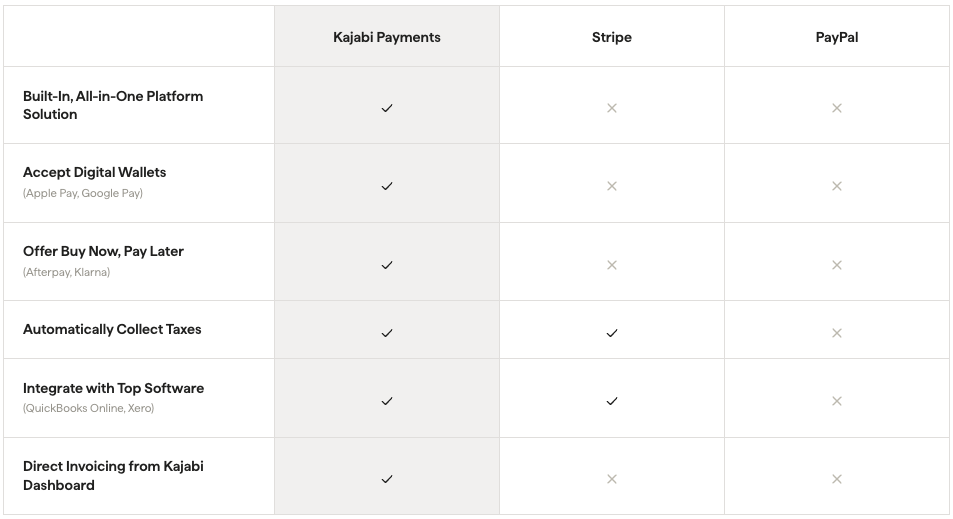
Through Kajabi Payments, we didn't get charged a platform transaction fee on any plan we tested. The cost lives entirely in the subscription, not in a cut of every sale, which changes the math once you're selling consistently.
Community
We turned on a community space alongside our test products and found it worked well for collecting the kind of engagement and testimonial material that's hard to get from a course platform alone. It's a similar idea to what Podia offers, just tied into a much bigger toolset here.
Kajabi was the most expensive platform we tested in this cluster, and it's upfront about why: you're paying for capacity, not features.
| Plan | Basic | Growth | Pro |
|---|---|---|---|
| Price (monthly / annual) | $179 / $143 mo | ~$199 mo (annual) | $499 / $399 mo |
| Transaction fee | 0% | 0% | 0% |
| Products | 5 | More | Unlimited |
| Contacts | 2,500 | More | More |
| Core tools (courses, email, funnels, checkout) | ✅ Included | ✅ Included | ✅ Included |
| Best for | First flagship product | Creators with an active email list | Agencies and established businesses |
Every tier we looked at included the full toolkit already, we just kept hitting product and contact ceilings as we tried to scale up the test account. There's no permanent free plan, only a trial period.
See Kajabi's full pricing →Already running an ecosystem of digital products — Yes, this is exactly what we found Kajabi consolidates well
Want to drop email marketing and funnel tools from your budget — Yes, in our testing these were fully built in, not an add-on
Just launching a digital product for the first time — No, we'd steer you toward Payhip first, both on price and learning curve
Looking for the cheapest way to create a digital product and get it live — No, Kajabi was the most expensive setup we tested in this whole comparison
Best for video courses and community
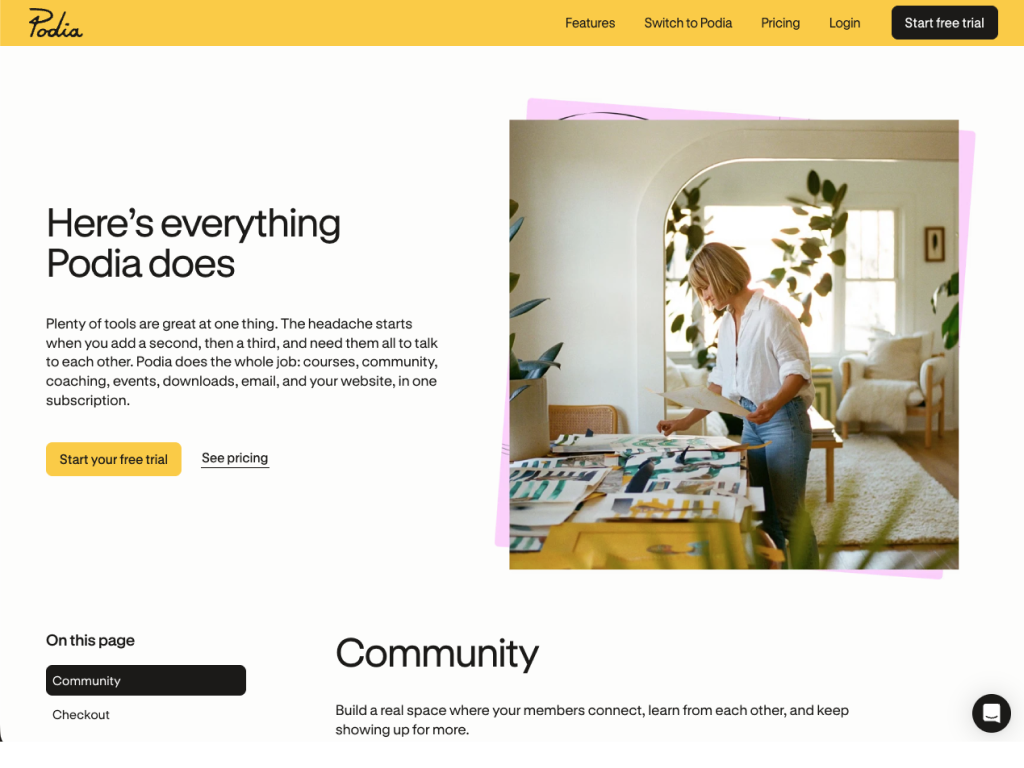
Podia is the right platform once you're ready to grow your business past a single download. It's built around video courses, coaching, and community, all bundled into one subscription, not separate tools.
There's no free plan anymore, but every paid tier gets you a full website, unlimited members, and built-in email marketing. The tradeoff for skipping Payhip's free entry point is a platform that scales once you're actually selling.
Podia is an all-in-one storefront for creators selling video courses, digital downloads, coaching, memberships, and live or in-person events, plus a built-in community space to keep your audience engaged between launches.
You don't need a separate LMS, a separate email tool, and a separate community app. It's one login, one dashboard, and one place to sell directly to your audience. That's the core pitch: fewer tools stitched together, one place to launch and grow your business.
Where Podia pulls ahead as a digital marketplace alternative to course-only platforms is the community layer. You can gate discussion spaces, host live events, and turn replays into standalone products, all without leaving the platform.
What we liked
Video courses and community live in the same platform, no separate app needed
Email marketing, automations, and segmentation included on every paid plan
Unlimited students on any plan, no per-learner fee
0% transaction fees once you're on Shaker or Earthquaker
Free migration service if you're moving from another platform
What we disliked
No free plan anymore, only a 30-day trial
Mover's 5% transaction fee stings until you clear the $840/month break-even point
Hard caps on products, videos, and community spaces even on paid tiers
Website builder is clean but has a customization ceiling on every plan
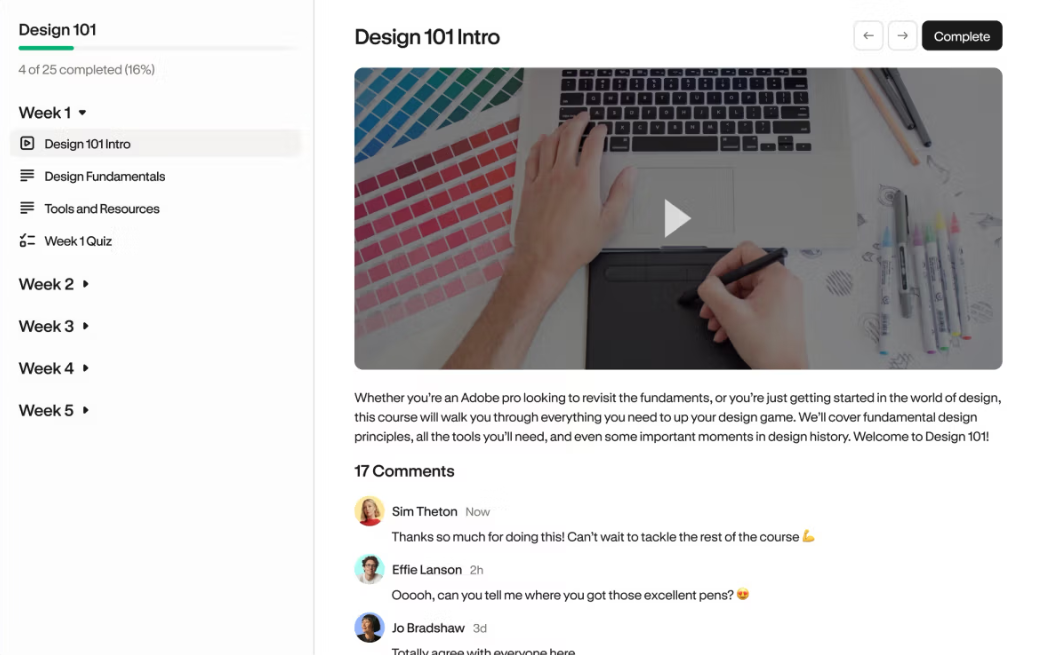
Video courses & content dripping
Structure lessons into modules, drip content on a schedule, and give students a progress-tracked login. This is where Podia earns its "best for video courses" reputation. Every plan supports unlimited students on your available product cap.
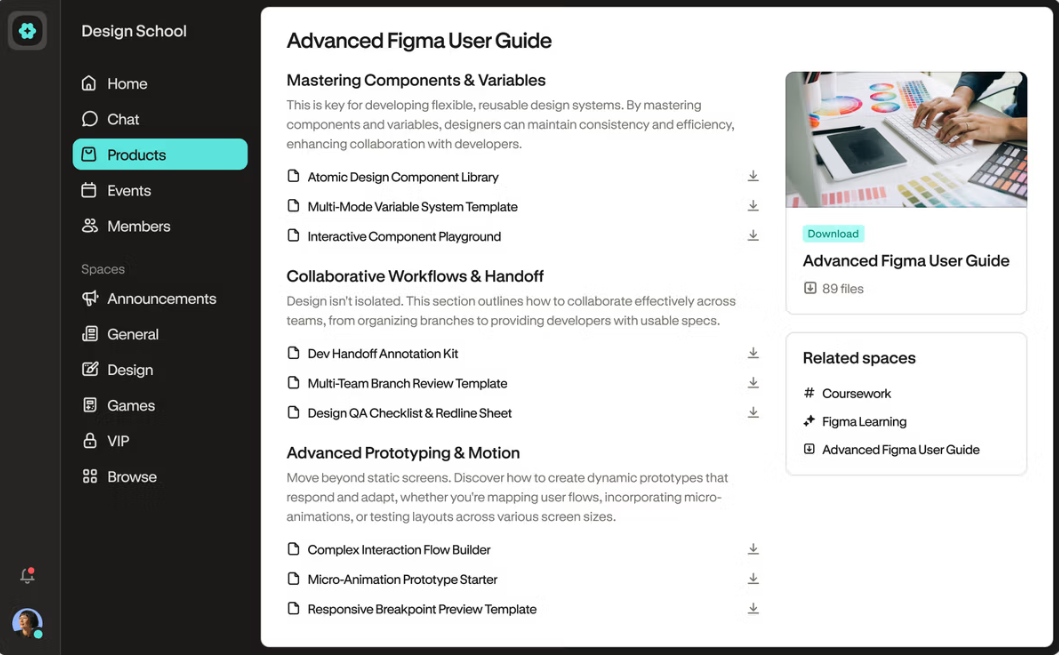
Digital downloads
Build your own place to sell digital downloads: ebooks, templates, audio, or any digital file. Alternatively, give them away to grow your list. All in one place with your community, email, and website.
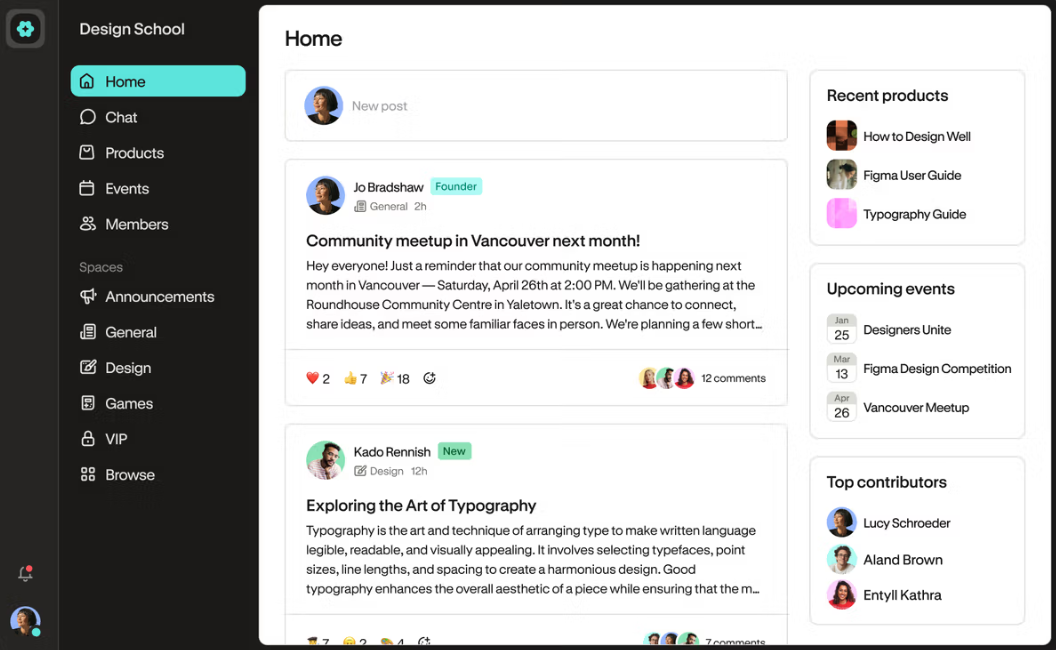
Community spaces
Build discussion spaces or a paid community tier directly inside your storefront. It's a built-in way to drive traffic back to your other products and collect testimonial-worthy engagement without a separate app like Circle or Discord.
Email marketing & automation
Broadcasts, drip sequences, tagging, and segmentation are included on every plan, so you can automate follow-ups and promote your product to your list without a separate ESP.
Affiliate marketing & upsells
On Shaker and above, you can recruit affiliates to promote your product for a cut of the sale, and add checkout upsells to lift average order value, both useful once you're past the "just launching" stage and into actively growing your business.
Podia dropped its free plan in 2024, so the entry point is steeper than Payhip's, but the fee structure rewards you fast once you're selling consistently.
| Plan | Mover | Shaker | Earthquaker |
|---|---|---|---|
| Price (monthly / annual) | $49 / $42 mo | $99 / $84 mo | $179 / $150 mo |
| Transaction fee | 5% | 0% | 0% |
| Products | 50 | 150 | Unlimited |
| Community spaces | 25 | 100 | Unlimited |
| Email subscribers included | 100 | 500 | 1,000 |
| Affiliate marketing | ❌ | ✅ | ✅ |
| Best for | Testing your first course or product line | Growing creators who want 0% fees | High-volume sellers running a full content business |
The break-even point sits around $840/month in revenue on annual billing. Below that, Mover's 5% fee costs less than the $42/month jump to Shaker. Above it, Shaker wins outright. As with Payhip, standard Stripe/PayPal processing fees (~2.9% + $0.30) apply on top of whatever Podia charges.
See Podia's full pricing →Selling video courses or running coaching sessions — Yes, this is Podia's strongest lane
Want a built-in community to keep your audience engaged — Yes, it's one of the few platforms with this natively included
Looking for the cheapest place to launch your first digital product — No, Payhip's free tier is the better starting point
Need a highly custom storefront design — No, Podia's website builder is clean but has a customization ceiling on every plan
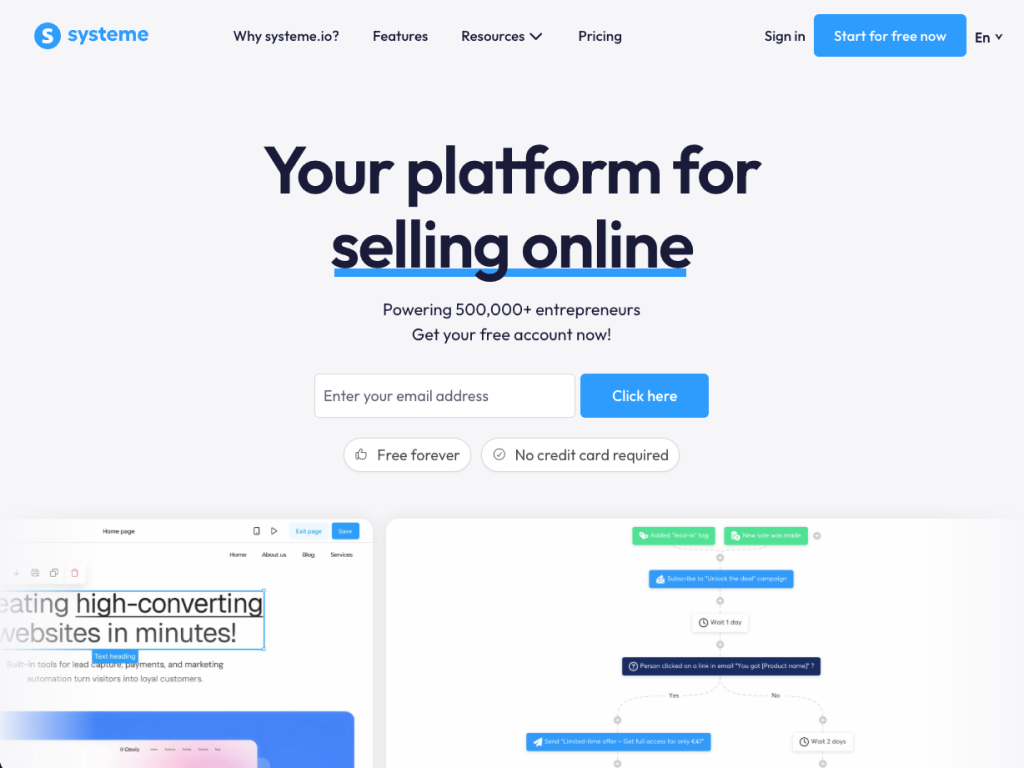
Best free all-in-one for funnels + digital products
Systeme.io bundles funnels, email marketing, and course/digital product sales into one dashboard, with an actually permanent free plan (2,000 contacts, 3 funnels, 1 course, no card required).
Paid tiers run $17–$97/month with zero transaction fees on any plan. The tradeoff is polish: slower page loads, limited design flexibility, and no page export.
Systeme.io is an all-in-one marketing platform that bundles sales funnels, email marketing, and digital product or course sales into a single dashboard, built for solo creators who don't want to pay for four separate tools to launch one offer.
Beyond hosting your product, it builds the funnel around it: opt-in pages, order bumps, upsell sequences, and automated email follow-ups, plus a native affiliate program if you want others selling on your behalf. The free plan isn't a trial, it's a permanent tier with real limits (2,000 contacts, 3 funnels, 1 course) that many first-time sellers never hit.
What we liked
Truly free plan with no time limit
Native affiliate program
No per-sale cut
What we disliked
Slow page loads
Thin analytics
Can't export or import pages
Weaker course experience than dedicated platforms
Systeme.io's pitch is breadth over polish: everything a first product launch needs is bundled into one login, most of it available for free.
Funnel builder
Build opt-in pages, sales pages, and multi-step funnels with order bumps and one-click upsells, without stitching together a separate landing-page tool.
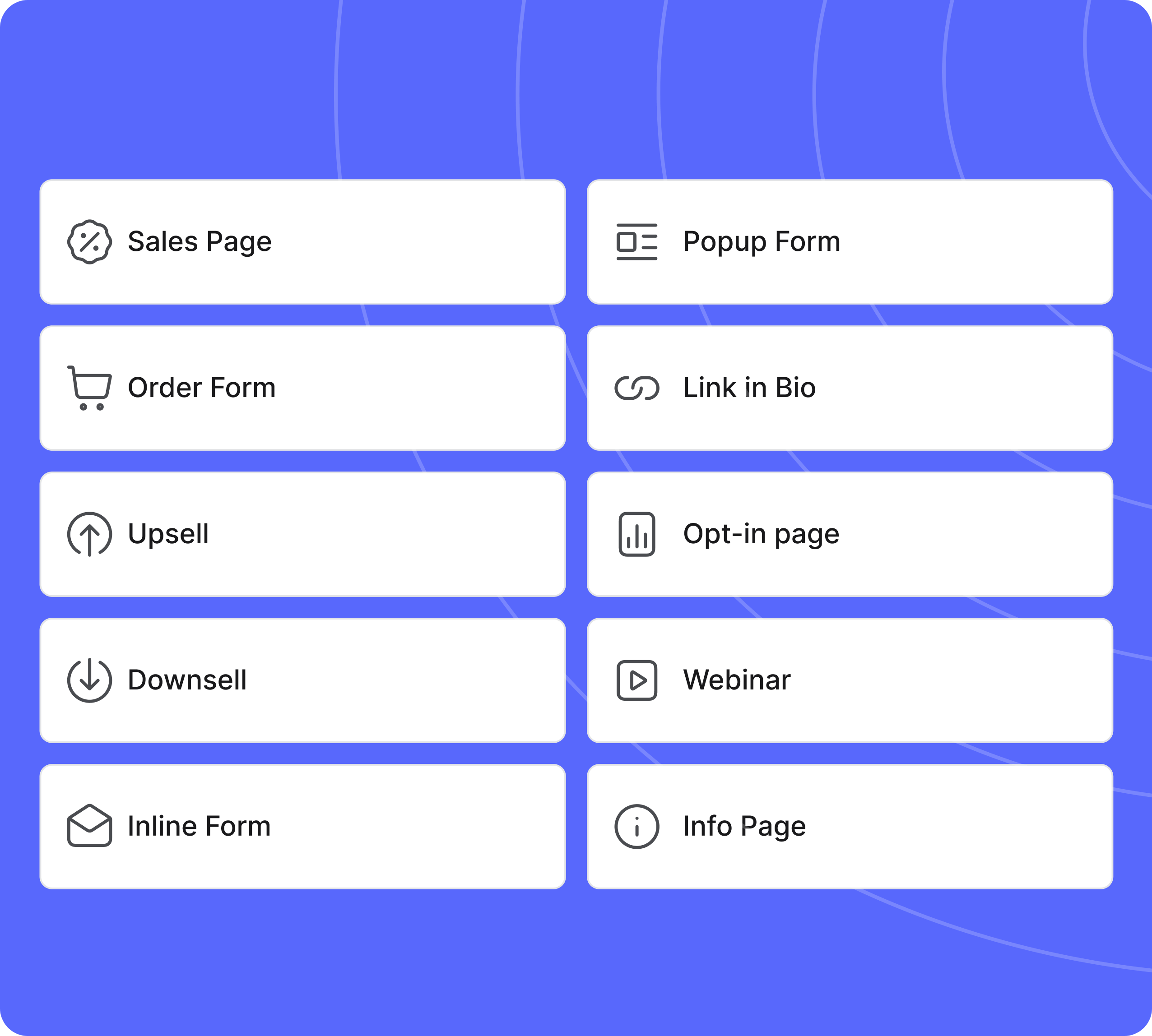
Email marketing & automation
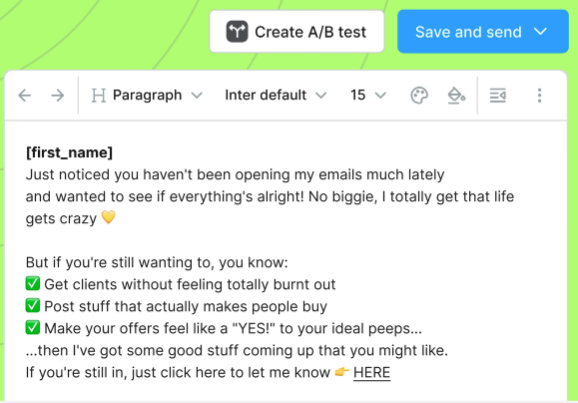
Tag contacts, trigger sequences off funnel behavior, and broadcast to your list, included on every plan, including Free.
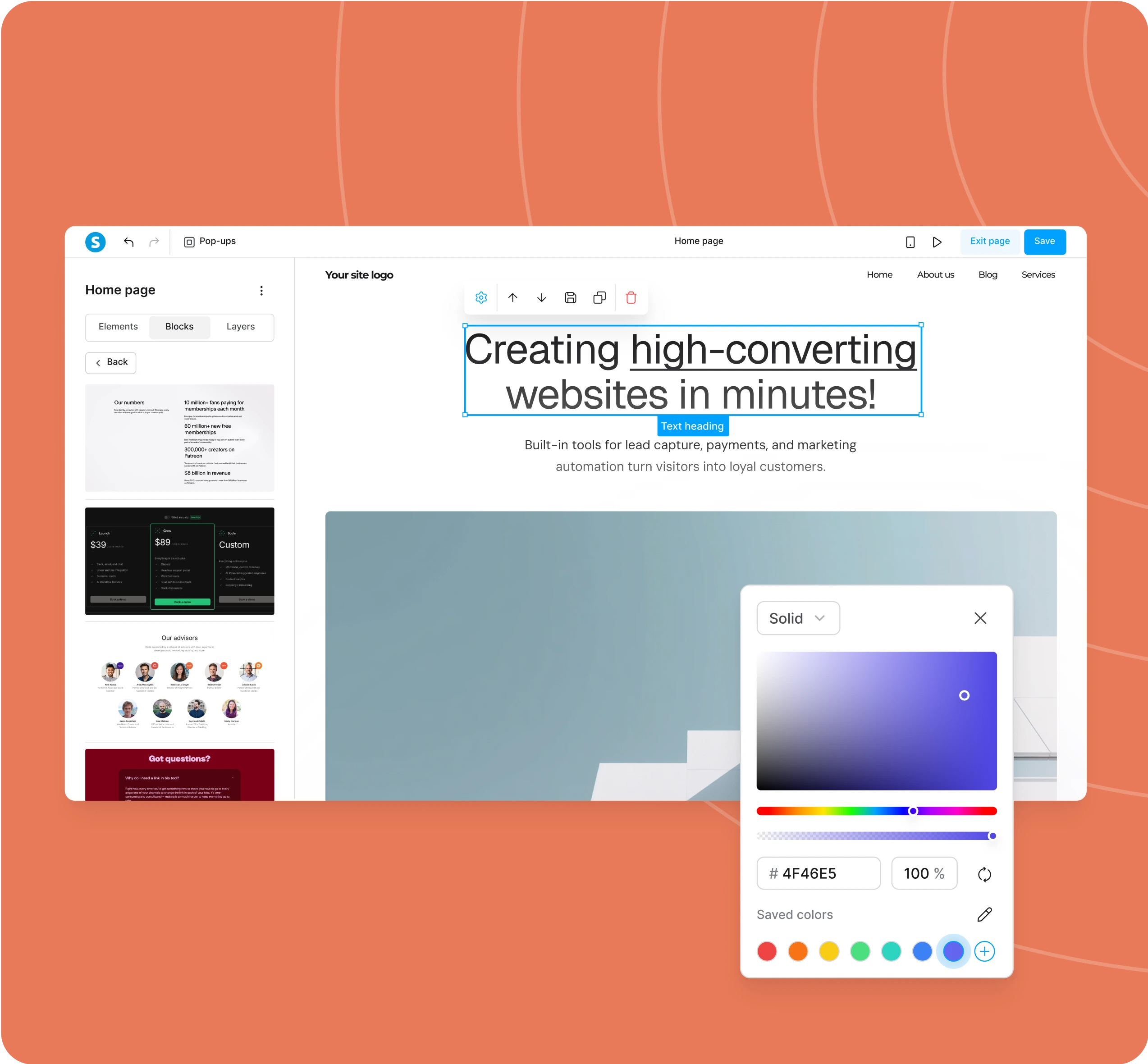
Course & digital product hosting
Host a course or downloadable product directly on Systeme.io and sell it through the same funnel you built to promote it.
Native affiliate program
Recruit affiliates to promote your product for a commission, a feature many budget platforms leave out entirely.
Systeme.io's free plan is permanent, not a trial, and every paid tier still charges 0% transaction fees, the upgrade is about lifting contact, funnel, and course caps, not unlocking features.
| Plan | Free | Startup | Webinar | Unlimited |
|---|---|---|---|---|
| Price (monthly / annual) | $0/mo | $27 / $17 mo | $47/mo | $97/mo |
| Transaction fee | 0% | 0% | 0% | 0% |
| Contacts | 2,000 | More | More | More |
| Funnels | 3 | More | More | Unlimited |
| Courses | 1 | More | More | Unlimited |
| Best for | Testing your first funnel and product | Solo creators past the free limits | Creators running webinars | High-volume sellers wanting no caps |
The free plan has no time limit, a rarity among platforms on this list, though page-builder polish and analytics depth lag behind paid competitors.
See Systeme.io's full pricing →Yes if budget matters most and you want funnels bundled in; skip it if course delivery quality is your top priority.
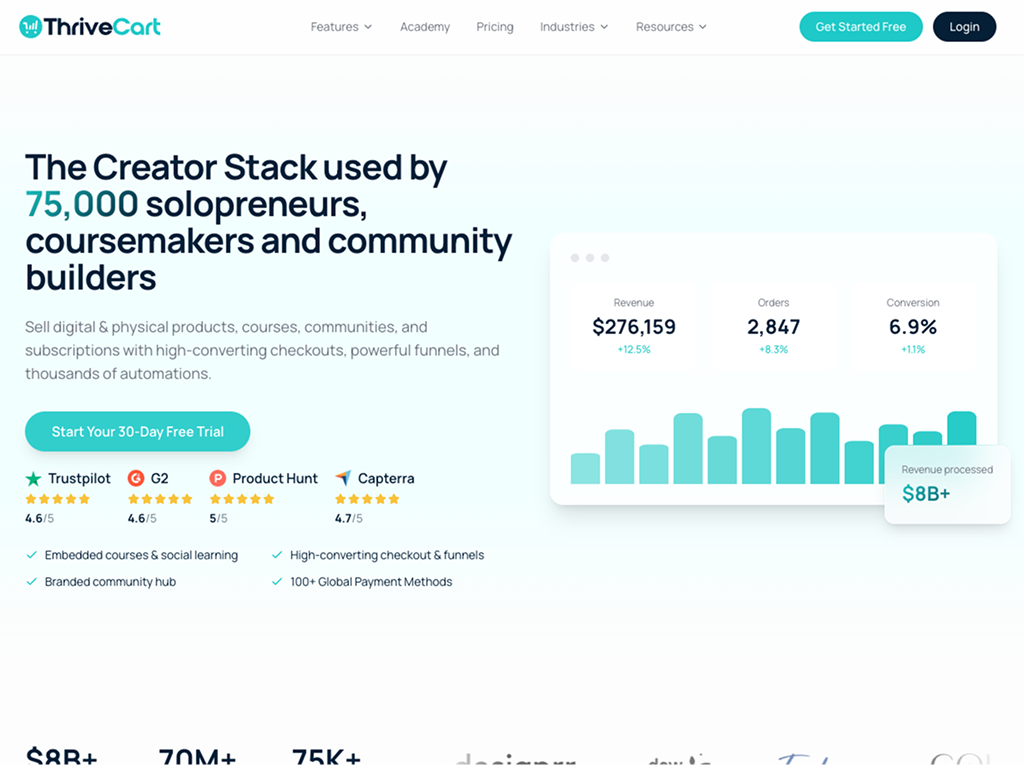
Best checkout & cart engine for existing sites
ThriveCart isn't a storefront, it's the checkout layer you plug into a site you already have. As of July 2026 it offers both a $495 lifetime license (still live) and new monthly plans ($37–47/mo Standard, $67–87/mo Pro+), all at 0% transaction fees.
ThriveCart isn't a storefront you launch from scratch, it's a checkout and cart layer you plug into a website, funnel, or landing page you already have. You bring the traffic and the product; ThriveCart handles the buy button, payment processing, and post-purchase upsell flow.
It supports four payment types out of the box (one-time, subscription, split-pay, and pay-what-you-want) and lets you stack one-click upsells and order bumps onto any checkout, features that are usually locked behind higher tiers elsewhere. The standout is pricing: a one-time lifetime license is still available alongside newer monthly plans, both at 0% transaction fees.
What we liked
No revenue cut ever
One-click upsells and bump offers
Four payment types (one-time, subscription, split-pay, pay-what-you-want)
What we disliked
Not a storefront on its own
Pro+ features (affiliate tools, tax automation) cost extra even after the lifetime buy-in
ThriveCart's features are built around one job: converting a visitor into a customer, then a customer into a bigger sale.
High-converting checkout
Embed a checkout page, popup, or full page on any site, with built-in A/B testing to compare conversion rates between variants.
One-click upsells & bump offers
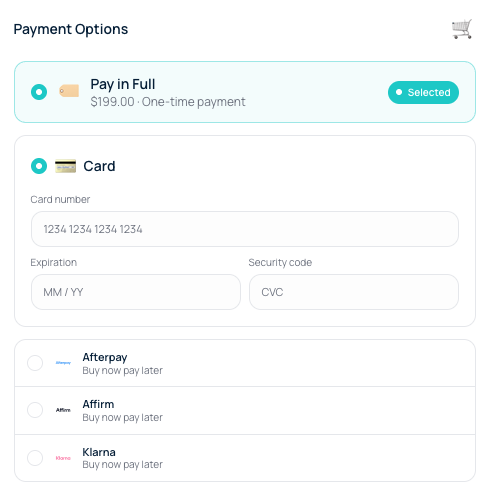
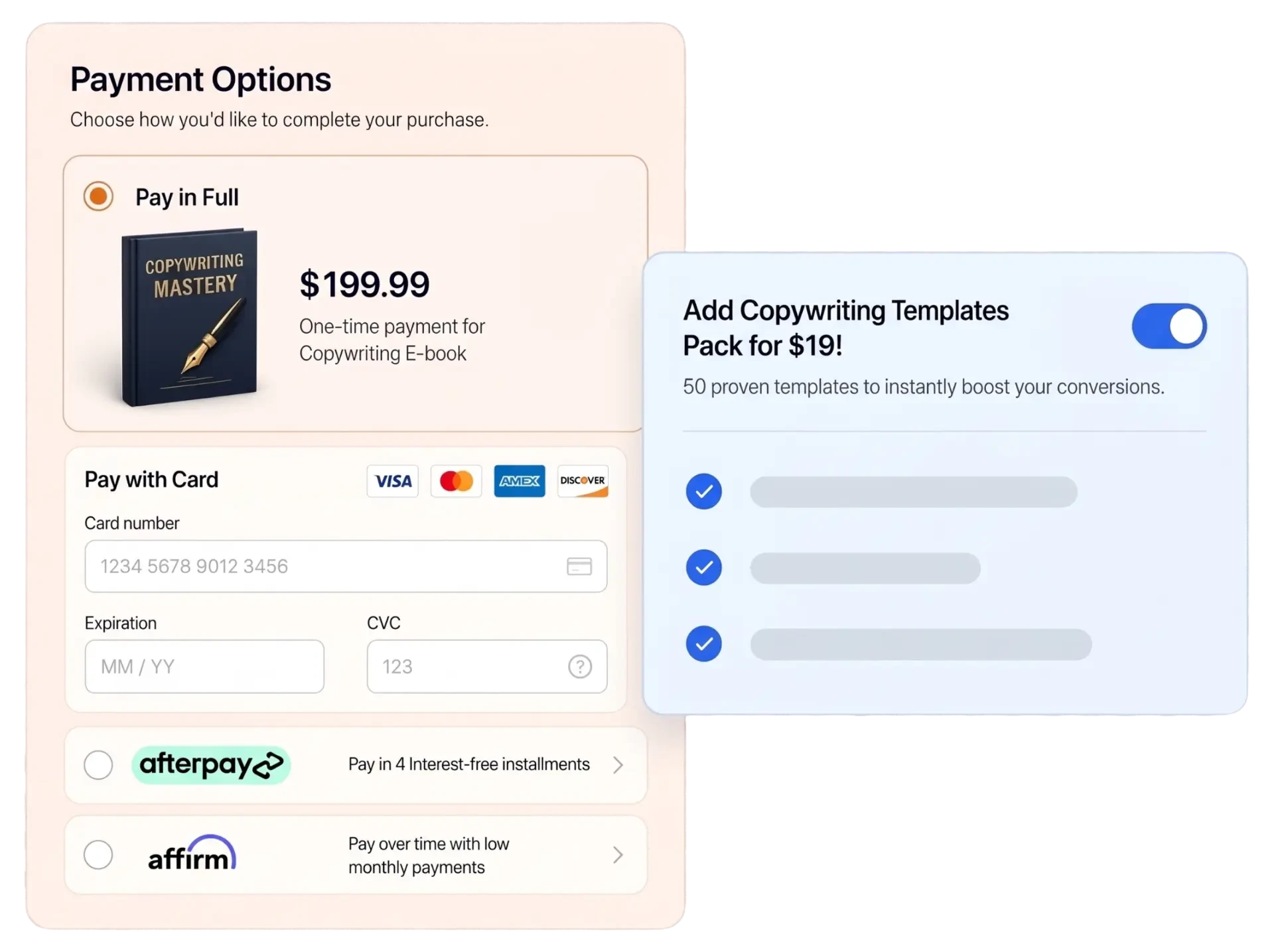
Add order bumps at checkout and one-click post-purchase upsells without asking for payment details twice.
Four payment types
Sell one-time purchases, subscriptions, split-pay plans, or pay-what-you-want products, all from the same cart.
Affiliate management (Pro+)
Recruit and pay affiliates directly through ThriveCart, tracked per product, available on the Pro+ tier.
| Plan | Standard (lifetime) | Standard (monthly) | Pro+ (monthly) |
|---|---|---|---|
| Price | $495 one-time | $37–47/mo | $67–87/mo |
| Transaction fee | 0% | 0% | 0% |
| Upsells & bump offers | ✅ | ✅ | ✅ |
| Affiliate management | ❌ | ❌ | ✅ |
| Best for | Sellers who want to pay once and be done | Testing before committing to the lifetime price | Sellers who need affiliate tracking built in |
The $495 lifetime license is still the better long-term deal if you're committed, monthly plans exist mainly for creators who want to try it before paying upfront. Pro+ features (affiliate tools, advanced reporting) cost extra even on top of the lifetime buy-in.
See ThriveCart's full pricing →Yes if you have traffic and a site already; skip it if you need an all-in-one with hosting included.
Best for scaling past solo creator into a team or academy
Thinkific is the platform you won't outgrow. Unlimited courses on every paid plan, an AI teaching assistant that answers student questions from your own content, and communities tied directly to courses. It's priced higher than Teachable for less speed, but it scales further.
Thinkific is a course platform built for creators and teams planning to scale past a single course into a full academy: unlimited courses on every paid plan, an AI teaching assistant that answers student questions using your own course content, and SCORM support for compliance training.
Where it differs from Teachable is depth over speed: the course builder takes longer to set up but supports more complex curricula, communities tied directly to individual courses, and detailed learner analytics that show exactly where students drop off.
What we liked
Easy to rebuild and restructure courses after launch
Handles on-demand and live courses in one system
Strong learner analytics for all plans
AI course prompts and mobile app
Perfect for growing, you won't hit a ceiling
Sales, marketing, and AI features in one place
What we disliked
Pricy compared to competitors
Limited native email marketing integrations
Customization capped on lower-tier plans
Thinkific trades a faster setup for more room to grow into, most useful once you're managing more than one course or a small team.
Unlimited courses
Every paid plan supports unlimited courses, no per-course pricing tier the way some competitors structure it.

AI teaching assistant
An AI assistant answers student questions using your own course material, cutting down on repetitive support requests.
Learner analytics
Track completion rates, quiz scores, and drop-off points per lesson, useful for spotting where a course is losing students.

Communities tied to courses
Run discussion spaces scoped to a specific course rather than one general community, keeping engagement relevant to what a student is actually taking.
| Plan | Basic | Start | Grow |
|---|---|---|---|
| Price (monthly / annual) | $54 / $40 mo | $109 / $82 mo | $219 / $164 mo |
| Transaction fee (Thinkific Payments) | 0% | 0% | 0% |
| Courses | Unlimited | Unlimited | Unlimited |
| Best for | A first course, solo creator | Creators wanting more community and marketing tools | Teams and academies |
Unlimited courses on every tier means the upgrade decision comes down to marketing and community features, not a course cap. It's priced above Teachable, but you won't outgrow it the way you might a course-count-limited plan.
See Thinkific's full pricing →Yes if you're building toward an academy or need compliance features; overkill for a first course.
Best delivery engine to bolt onto your own website
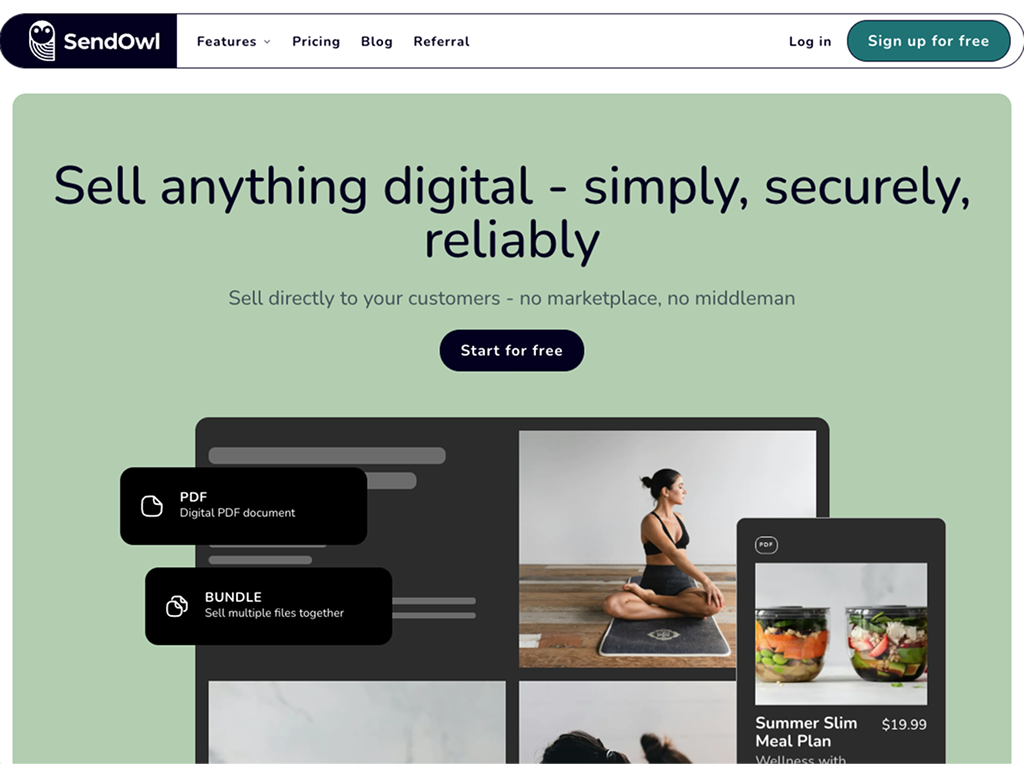
SendOwl doesn't give you a storefront, it's a delivery and checkout engine you embed into a site you already run (Shopify, WordPress, your own domain). Strong file protection (PDF stamping, expiring links, license keys) but a 2025 price hike moved it from budget-friendly to mid-tier.
SendOwl is a delivery and checkout engine you embed into a site you already run, Shopify, WordPress, or your own domain, rather than a standalone storefront. You bring the site and the traffic; SendOwl handles secure file delivery, payment processing, and anti-piracy protection.
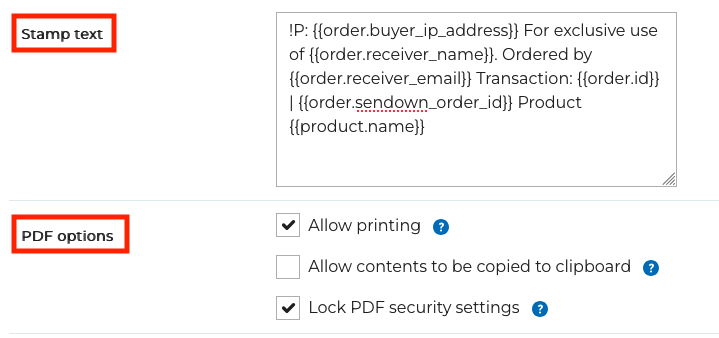
Its strength is file protection: PDF stamping embeds the buyer's details in every download, links expire after a set number of downloads, and software sellers get license key generation, tools aimed at sellers worried about their files getting shared beyond the original buyer.
What we liked
No revenue cut
Solid anti-piracy tools
Built-in affiliate program
What we disliked
No storefront of its own
2025 price increase made it less beginner-friendly
Limited checkout customization
SendOwl's features center on secure, reliable delivery rather than storefront design, the storefront itself lives on the site you're bolting it onto.
Secure file delivery
PDF stamping, expiring download links, and download-count limits make it harder for a buyer to redistribute files.
License key generation
Automatically generate and track license keys for software or digital tools sold through the platform.
Built-in affiliate program
Recruit affiliates to promote your product for a commission, without needing a separate affiliate tool.
Embeddable checkout
Drop a buy button or checkout flow into an existing site instead of redirecting buyers to a separate storefront.
| Plan | Launch | Higher-volume plans |
|---|---|---|
| Price | $39/mo | Scales up to $159/mo+ based on order volume |
| Transaction fee | 0% | 0% |
| Best for | Sellers just adding delivery to an existing site | Higher-volume sellers with an established site |
A 2025 price increase moved SendOwl from a budget option to mid-tier, it's no longer the cheapest way to bolt on delivery, but the file protection tools are still ahead of most competitors at this price.
See SendOwl's full pricing →Only if you already have a website and don't want SendOwl's older, higher pricing to be your entry point, Payhip or Gumroad get you selling faster from zero.
Best simple starting point if you don't need courses
Gumroad is the platform most creators have heard of, but it didn't make our top 3 for a reason: a flat 10% fee that never drops no matter how much you sell. It's simple and free to start, just don't expect it to scale with you.
Gumroad is the simplest way to sell a single digital download: upload a file, set a price, share the link. There's no monthly fee, no storefront to configure, and no learning curve, you can be live in a few minutes.
The tradeoff is that Gumroad stays this simple on purpose. There's no native course builder and no membership tiers, and the flat 10% transaction fee never drops no matter how much you sell, which makes it a starting point rather than a platform to grow a full business on.
What we liked
Fastest possible setup
No monthly cost ever
What we disliked
Fee never decreases as you grow
No courses or memberships
Discover marketplace sales carry a steep 30% fee
Gumroad's whole feature set is built around getting a single product live fast, not around scaling a catalog.
Instant product setup
Upload a file, set a price, and get a shareable checkout link within minutes, no storefront design required.

Pay-what-you-want pricing
Let buyers choose their own price above a set minimum, useful for name-your-price launches or tip-style sales.
Built-in audience tools
Collect emails at checkout and send updates to past buyers without a separate email tool.
Gumroad marketplace
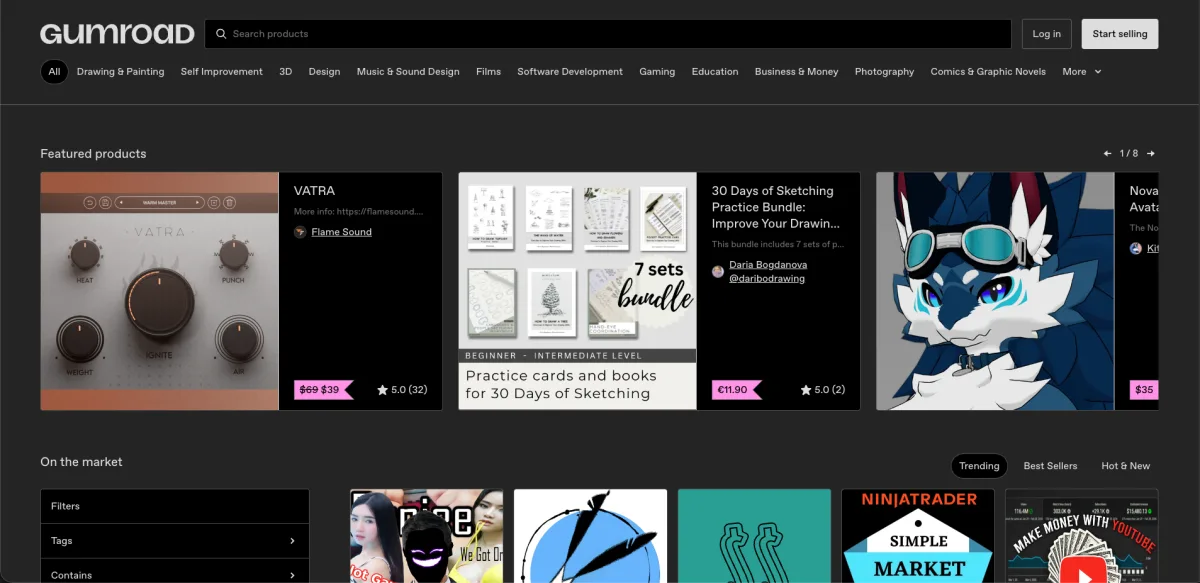
You also get access to Gumroad marketplace. But don't expect it to become a huge traffic source, and note a 30% fee on marketplace sales.
No monthly cost
Every feature is available for free, the only cost is the 10% transaction fee on each sale.
| Plan | Free (only tier) |
|---|---|
| Price | $0/mo |
| Transaction fee | 10% flat, every sale |
| Courses / memberships | ❌ Not supported |
| Best for | A single product idea, tested fast, without commitment |
At $2,000/month in sales, Gumroad's 10% costs $200, versus $69/month for Payhip's Plus tier at a comparable fee. It's the cheapest way to start, not the cheapest way to stay.
See Gumroad's full pricing →Only for testing a single product idea. At $2,000/month in sales, Gumroad costs $200 versus Payhip Plus's $69, so this is a starting point, not a long-term home.
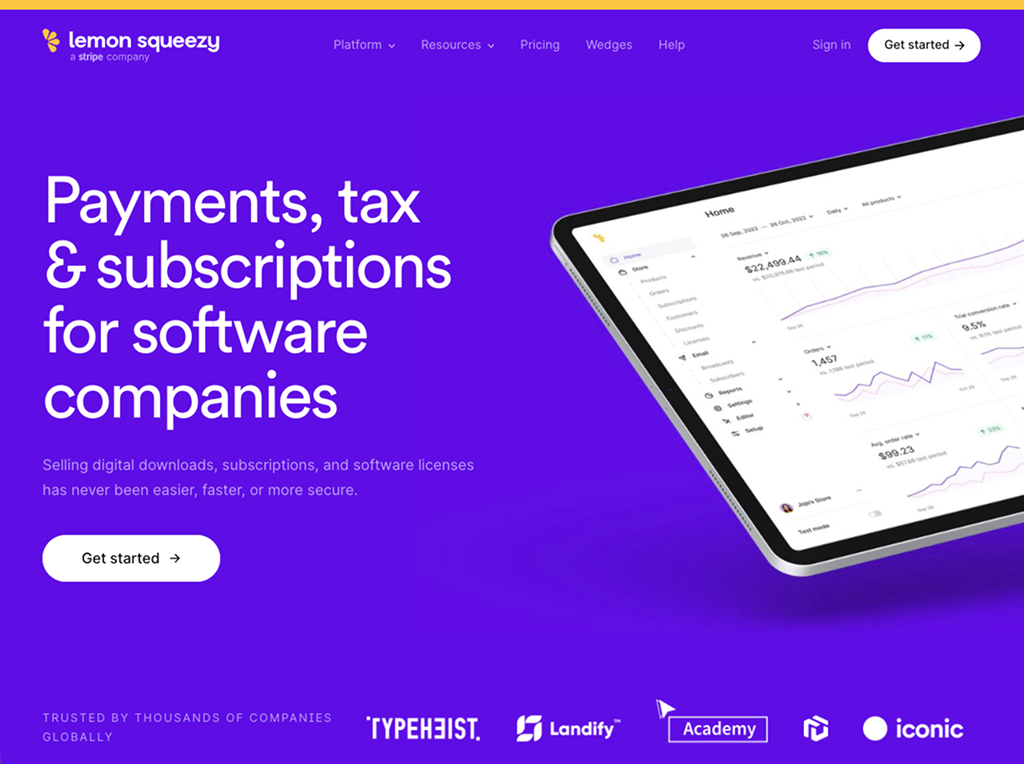
Best for global tax compliance without a subscription
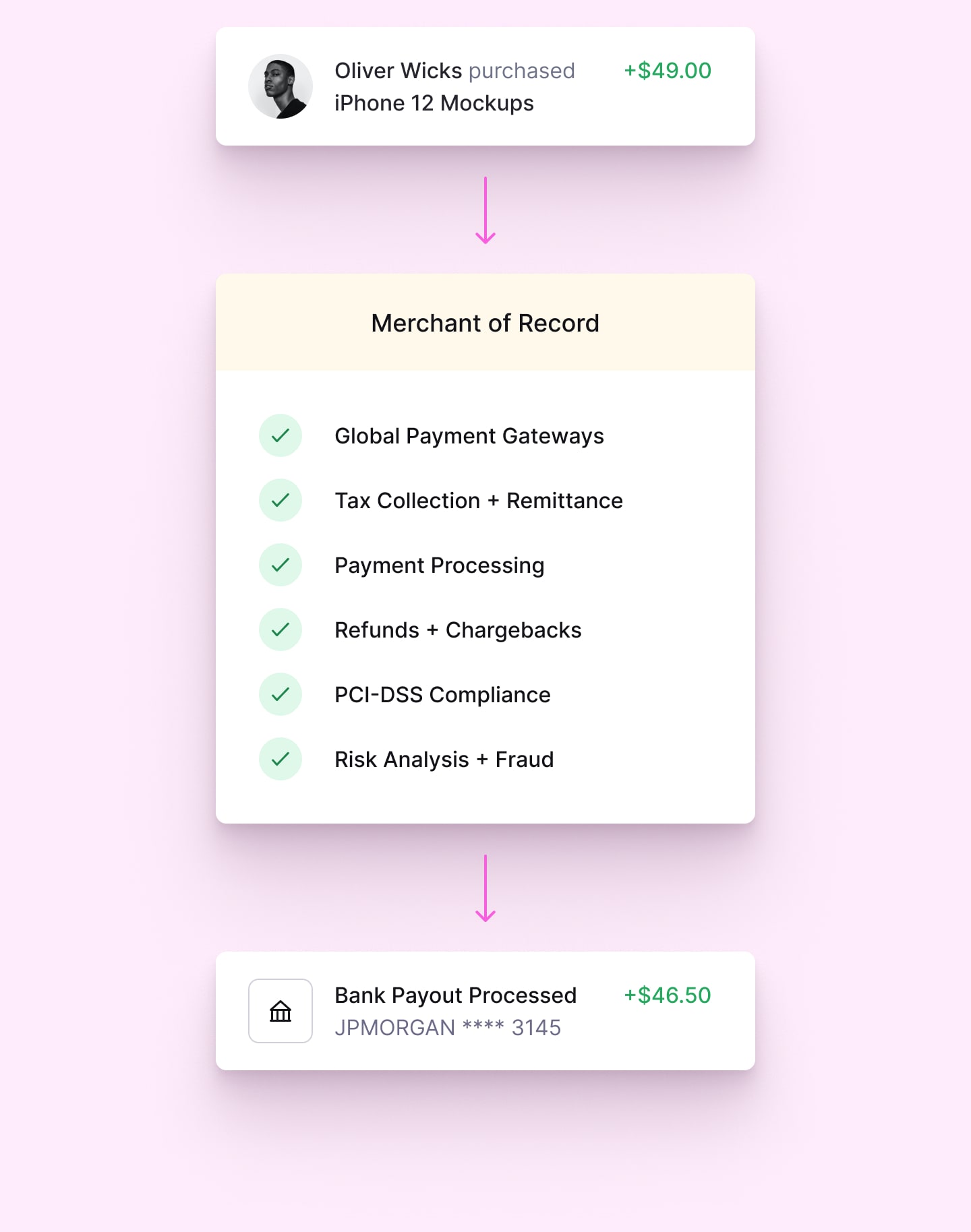
Lemon Squeezy (acquired by Stripe in 2024) acts as your Merchant of Record, meaning it collects and remits VAT, GST, and sales tax worldwide on your behalf. No monthly fee, just 5% + $0.50 per transaction, though international cards, PayPal, and subscriptions each add a surcharge on top.
Lemon Squeezy, acquired by Stripe in 2024, acts as a Merchant of Record for digital sellers, meaning it takes on the responsibility of collecting and remitting VAT, GST, and sales tax across the countries you sell into, rather than leaving that compliance work to you.
It's built with software and license-based products in mind as much as downloads and courses: license key generation, subscription billing, and dunning management are all supported. There's no monthly fee, the cost lives entirely in a per-transaction rate, which makes it cheap to start and easy to model at low volume.
What we liked
Full global tax handling included
No monthly commitment
License key generation for software
What we disliked
Flat $0.50 fee hurts on cheap items
Surcharges stack fast (international +1.5%, PayPal +1.5%, subscriptions +0.5%)
No brand-level affiliate program
Lemon Squeezy's core pitch is tax compliance handled for you, everything else is built to support software and subscription sellers specifically.
Merchant of Record tax handling
VAT, GST, and sales tax are calculated, collected, and remitted on your behalf across supported countries, no manual filing required.
License key generation
Issue and validate license keys automatically for software products, with usage tracking built in.
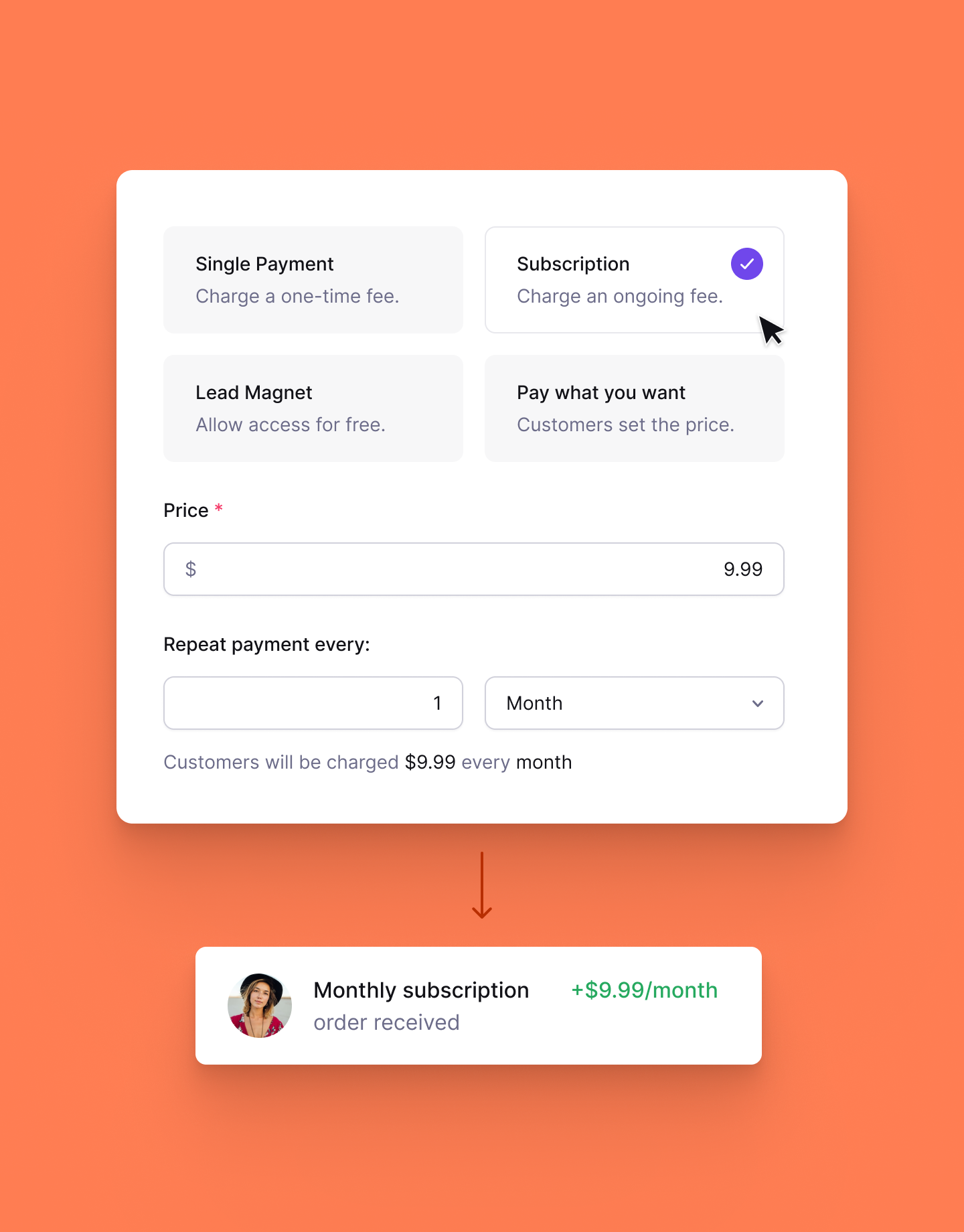
Subscription billing
Run recurring subscriptions with dunning management for failed payments handled automatically.
No monthly commitment
Pricing is entirely transaction-based, so there's no subscription cost to justify before you've made a sale.
| Plan | Standard (only tier) |
|---|---|
| Price | $0/mo |
| Transaction fee | 5% + $0.50 per transaction |
| Surcharges | +1.5% international cards, +1.5% PayPal, +0.5% subscriptions |
| Best for | Selling internationally without handling tax compliance yourself |
The flat $0.50 per-transaction fee hurts most on cheap items, a $3 product loses a bigger share to that fee than a $30 one. Payhip Pro is cheaper past roughly $2,000/month if you don't need Merchant of Record coverage.
See Lemon Squeezy's full pricing →Yes if tax compliance is your biggest headache; Payhip Pro is cheaper once you're past ~$2,000/month if you don't need Merchant of Record coverage.
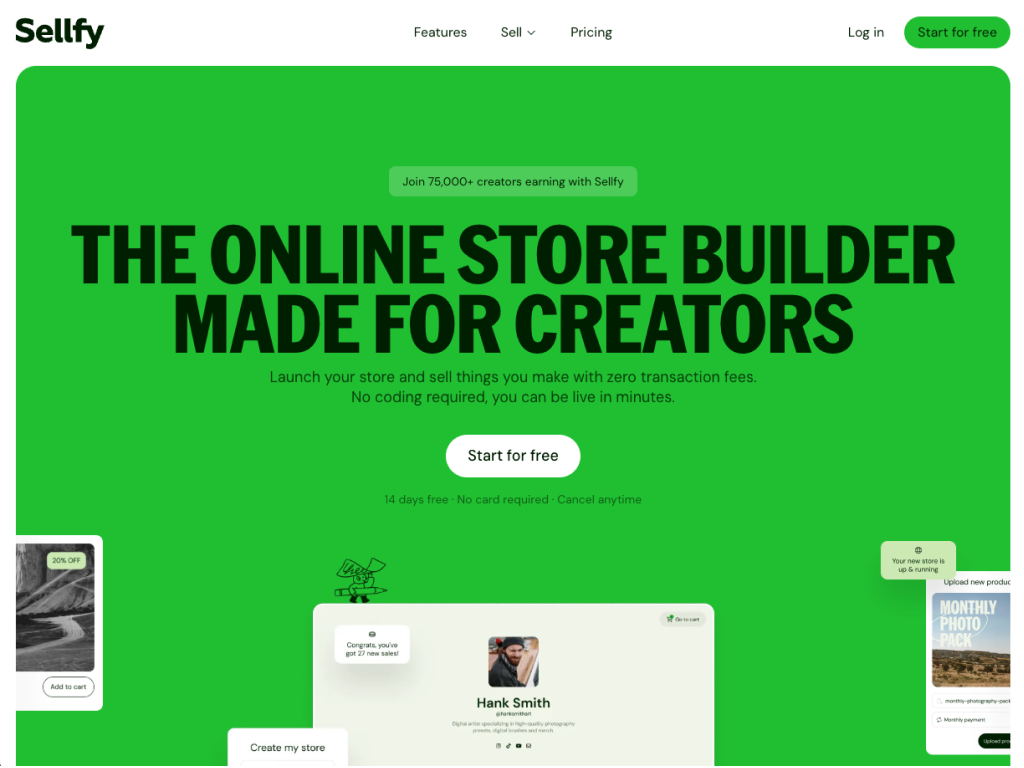
Best for print-on-demand alongside digital downloads
Sellfy pairs standard digital product hosting with built-in print-on-demand merch, useful if you want to sell a digital download and a physical spinoff (like a printable plus a mug) from the same storefront. No transaction fees, but sales caps by plan mean you'll outgrow tiers based on revenue, not features you're missing.
Sellfy hosts standard digital product sales, downloads, courses, subscriptions, alongside built-in print-on-demand merchandise, so you can sell a printable and a mug with your design on it from the same storefront without connecting a separate POD app.
There's no free plan, only a 14-day trial, and each tier caps you by annual sales volume rather than by feature access, so you'll outgrow a plan because you're selling more, not because you're missing a tool.
What we liked
No per-sale cut
Native POD integration
Affiliate marketing on Business tier+
What we disliked
No free plan (14-day trial only)
Annual revenue caps force upgrades
Email-only support
Sellfy's standout is print-on-demand baked into the same storefront as your digital products, most competitors on this list require a separate app for that.
Native print-on-demand
Design and sell merch (apparel, mugs, prints) alongside digital downloads, fulfilled automatically without a separate POD integration.
Digital product & subscription hosting
Sell downloads, courses, or subscription-based products from the same storefront as your physical merch.
Storefront builder
Set up a branded store, including your own domain, without needing a separate website builder.
Affiliate marketing (Business tier+)
Recruit affiliates to promote your products for a commission, available starting on the Business plan.
| Plan | Starter | Business | Premium |
|---|---|---|---|
| Price (monthly / annual) | $22 / $19 mo | $59 / $49 mo | $119 / $99 mo |
| Transaction fee | 0% | 0% | 0% |
| Annual sales cap | Lowest | Higher | Highest |
| Print-on-demand | ✅ | ✅ | ✅ |
| Affiliate marketing | ❌ | ✅ | ✅ |
| Best for | Testing a small product mix | Growing sellers combining POD and digital | High-volume sellers nearing the Business cap |
There's no free tier, only a 14-day trial, and the caps are on annual revenue rather than products or features, so you'll hit a ceiling by selling well, not by needing something Sellfy doesn't offer.
See Sellfy's full pricing →Yes if POD is part of your product mix; otherwise Payhip or Podia cover the same digital-only ground for less.
Best for discovery-driven traffic, worst for keeping your margin
Etsy isn't a platform you build a storefront on, it's a marketplace with built-in shopper traffic and a fee structure that reflects it. You're not paying for tools, you're paying for buyer discovery, and that discovery costs 12–20% of every sale once everything's stacked together.
Etsy isn't a platform you build a storefront on, it's a marketplace with built-in shopper traffic for printables, templates, and planners, buyers who are already searching for a digital product like yours before you've spent a dollar on marketing.
That traffic comes at a cost, though: a per-listing fee, a transaction fee, standard payment processing, and, once you're selling consistently, a mandatory Offsite Ads fee. You're not paying for tools here, you're paying for discovery.
What we liked
Existing buyer traffic with zero marketing spend required to get first sales
What we disliked
Highest combined fee load on this entire list
No email list ownership
Offsite Ads become mandatory past $10K/year
Etsy's features are less about tools for building a storefront and more about the traffic and buyer trust the marketplace already brings, if your product fits what shoppers search for here.
Built-in shopper search & discovery
Buyers already come to Etsy searching for printables, templates, and planners, giving new sellers organic traffic that a standalone storefront won't have on day one.
Etsy Payments
Handles checkout and payment processing across supported countries, buyers can pay with a range of local methods without you integrating each one separately.
Built-in reviews & buyer trust
Star ratings and reviews are native to every listing, which lowers the trust barrier for first-time buyers compared to sending them to a storefront they've never seen.
Offsite Ads
Etsy promotes your listings across the web and covers the upfront cost until you cross $10K/year in sales, after which the 12–15% fee becomes mandatory on any resulting sale.
| Fee | Amount | When it applies |
|---|---|---|
| Listing fee | $0.20 | Per listing, renews every 4 months |
| Transaction fee | 6.5% | On every sale |
| Payment processing | ~3% + $0.25 | On every sale |
| Offsite Ads fee | 12–15% | Mandatory once you cross $10K/year in sales |
Yes as a discovery channel alongside your own storefront, not as a replacement for one, you don't own the customer relationship here the way you do on Payhip or Podia.
If you want to launch without paying anything up front, Payhip is the strongest all-around pick. Every feature is unlocked on the free plan, and fees only step down further as you sell more.
If your product is really a course rather than a one-off download, go with Teachable. Video hosting, community, and email marketing come built in, and unlimited students are included on every plan.
A few adjacent picks from our list that are also worth checking out. One for best-in-class online courses, one for free all-in-one option for digital sales and email.
Get quick answers about how we evaluate tools and how to choose the right one for your needs.
You don't need an audience, a website, or coding skills. Upload a file, set a price, and share the checkout link, that's the entire setup on Payhip and Gumroad, both free to join. If you want to learn how to sell digital products before committing to a paid tool, Systeme.io has a genuinely permanent free version with no card required, so you can start selling your digital products at zero cost.
The categories that convert best are pre-recorded courses, coaching, social media templates, and video, especially for creators creating video content for the first time. That's exactly what Teachable and Thinkific are built around. If you're not sure people will pay for a full marketing course yet, validate the idea first with a smaller download or template pack on Payhip.
If you're driving traffic yourself through paid ads and care about checkout conversion rates, you don't need a full storefront, you need a cart that drops straight into the url you already have. ThriveCart and SendOwl both embed checkout directly into an existing page, with built-in A/B testing to see which version actually converts.
Yes. Most platforms here support multiple payment methods (card, PayPal, and regional wallets), and several let you run more than one price-based plan side by side. ThriveCart alone covers four payment types (one-time, subscription, split-pay, and pay-what-you-want), and Systeme.io lets you test pricing on its free version before you take payments for real.
Discover how to sell digital products at a scale past a side hustle with Kajabi and Thinkific: both bundle sales, marketing, and some genuinely great digital tools that small business owners need into one dashboard, rather than duct-taping four separate apps together to supercharge your digital business.
Dig deeper into the tools and comparisons covered in this guide.

